Part 3 WA Trip 2023

Exmouth WA to Cervantes WA

Our goal after the eclipse was to head to Kalbarri National Park. On the way are a couple of must-do stops to see Coral Bay and Monkey Mia. We had heard from our friends, Leigh and Geoff who were staying at Denman, near Monkey Mia for a few days. We agreed to try to meet up with them. We headed straight to Coral Bay which has one road in and out. It turned out a non-event for us. Basically, it is a beach stay with flash caravan parks/resorts, with what looked like an expensive hotel and coffee shop. You could not move for caravans, on top of each other, with kids, and paddle boards everywhere. We could not even park to see the beach and therefore were unable to tell you if it was of any significance.

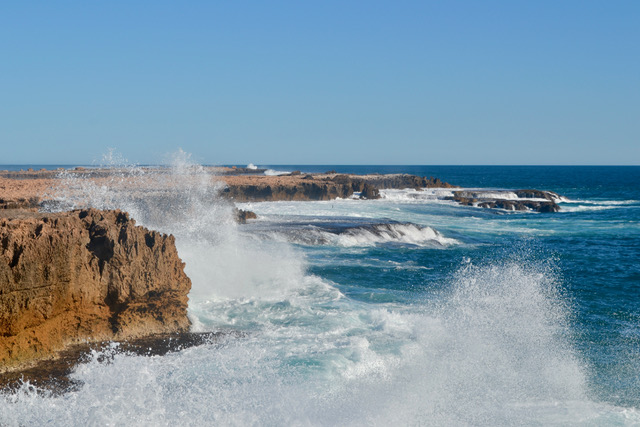
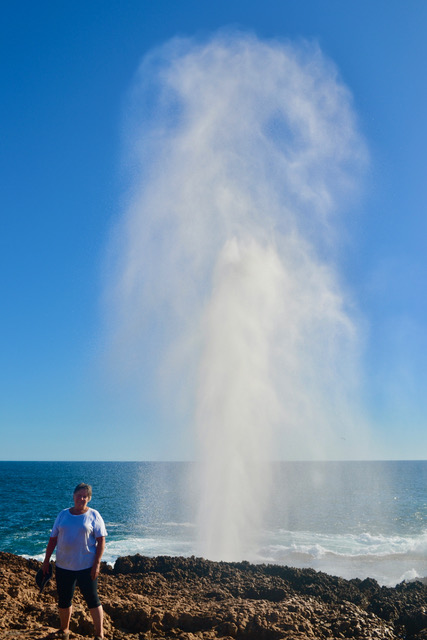
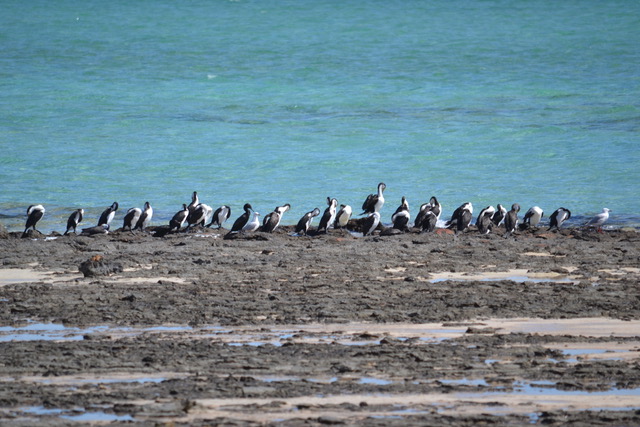
Moving back to the highway we headed down and pulled off before Carnarvon to see the Quobba Blow Hole. We timed it beautifully as the tide was in and the water erupting. This was much more to our liking. It is a natural area, with no lookout, fencing or commercialism and only a few humans around. You can walk across the rocks close to the water’s edge. It was not dangerous although some caution was needed due to it being wet and slippery.  The water was fiercely blowing up through the hole when we arrived. We were able to get quite close to the opening for some great photos. Getting wet was fun and a bonus as the day had been very hot and dry. We went for a walk up the beach to a small lookout to view another cove with yet another inviting family-style beach. We noticed a large flock of sea birds sitting on a rocky outcrop nearby. The afternoon was quickly fading and so we moved on.

We decided to take our time and stay at Carnarvon once again to wash our clothes, and to enjoy some hot showers. For a few days now I have not been feeling well, hacking cough etc. Checked for covid but all clear, just a good old cold, just enough to upset our plans a little. My walking skills were a bit subdued, and my planning ability was out the window.
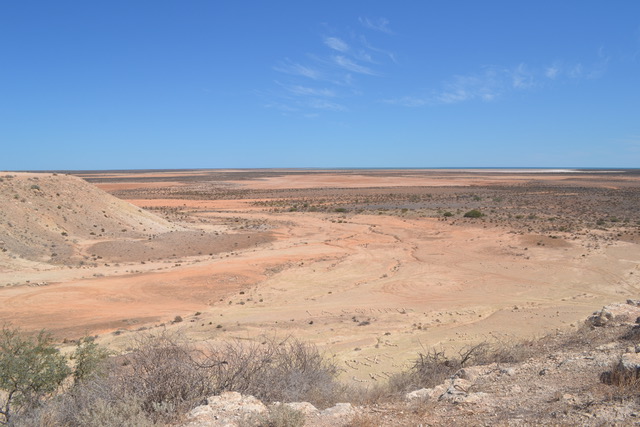
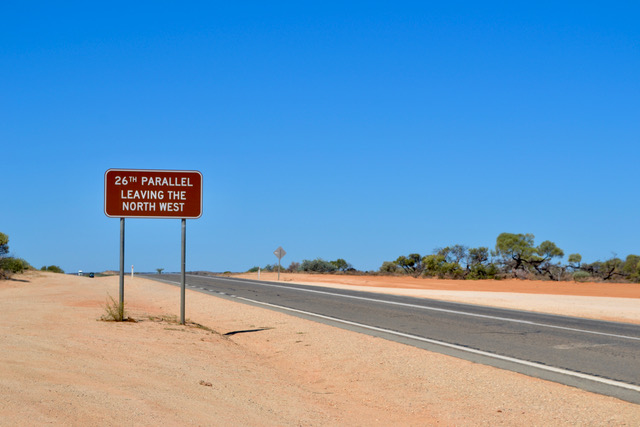
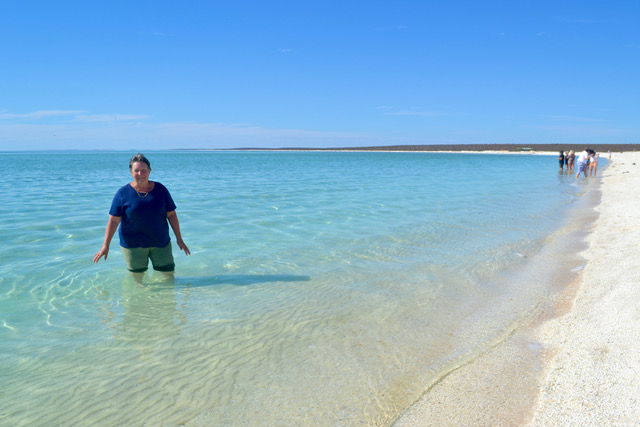
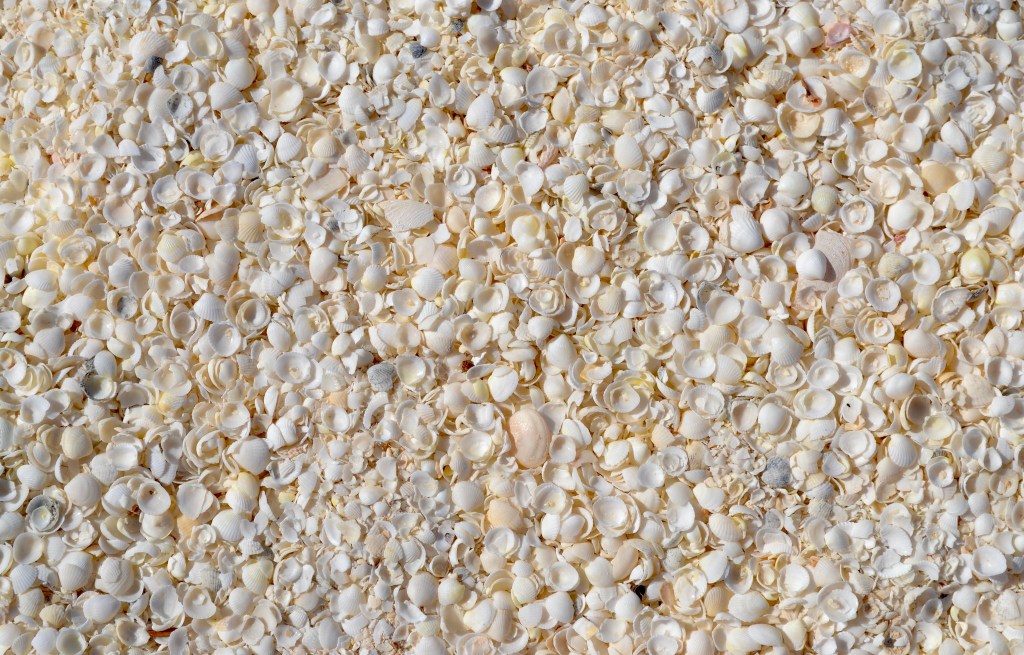
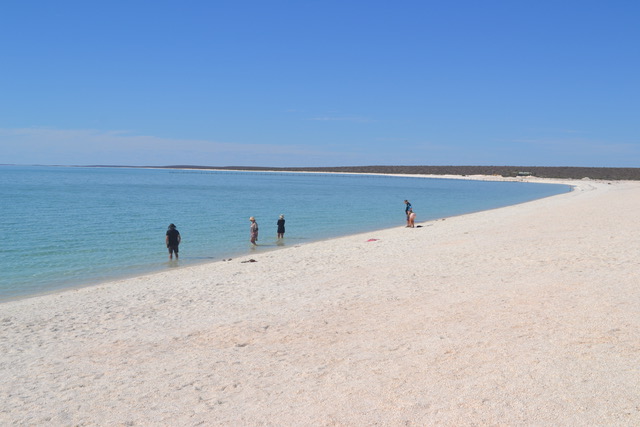
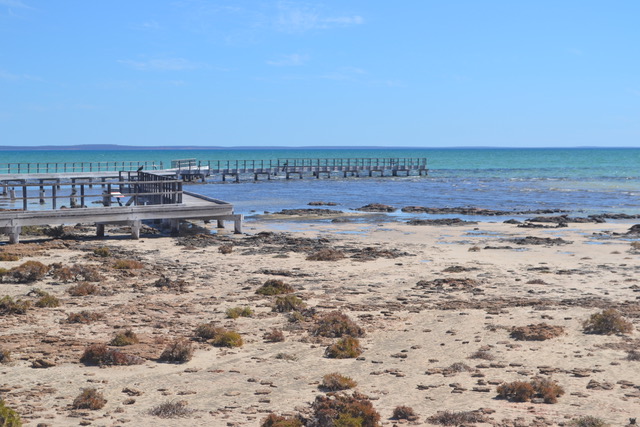
The next morning, we packed up early and we were looking forward to seeing our friends at Denham. Of course, our car does tend to veer off the road at every camera or tourist sign.  Hamelin Pool to see the Stromatolites was our first detour. We see the stalagmites, and the stalactites many times but this was new to me, at least. It was a short hot walk to the beach from the car park and unfortunately, the jetty had been damaged in recent storms and the access to these living fossils was not great. There are information boards but a large wire fence between you and the fossils. Hopefully, they will get the jetty fixed so others can enjoy them. The next pull-off was Shell Beach, Shark Bay, which was fascinating. Millions of tiny shells covering a 60km stretch to a depth of 7-10 metres. It is a pure white beach with shallow warm water to paddle in. A little hard on bare feet though. Our water shoes would have been a good idea, had we thought of it.  Nonetheless it was quite pretty, and the water was beautiful.

After the beach a pull-off to an historic telegraph office and beach. Not worth a mention as it was not an inviting-looking area. A little rundown and neglected, I do feel it needs some work to appeal more to the public.

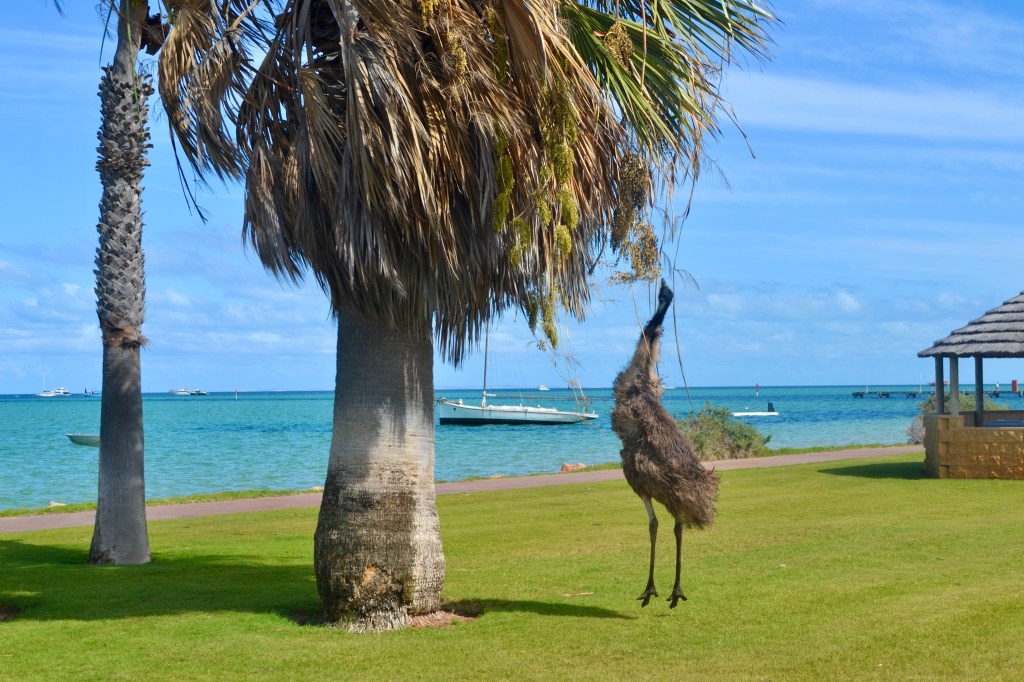
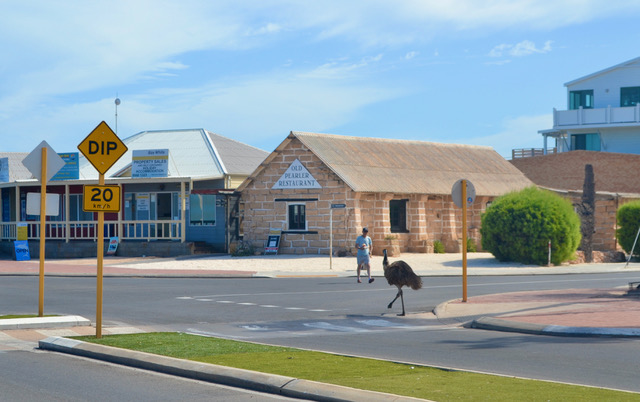
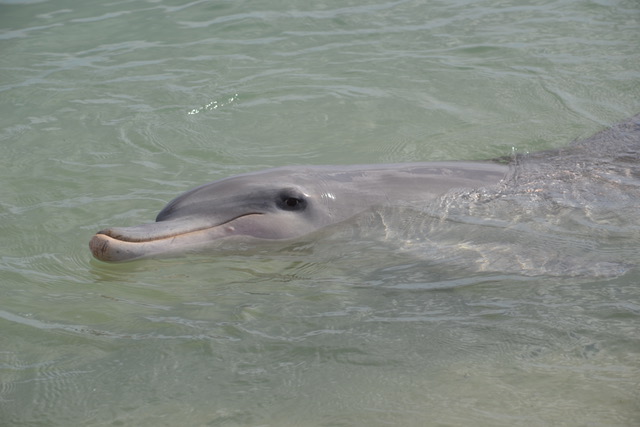
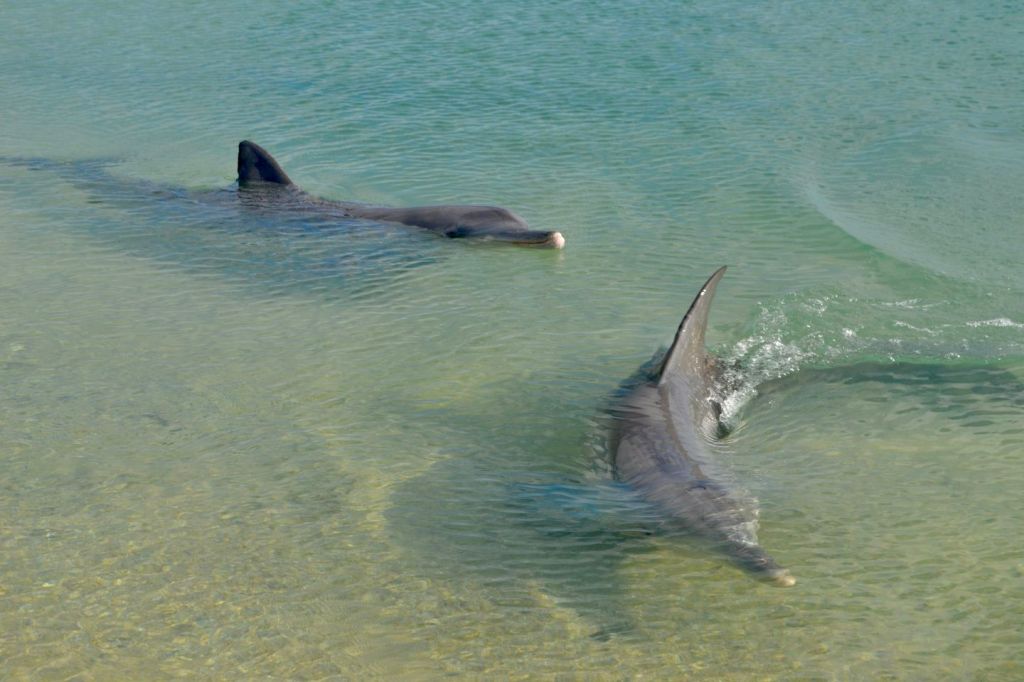
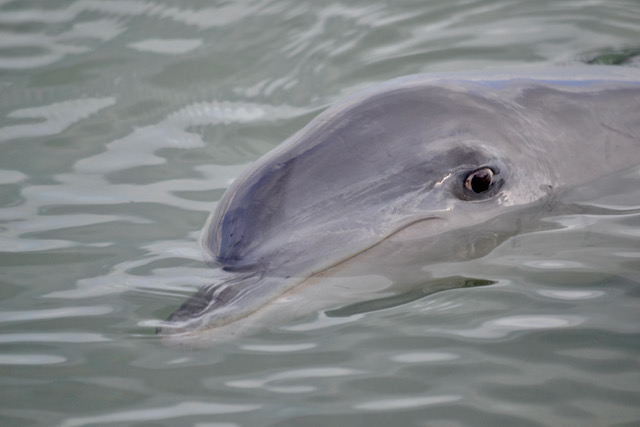
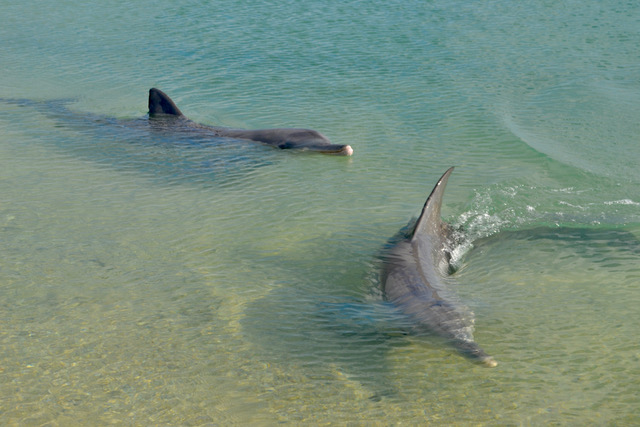
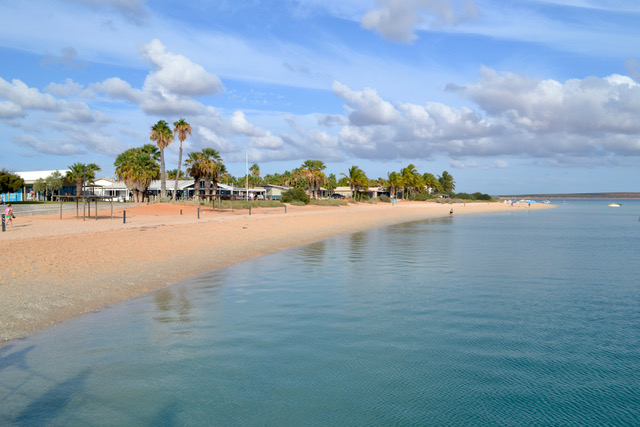
We moved on quickly to Denham. This is a quaint town with a manicured esplanade running along the beachfront. It is a popular town for boating and fishing and the gateway to the Shark Bay World Heritage Area The caravan parks looked full, and we suspect a lot of holiday rentals were at capacity. We were lucky, as Leigh and Geoff had an Airbnb which had an extra room and bathroom facilities downstairs. For the first time in many weeks, we were able to have a normal bed and a normal bathroom. This was just as exciting as seeing our friends. After a cold cider and some catch-up conversation, it was decided a swim was in order. We headed off for a lake nearby. It was a short drive and within a dozen steps of the car, the water was shallow and warm. We lazed in the water and chatted some more until the late afternoon air chilled our bodies. Back to our accommodation for shower and clean clothes for a night out at the local. We headed down to the most western hotel in Australia for a great meal, some wine and more talking. As we woke from a sound sleep, we looked forward to our trip to Monkey Mia. We had heard lots of good things about this place, and I was thrilled at the prospect of seeing dolphins up close and personal. Driving another 20 km from Denham we arrived at what appeared to be a holiday resort. There was a large information and gift shop and a walkway to the jetty where the dolphins were expected to visit. The area is very resort-style, with large parkland for children, a large restaurant and easy beach access. The dolphins are expected two to three times each morning. You wait near the jetty and once the dolphins are seen in the distance, two guides join you with stories of their families and their behaviours. They do come into the water’s edge and the handlers feed them fish. They allow you to stand at the edge of the water, however, you are restricted in how close you can get to them. It is a lovely experience as they are majestic and playful creatures. The whole experience lasts for half an hour at which time we wandered up for lunch as there was little else to do. There are emu wandering around the play area and around the restaurant which are cute to watch. We returned to the Airbnb, happy at what we had seen but underwhelmed by the whole experience. I expect if we were the type that loved sunbaking on a pristine beach then we would have appreciated the effort more.

I spent the afternoon working and Ken caught up on some photo editing. Geoff decided to cook us a gourmet seafood dinner that night. He is a pretty good chef as we have experienced his excellent culinary ability previously. After a couple of glasses of wine, a walk along the waterfront, holiday tiredness crept in. As our friends were leaving earlier than us the next morning, we said our goodbyes that evening and let sleep take over once more. 
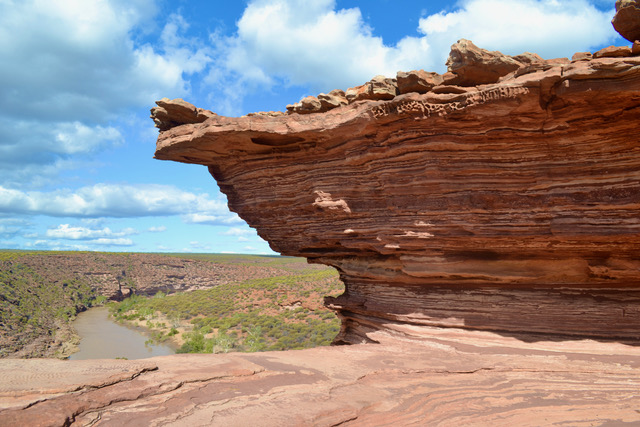
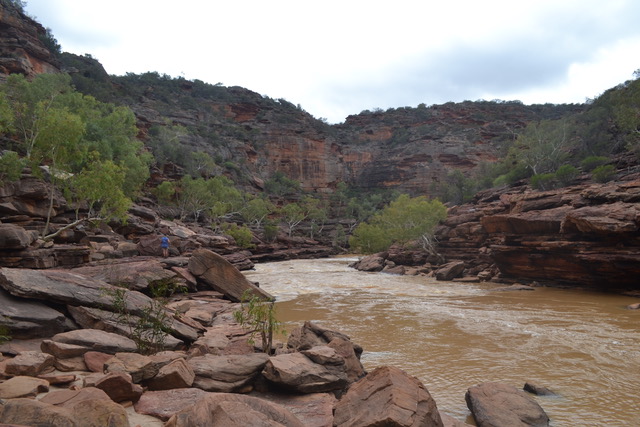
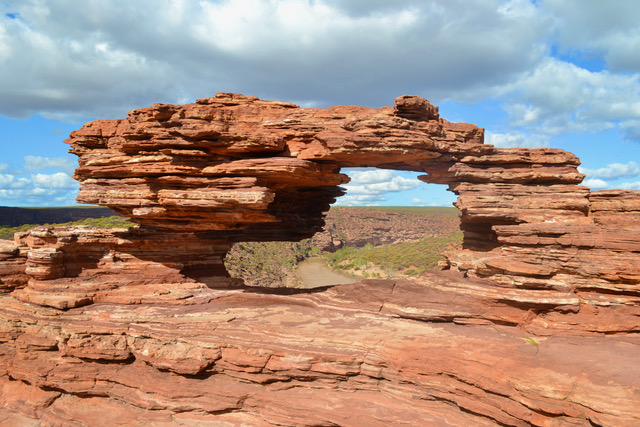
Another 350 km down the highway brings us to Kalbarri National Park. The road off the highway is pretty much all national park. The first walk we encountered was Nature’s Window. It was about a 1.5 km walk on a boardwalk with a little bit of rock navigating at the end. The large rock window allows one to look through into the Murchison River and its surrounds. The scene is perfect and beckons for a photo. The national park spans 186,000 hectares so looking out from the rocky outcrop was stunning. My cold was still persistent and so I found the walk back up was draining.

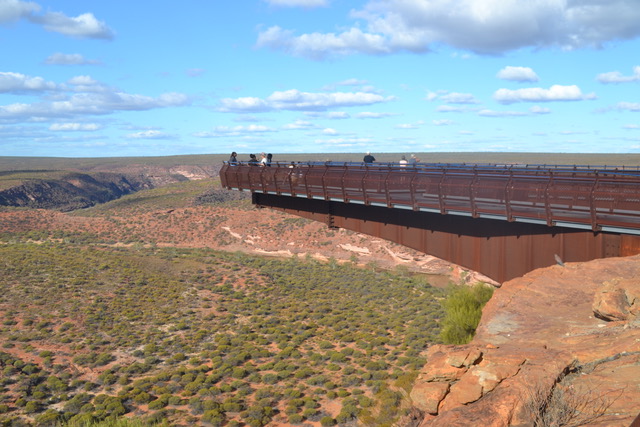
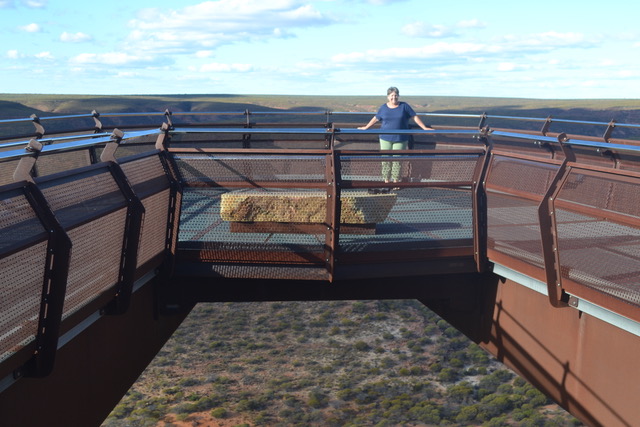
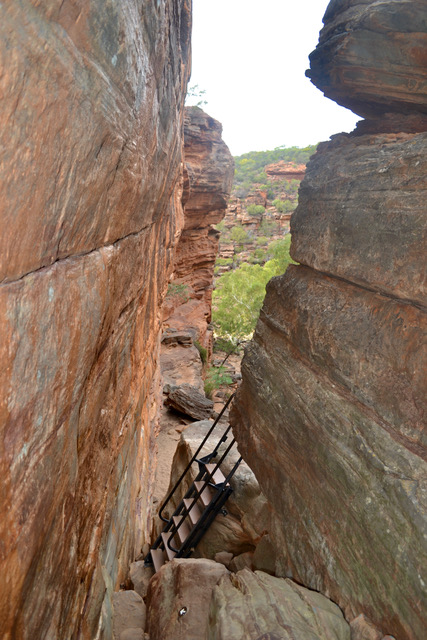
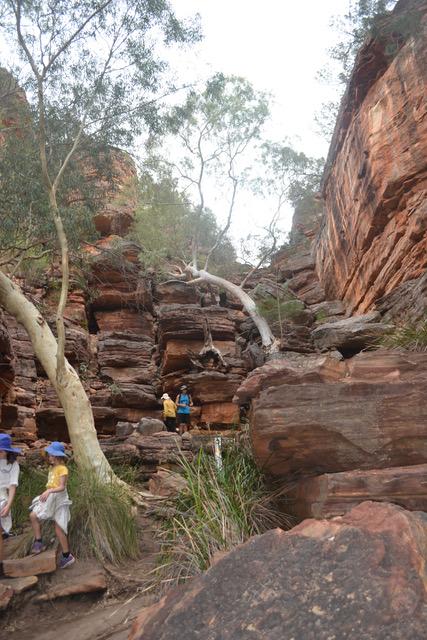
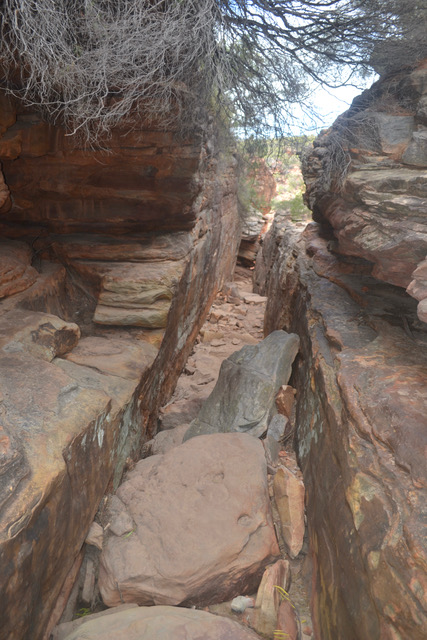
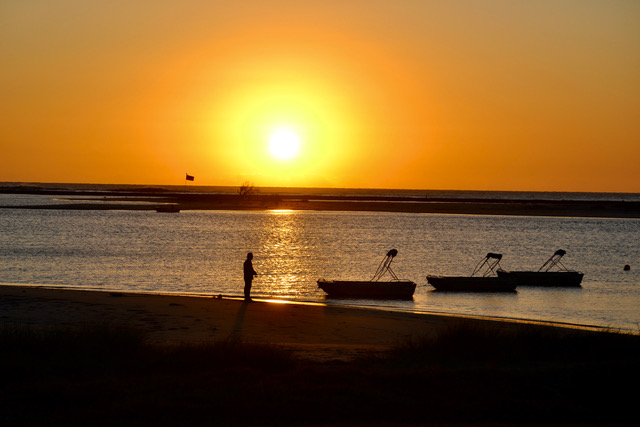
A short drive further on and you come to the Kalbarri Skywalk. This lookout allows you to walk out onto two manmade structures with see-through flooring extending over the valley. It is very pretty and easily accessible but personally standing on an undeveloped piece of land high on a cliff top is more exhilarating. Having said that the lookout and the sealed walking paths do allow a lot more people to access the beauty of this country. Once again there is a lot of information displayed and a tiny café available for resting. Overall, it is a very picturesque place to visit. There were several more drives and walks available but as it was getting late, we headed into town to secure our accommodation. Free camping was not as forthcoming along the coast, so we headed to a caravan park on the main road opposite the foreshore. That night, hoping for a nice sunset we wandered over to the park on the beach and were rewarded with a very beautiful peaceful crimson sky.  The next day the intensity of my cold meant I did not want to do any further walks. Ken of course took off to investigate some more of the National Park while I rested.  To his discomfort, he encountered another rock scrambling climb down to the bottom of a gorge. He was, however, rewarded with a glorious photographic scene. After another couple of walks he returned a very happy man. We then took a drive through the town and investigated the many ocean lookouts along the way. They all have easy pathways and the views varied at each stop. A little cold and windy but a sunny sky made it a very pleasant afternoon. Another nice sunset over the water saw an end to the day. It is a very pretty town, with lovely scenery, beaches, and some spectacular lookouts. This may have been my favourite place as far as being comfortable and relaxed.
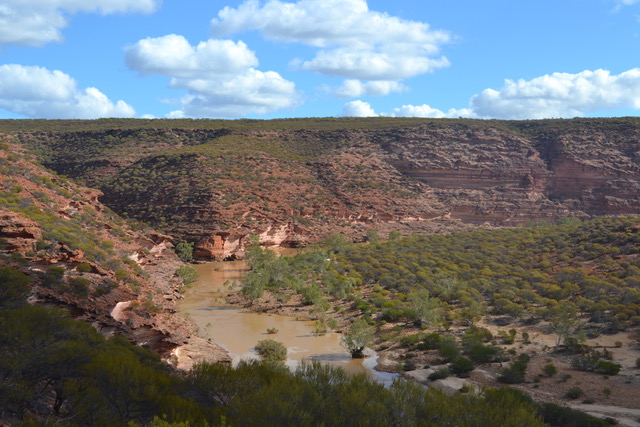
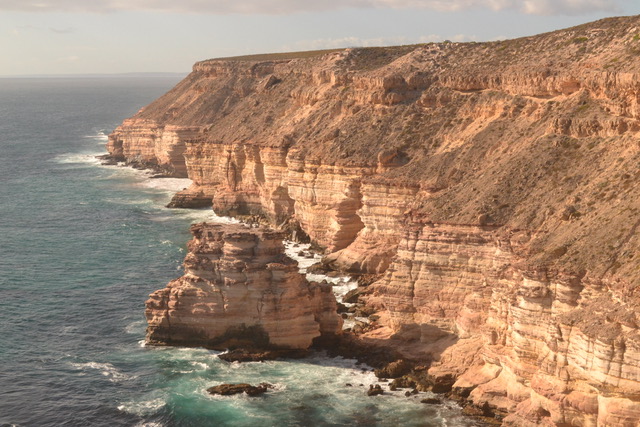
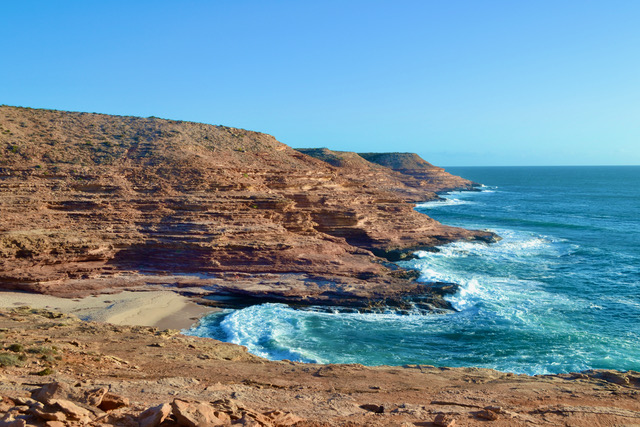
Leaving Kalbarri, we headed down the coast toward Cervantes. As I said we had taken a drive the previous afternoon to check out these turnoffs. We could not help but look again. The morning sun gave us a slightly different view.  We were now ready to move on and hungry to see more of what WA had to offer.

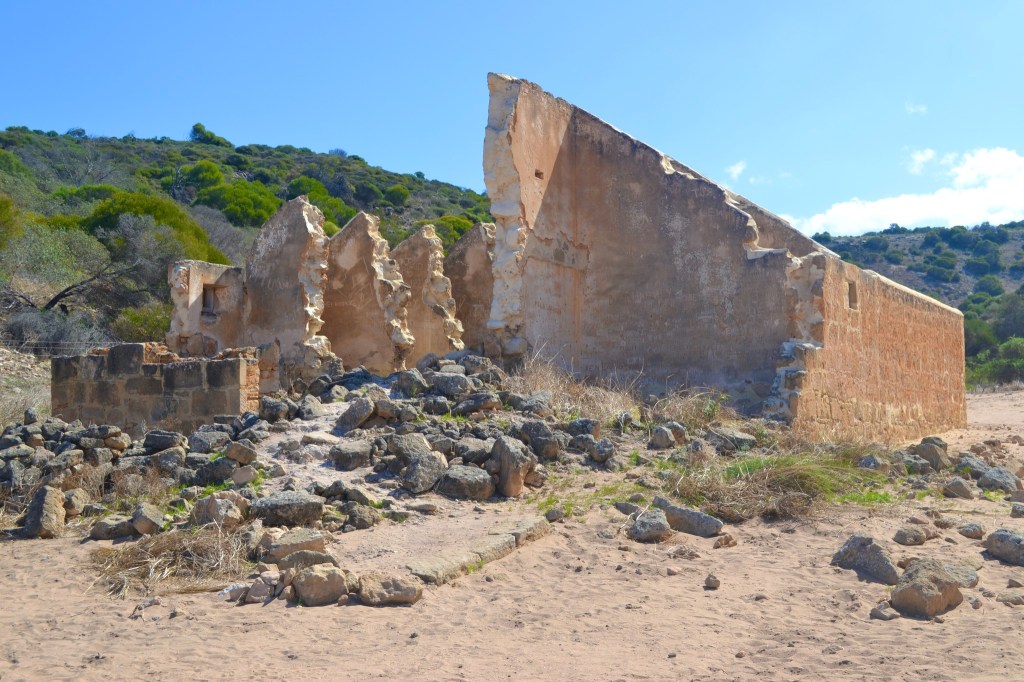
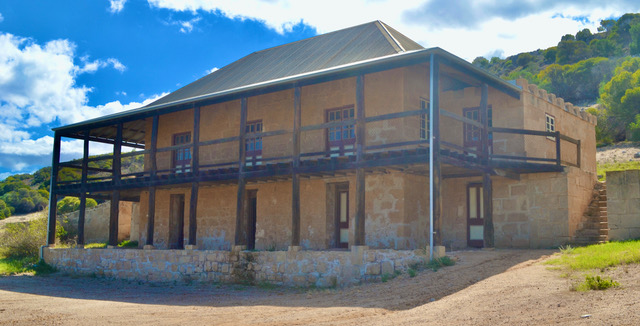
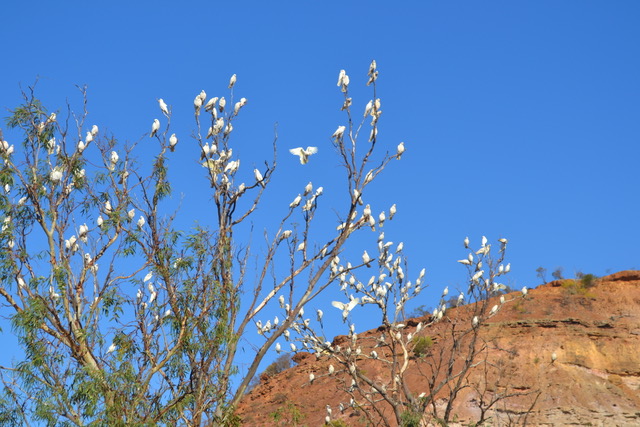
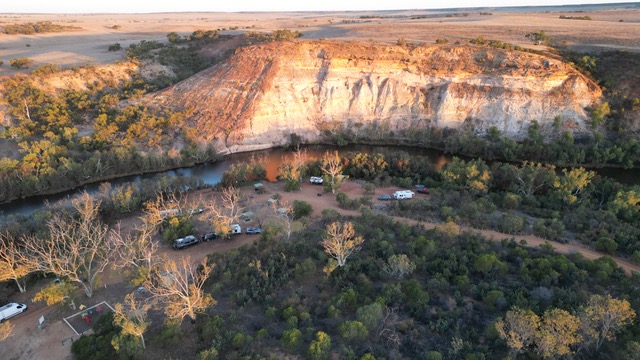
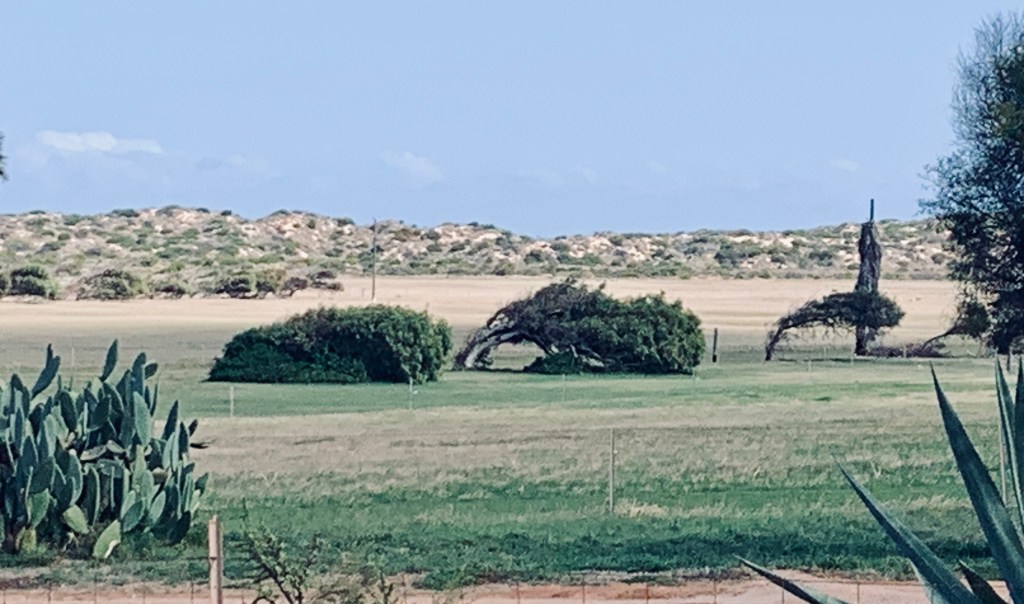
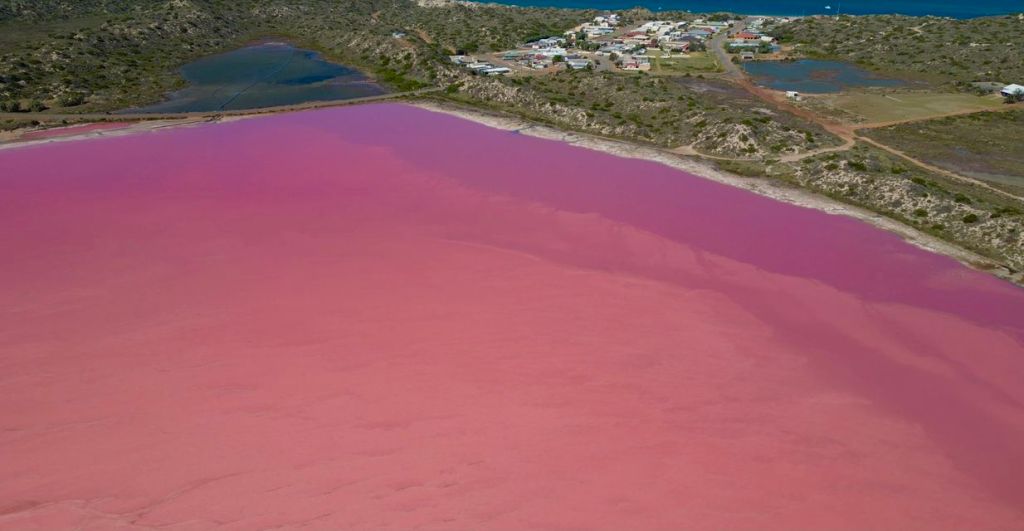
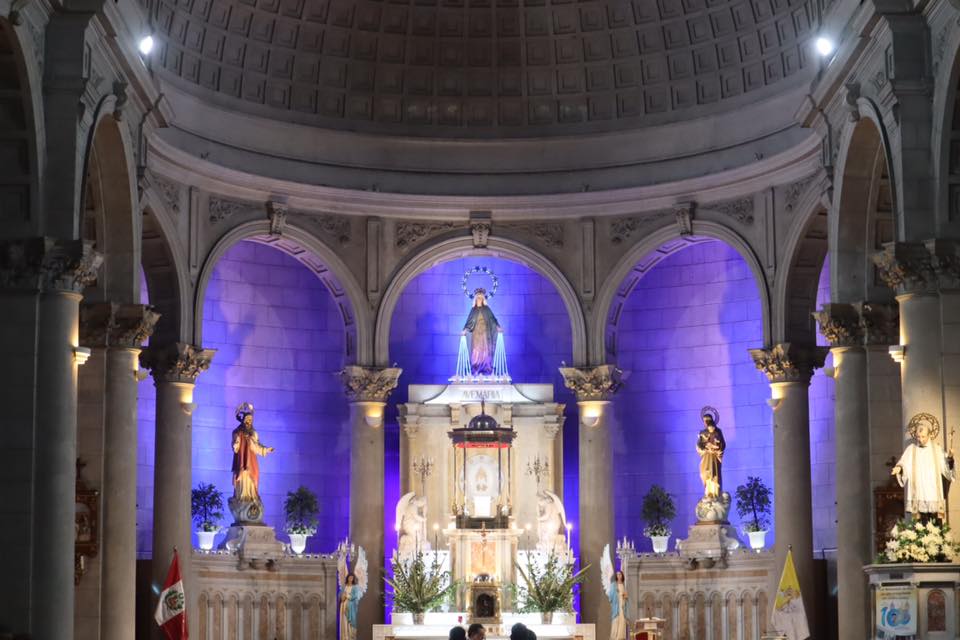
Gregory was the next place to visit. A tiny settlement with a convict history and a pink lake. There are several pink lakes in Australia and this one known as Hutt Lagoon was the first, we had seen. Travelling on along George Grey Drive for some time you see glimpses of the lake and the pink colouring is obvious.  Turning off at Port Gregory Road, you drive a kilometre or so directly beside the lake until you approach a small hill where you can pull off and cross the road to a viewing area and access to the beach. There were a few cars there already, so we parked and walked down the hill on the other side. It was easy then to walk across the sand to get a closer view of the pink water. Comparing what we saw with vibrant coloured photo’s it was a dull pink with the colour varying in areas. The depth of the colour changes constantly depending on the bacteria present in the water. I would not say it was strong the day we visited but afterwards replaying the drone video you could see the intensity of the colour. Turning back the way we had come, we looked for the historic Lynton convict depot. Established in 1983, it was the first convict depot north of Fremantle. There were some signposted ruins and a little further up the road was Sanford House a Georgian homestead open to the public for a gold coin donation.  We explored a little and then moved on. One thing I noticed here was the massive trees bent almost to the ground, clearly showing the direction of the strong winds that prevail over the Western Australian coastline. We passed through Geraldton once again and checked out a historical church built between 1916-1938. Quite an impressive building and well preserved.  We then drove onto our next free camp called Ellendale Pool. The campsite was in Greenough about 45 km southeast of Geraldton. On the way, a tiny town called Walkaway, a wind farm and many acres of farmland followed by 100 m of dirt road, and we found our destination for the night. Crossing over a little bridge we find ourselves surrounded by giant gum trees and a rocky gorge. As we arrived, we noticed a tall tree completely covered in white.  At first, I thought it to be white flowers but quickly changed my thinking as a crescendo of piercing cries descended on my ears. There were hundreds of white corella nesting on the branches. Later in the day as the sun started to set it was fascinating to watch huge groups fly overhead vacating their trees, maybe looking for a warmer spot in which to sleep. We will never know but they were back to visit again the next day bright and early. With another couple of hours drive ahead of us we took off without delay.

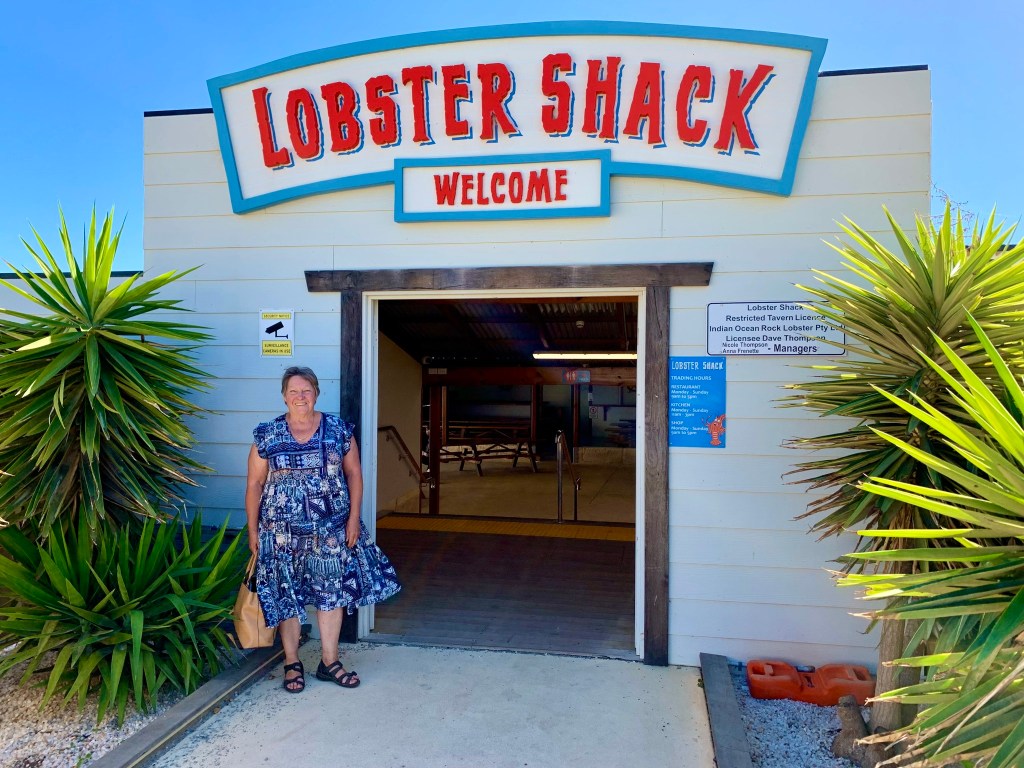
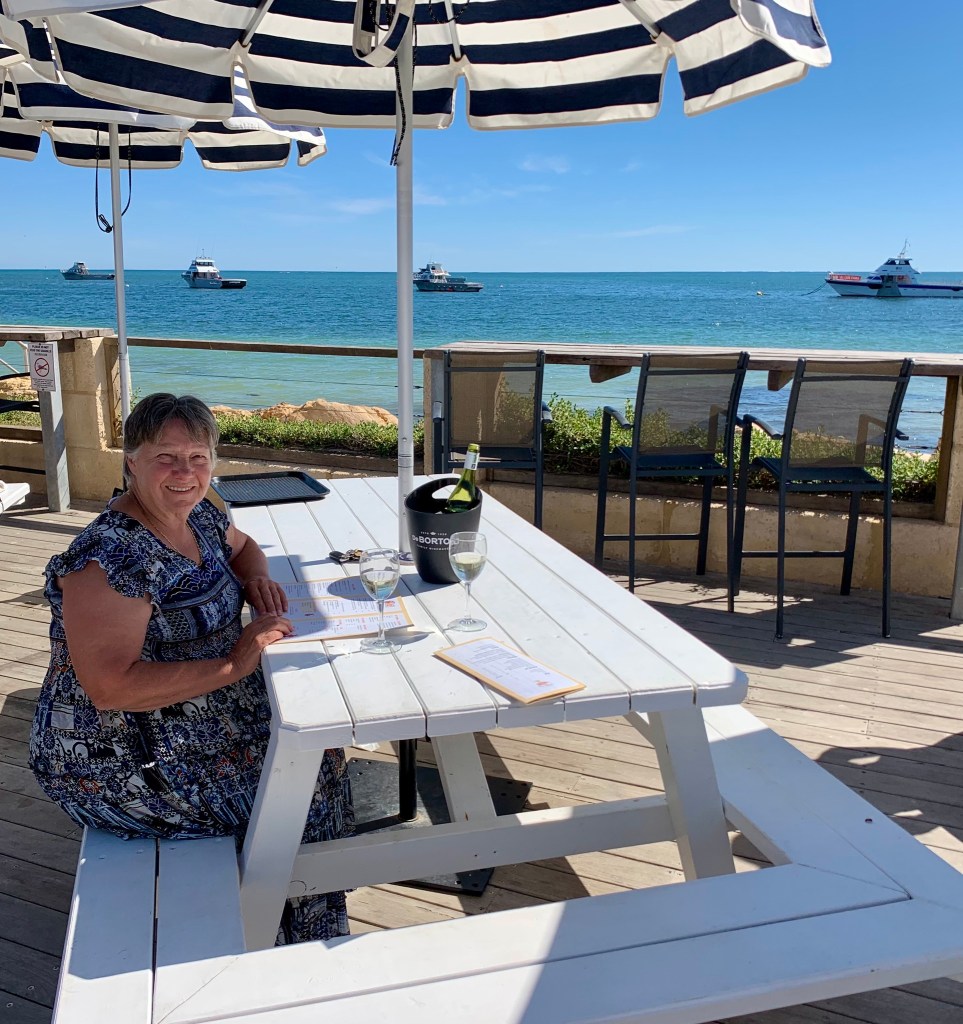
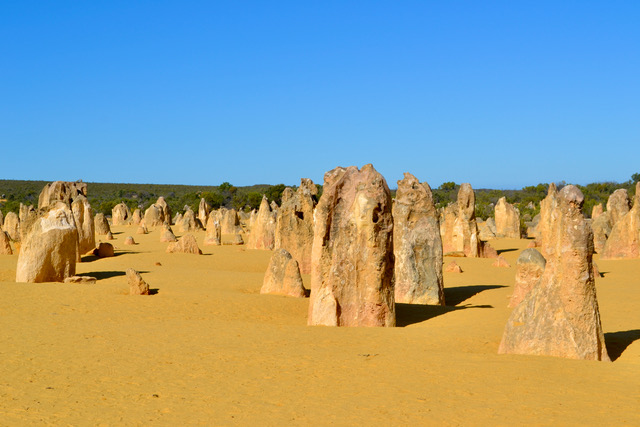
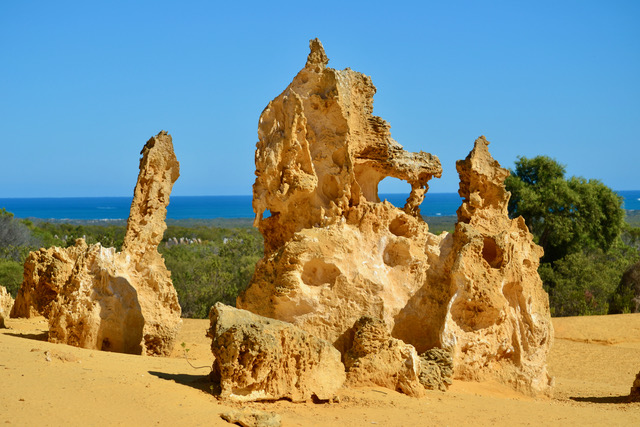
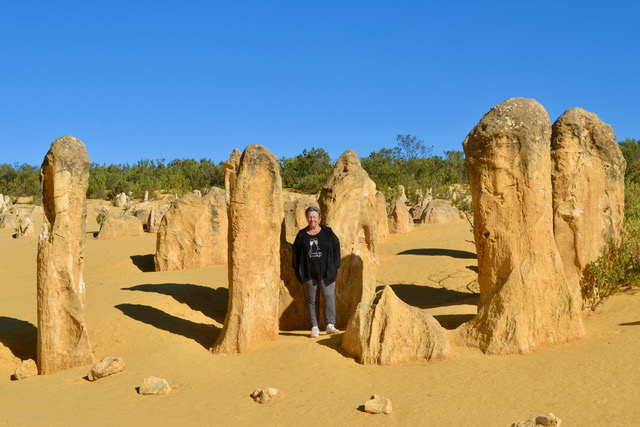
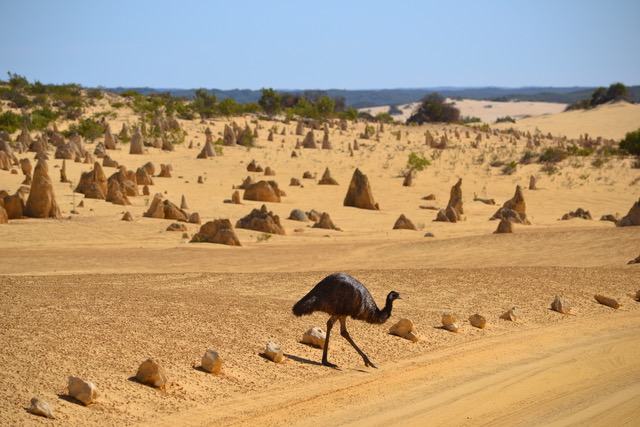
Pulling into Cervantes expecting quite a large town we were surprised to see the opposite. We were going to a donation camp at the showground but alas it was not operating. There was only one caravan park in the town which I felt was overpriced. I had found out the day before that our daughter Jess had secretly been making plans with Ken to organise a dinner voucher at The Lobster Shack ( a seafood restaurant in Cervantes) as a birthday gift for me. They know I love seafood and this place had been recommended to us. Given that situation, Ken insisted on us staying two nights in the overpriced caravan park so we could enjoy a relaxing afternoon and the next day a celebratory lunch. It was hard to argue with that. A leisurely afternoon and another nice sunset at the beach. We woke to get an early start to see The Pinnacles. I was blown away by these as I had seen photos and was expecting a small desert area with funny-shaped rocks. It is much more than this. We arrived as the park opened. As pensioners, it was only $8.00 to enter. There is a drive through the park which is part of the Nambung nature reserve. As we arrived early there was a quiet peaceful feeling as we started the slow drive. To me, it seemed like we were invading a series of secret cities silently going about the process of change. There are hundreds or maybe thousands of these “rocks” Formed approximately 25,000 to 30,000 years ago. Once the sea receded and left behind the seashells a new world emerged. Winds blew away the sand and left the pillars to stand alone and face the elements. They are all different shapes but often similarities can be seen within certain groups. You are allowed to drive and walk among the rocks but asked not to touch or climb on them. We drove and stopped many times wandering through the structures. Often you would round a corner and feel like you had just entered another town. Some are taller than people, some are wider, there are groups huddled together and others scattered away. They are all individual and yet they are the same. In one very sparse area with more open space, we were joined by three large emus’ wandering steadily across to a small shrubbed area. We were able to watch them slowly pass in front of us on a journey known only to them. I wondered if they were annoyed by our presence in this peaceful, serene setting.  Further along the track a large grey kangaroo foraging in the bushes on the side of the road gracefully emerged and hopped across the road right in front of us. We have all seen these animals many times, but I personally am always thrilled when I see them in natural surroundings simply going about their missions. It took a couple of hours to complete the drive and we finished at the visitor’s centre where they have a large display of information and photographs of The Pinnacles. Interestingly they have not yet discovered how they were formed. The actual gift shop was a little disappointing. I find the gifts are pretty much the same in every tourist centre you enter. I was prepared to buy something which represented the park as a memory, but nothing was special or unique. The same old products with different labels. I decided to wait until I found something I liked elsewhere. It did not spoil the visit as I am still thinking of its beauty days later as I write this blog. One of the highlights of the trip for me. Topped off by my special seafood lunch, at the famous Lobster Shack,  with wine and a gelato for dessert. Sitting on the balcony with a  fabulous ocean view made my day complete.

.

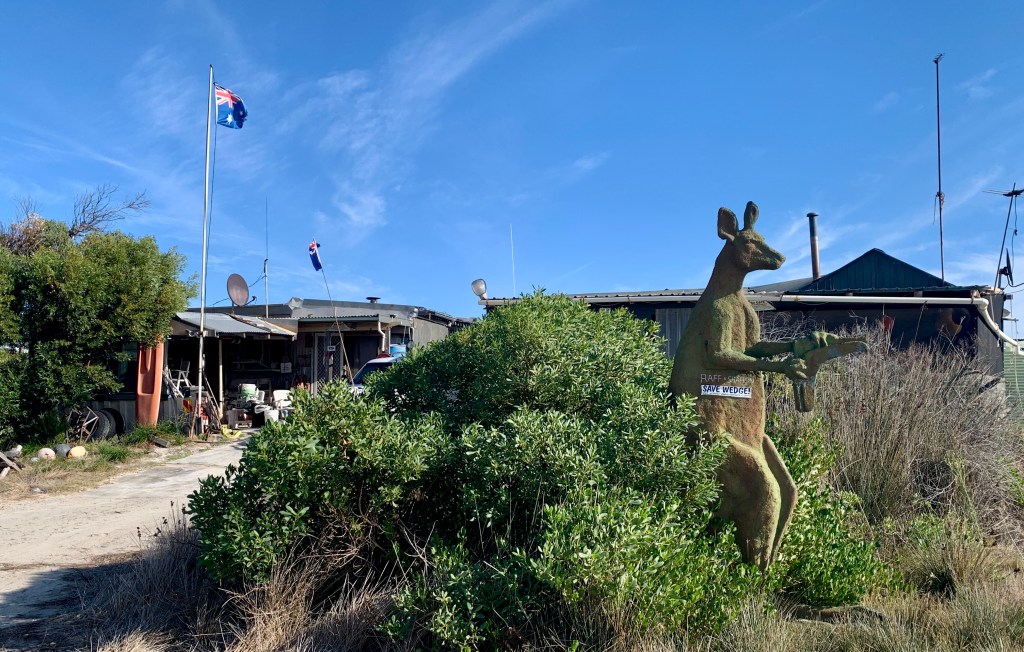
As we headed further down the highway, true to form the car was compelled to do a couple of detours on the way.  Firstly, we saw a sign for a place called Wedge Island. Asking ourselves the question, what are we going to see, wedge-tailed eagles or an interesting island in the ocean, we had no know idea at this point. A few kilometres down the road we started to see a few old shacks hidden in the bushes. As we continued there were more and more varying shapes, sizes, and conditions. There is no running water, no shops, and no electricity. There are some generators to be seen. The place looked deserted. We could see tracks to beach areas but no signs of people. It was obvious that there were residents, and a few vehicles parked among the shacks.  Reading up on this, apparently, there is up to 350 of these independent shacks or humpies scattered all through the bushy area.  It is hard to believe but during the right season up to 14,000 individuals may use these shacks for cray fishing.  Wedge is the name of the town and a small rocky island off the beach is known as Wedge Island.  You will not find one-star, let alone five-star accommodation in this town. Very interesting and intriguing place.

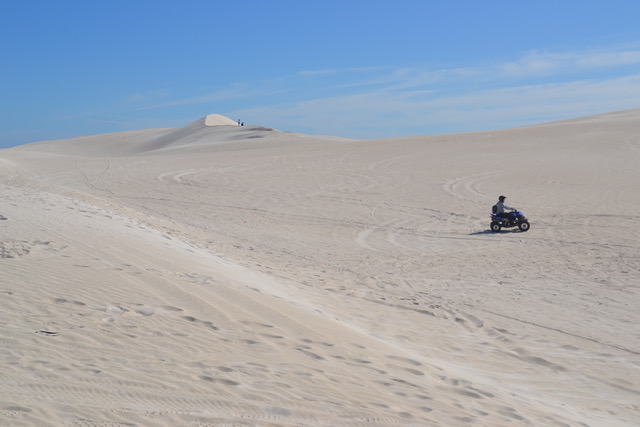
The next stop off the highway was the Lancelin sand dunes.  An absolute necessity for a 4WD is needed on these ones. You could walk all over them and had we been a bit more energetic we would have. For now, watching those on the quad bikes zoom up and down the hills and standing admiring the pristine white sand stretching for miles was enough. We used what energy we had walking up to a local lookout over the ocean. Nearby a nice little bakery satisfied us with some great pies for lunch. A note, WA make very scrumptious pies, with yummy light fluffy pastry. We endeavour to steer clear of these very frequently available bakeries.

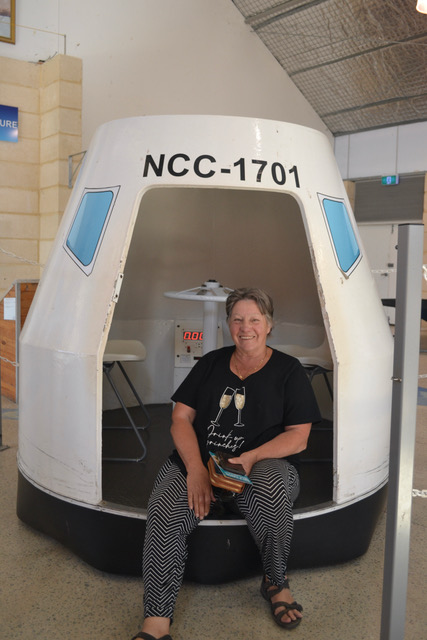
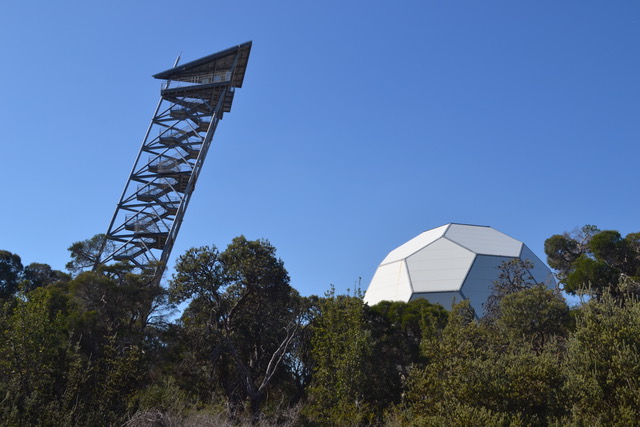
Back in the trusty Mazda once again we decided to  head inland to a small town called Hyden for a much appealing tourist attraction. First, we stopped at Gin Gin to visit the  Gravity Discovery Centre and observatory.  The advertising for this attraction is quite appealing but having now visited we would say it is better suited for educational purposes. The examples of the fundamental forces of gravity  provided, are great for hands on fun and we believe together with an overnight stay to learn about the night sky and use the observatory facilities would be worth the trip. As day tourists it is a little disappointing. Many of the displays were not functioning well and the displayed information could have been better.  We spent an hour or so there and wandered through the displays but believe there needs to be some work done to entice more people to visit. One area I think kids would love is the leaning tower, here you can recreate a 300-year-old experiment from the top of the tower. We were not enthusiastic to try it and the area surrounding it could do with some sprucing up to bring it to life. Having said that it is worth a visit.

The next leg of our drive took us through many back roads and small towns. Travelling many kilometres  via small regional towns, like Coondle and Toodyay  we found ourselves wondering where we were going. The road has little traffic, and winds endlessly through state forests, hills, and valleys with little river crossings.  It feels like you are miles from anywhere but in fact only a couple of hours  from Perth.  The countryside is pretty and reminded us of NSW. We were originally heading for Northam and then onto Hyden however after discussion we decided we would change our plans again and head back to Perth after visiting York.

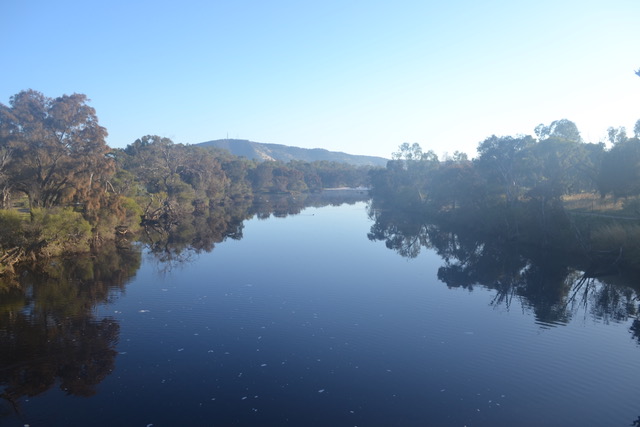
York is the oldest inland town in WA, situated on the Avon River. There were several attractions, so we started looking for a free camp to settle for the night.  It was not as easy as expected and late in the afternoon we settled on a RV site in the middle of town hoping  a quiet sleepy town would afford us a good night’s sleep. It was a pretty sight just near the Avon River. A much-needed trip to the IGA and a little drive around the quaint little town finished our day.

 Alas the sleep could have been better as we did not consider the workers leaving in the early hours of the morning crossing the local road bridge nearby.

It was the 1st of May, the actual date of my birth so a prompt decision to have a nice leisurely breakfast in town to celebrate made us scurry to pack up. My thoughts were of eggs Benedict and hot brewed coffee, I would soon be enjoying.  You must admit Weetabix and fruit can get a bit boring after a while.

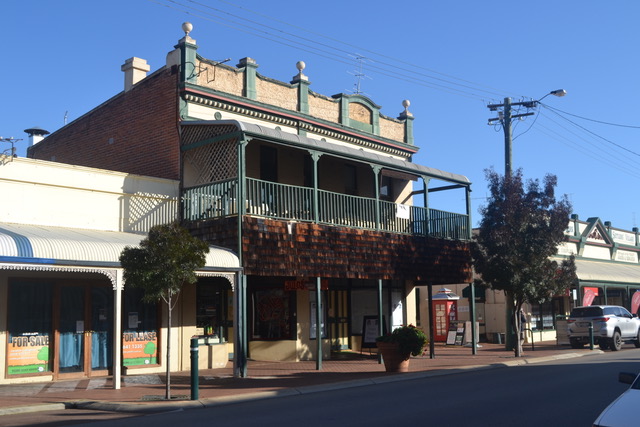
We drove straight to town, had a look around the nearby  park and started a walk around some of the heritage buildings. After a leisurely stroll down the main road, I discovered my mobile phone was missing and had convinced myself I had left it in the public toilet back in the park. I was still very stuffed up with the cold and struggling with a tight chest but could not imagine surviving without my phone. We hurriedly turned back to the park to find my phone. Breathing heavily, I checked our car first and thankfully a sigh of relief as I found it sitting on the seat.  My much-needed breakfast was foremost in my thoughts, so we trotted off to find the nearest café. To our absolute dismay we were confronted with one coffee shop with preheated toasted sandwiches and no atmosphere at all. We removed ourselves quickly and wandered down the main road trying to satisfy our needs. There was nothing and so my lovely birthday breakfast was not experienced that day.  We had a takeaway coffee and decided to wait for the next town. We had a couple of small sites to see, some photographing of more heritage buildings and we were on our way again.

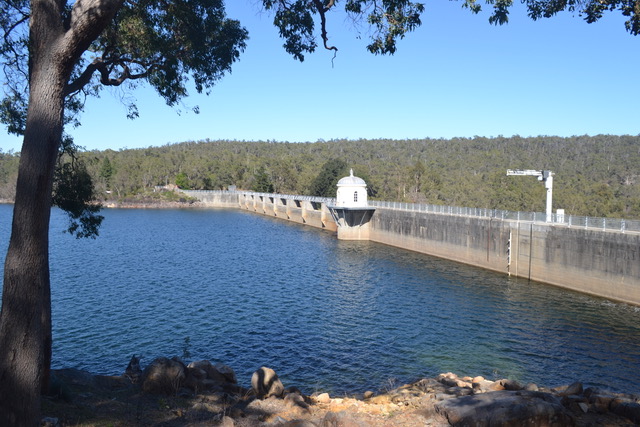
Our new destination being Perth we headed back along the Great Southern Highway where we found ourselves driving through the Mundaring State Forest. We came across the Mundaring Weir, apparently one of the world’s greatest engineering projects. It was finished in 1903 as the start of the water pipeline which pumped water 700 kilometres away to the goldfields of Kalgoorlie. The area surrounding is ideal for picnics, , canoeing, swimming  and many walks. It was midmorning on a sunny day so ideal to walk across the dam wall to look out onto the heritage museum down below and then stare out at the  bright blue water surrounded by the deep green of the bush hugging the waters edge on either side.  We spent an hour or so just enjoying the pleasant surroundings and the peacefulness of the entire area. It was a nice surprise for the day.

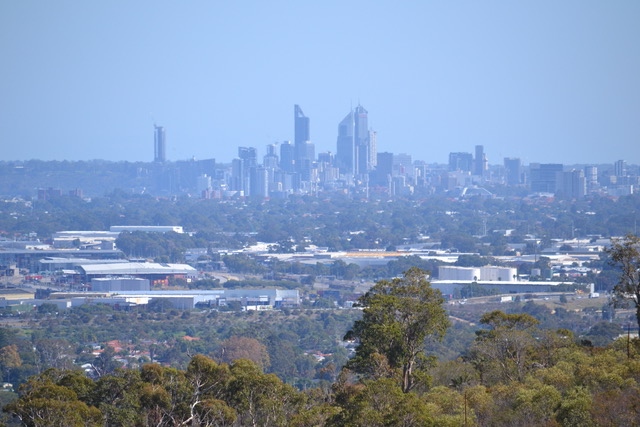
We headed down the highway for the Lesmurdie falls which I expected to be the highlight of the day. Unfortunately, the falls were not falling, and the walk was steep and hot so not exactly what we were looking forward to. The national park was however surrounded by some beautiful expensive looking homes with great views toward the city of Perth.  Accommodation was our next venture which again proved harder than expected. We were looking for a caravan park reasonably close to Perth at a acceptable price that was not booked out. Again, everything was heavily booked. Increasingly this was the case even though it was not holiday period. This caused me to ask the question why. A receptionist at one of the parks informed us that many people were living permanently in the caravan parks due to the rising expenses and lack of available properties. This made sense and made us realise we would have to be more organised over the next few weeks of travel.  Eventually we found our spot at a place called Coogee “ pronounced Coo G”  outside of Fremantle.  One advantage of the caravan parks where there is a heavy permanent residence is that they are very clean and very quiet.  We settled into this one  for a few days.  That night we went to a restaurant for a relaxing birthday dinner. After trying a couple of places which were unsatisfactory, we settled on a restaurant and enjoyed a couple of wines with our very tasty meal. 

                                    .
. We had been travelling for 4 weeks now and loving every minute of it. The majority of these photo’s have been taken by Ken with his D3100 Camera. He has a great eye and captures the essence of every place we go to. I do take photo’s with my trusty Iphone XR, but I tend to like quirky scenes which I will post in a separate blog.

The next day we were going to explore Perth CBD, Fremantle and then move along the coast to Esperance. See part 4 for our continued escapades.

Thanks for reading once again. Leave a comment and give it a thumbs up.
South America Part 3-Peru

South America Part 3.-Peru

  • This is the third largest country in South America
  • Population nearly 27million.
  • Language-Spanish, Quechua, Aymara and various dialects of the Amazon Jungle
  • Three natural regions :- The coast, the highlands and the jungle.

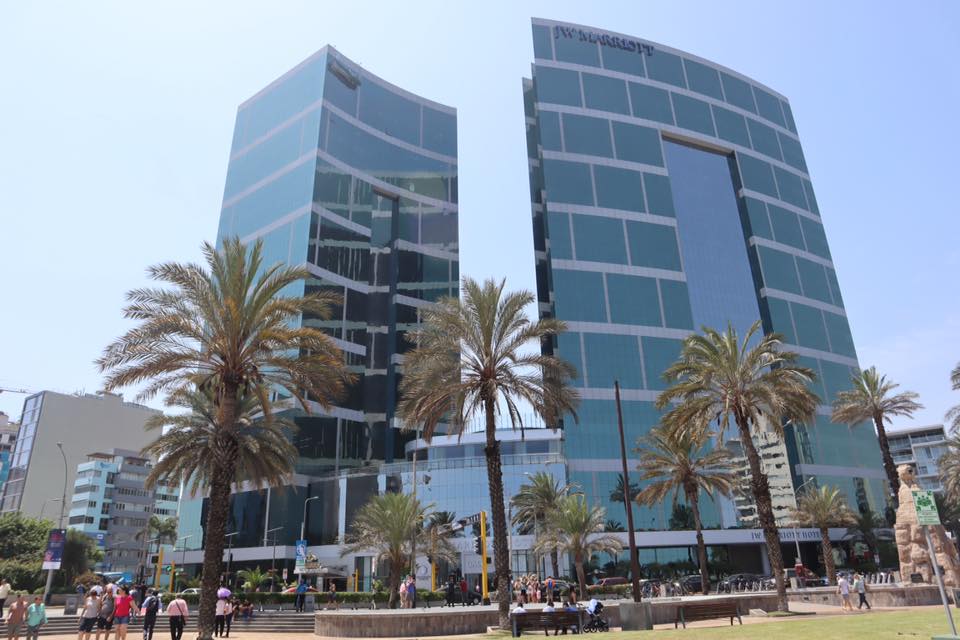
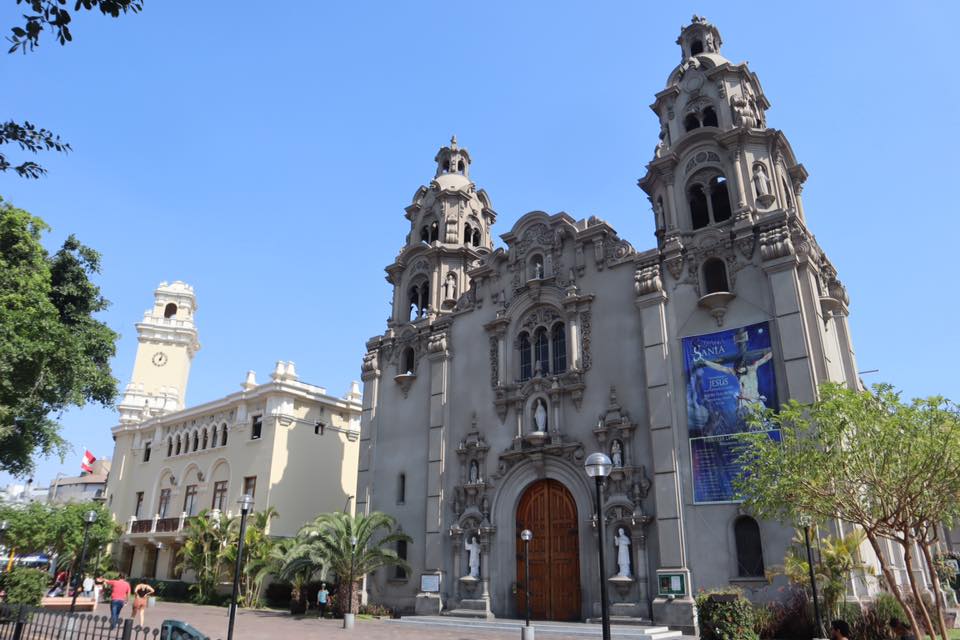
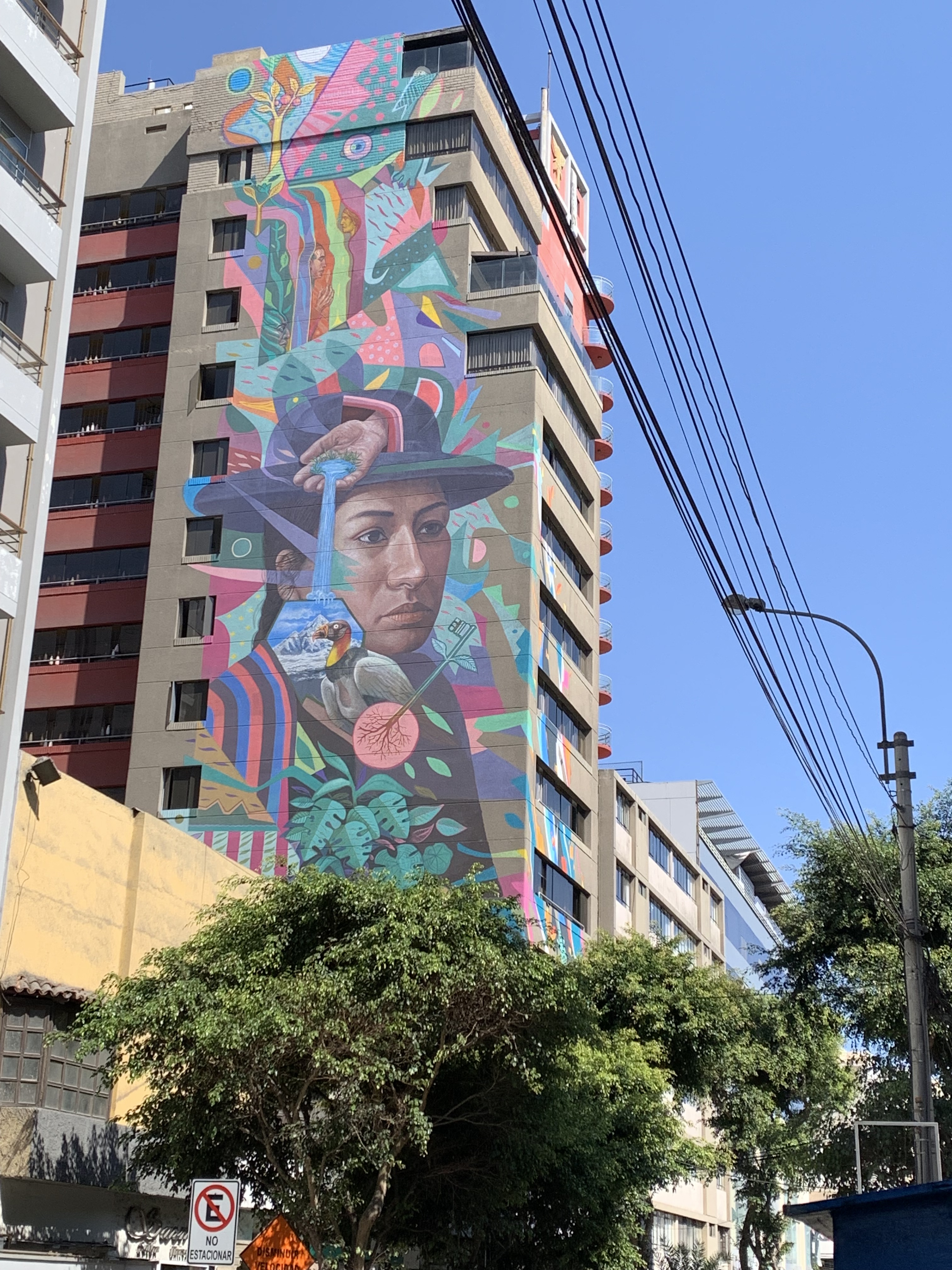
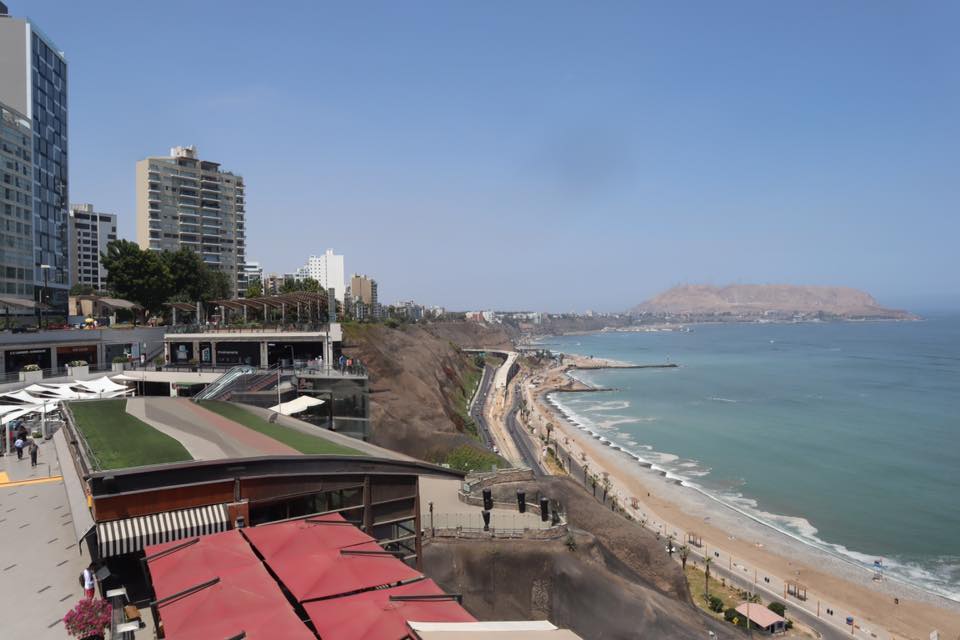
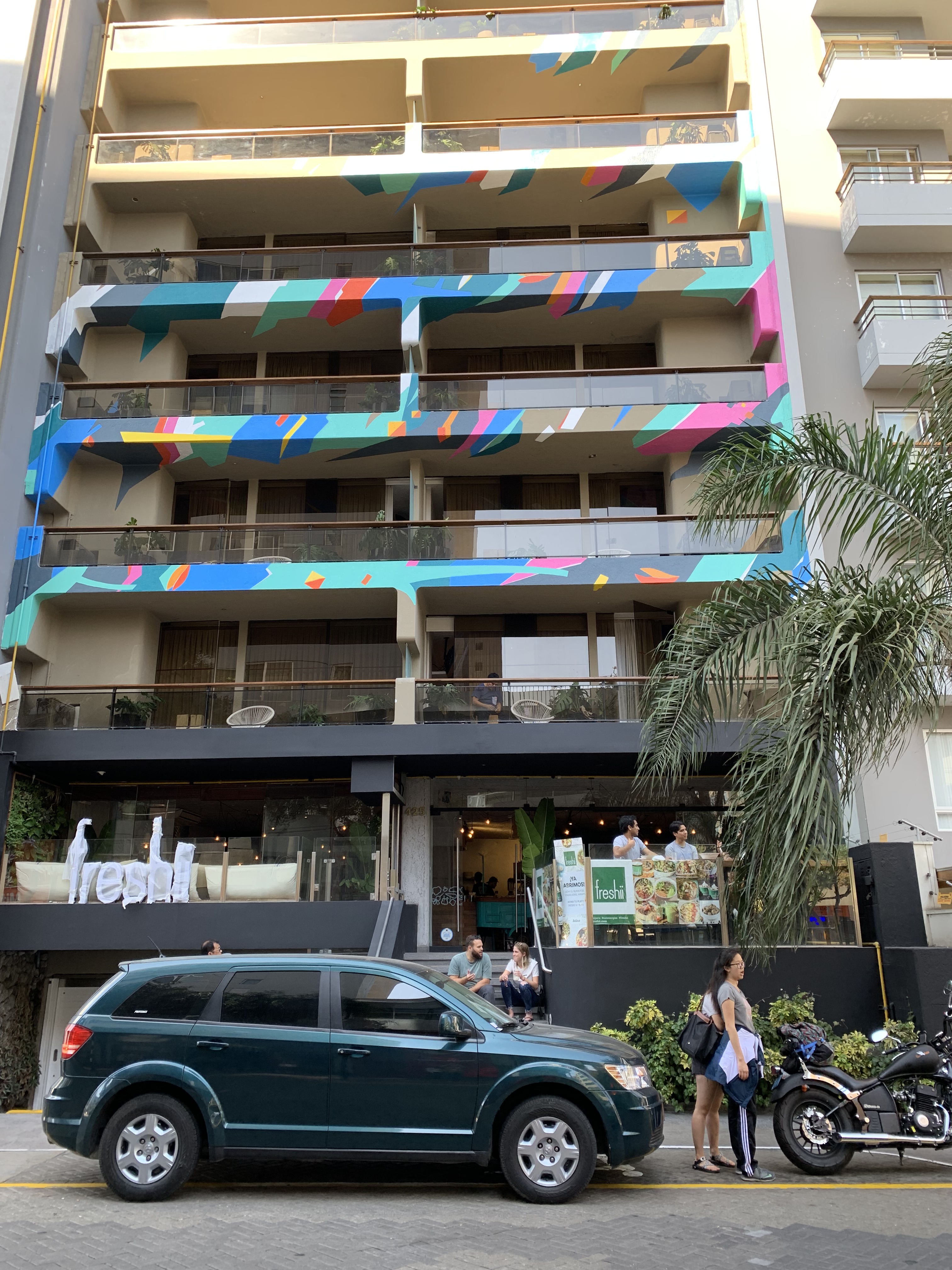
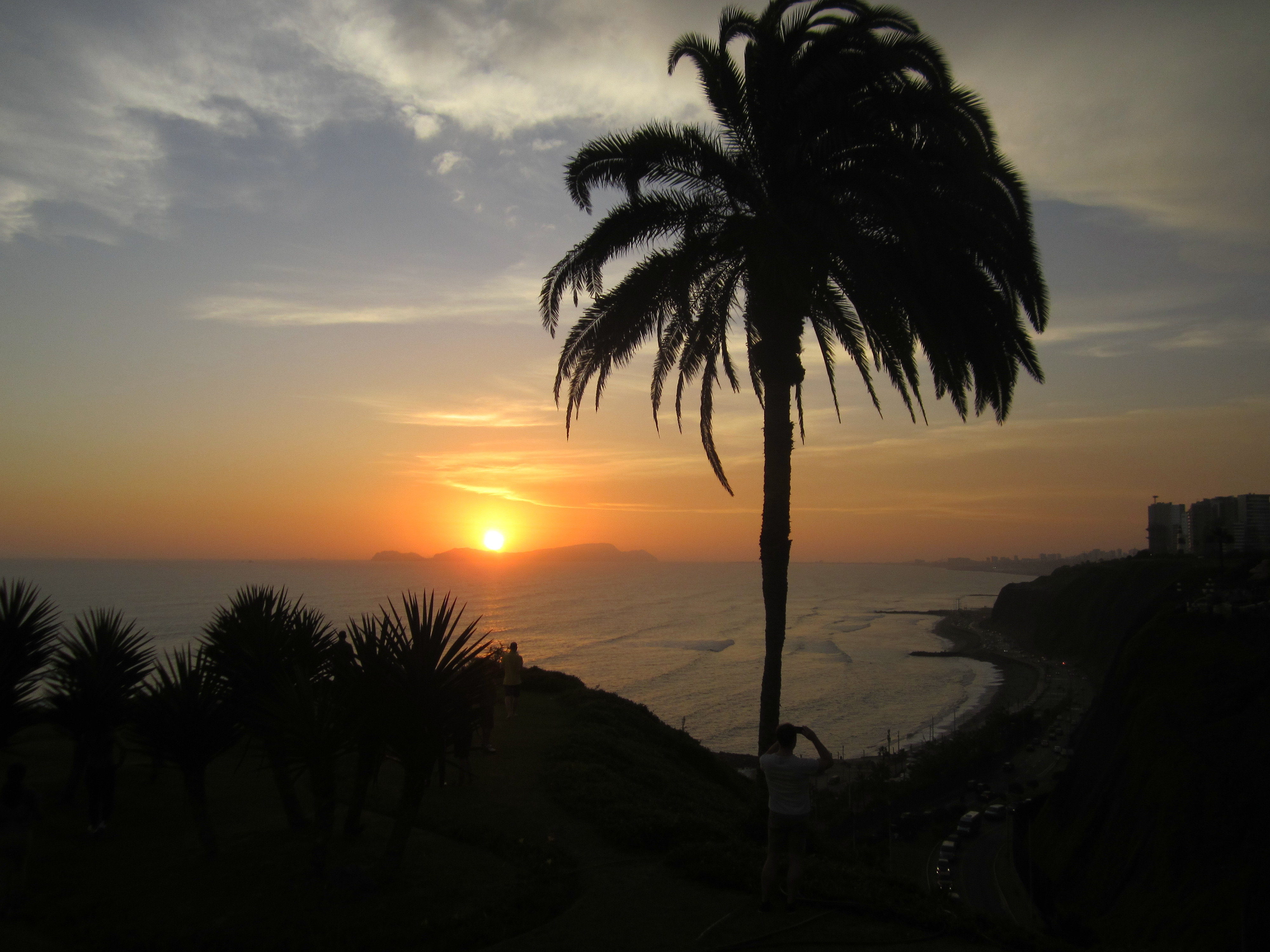
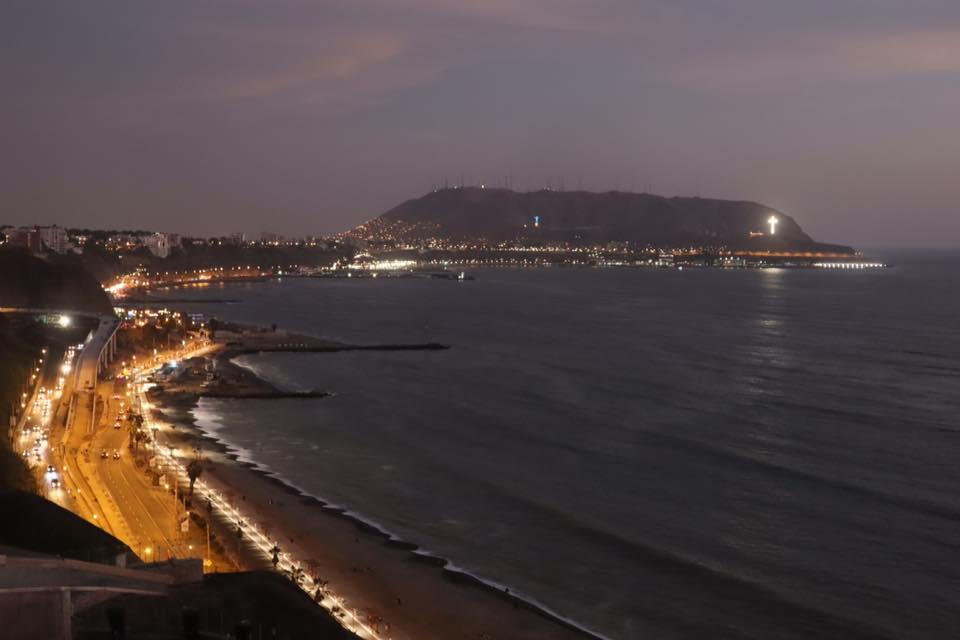
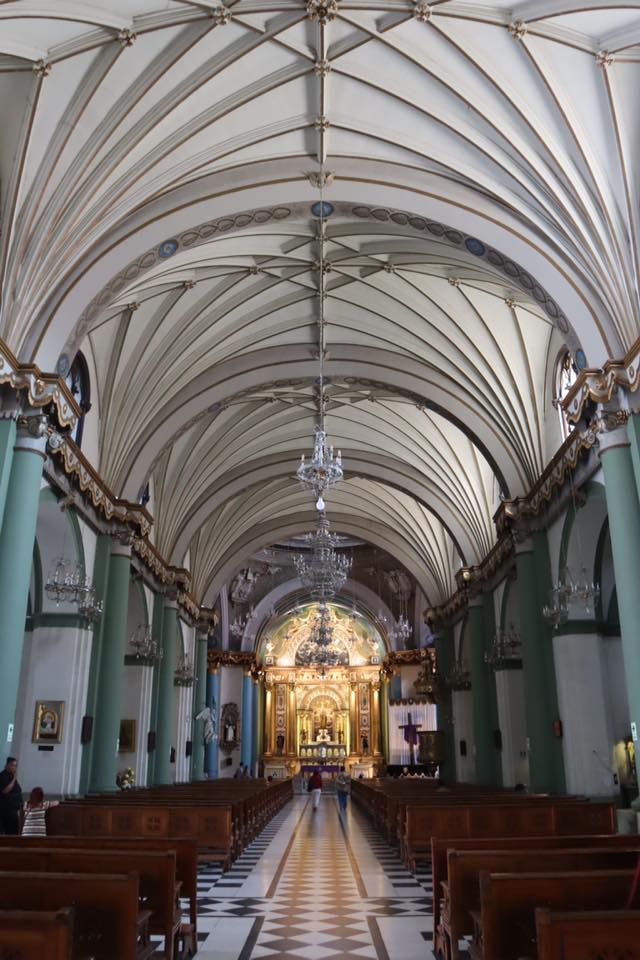
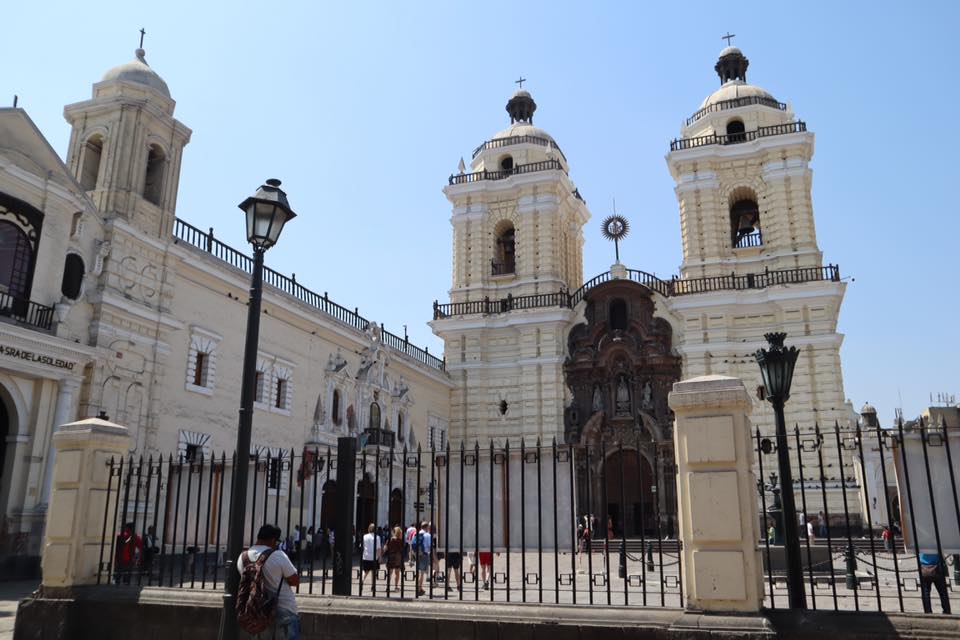
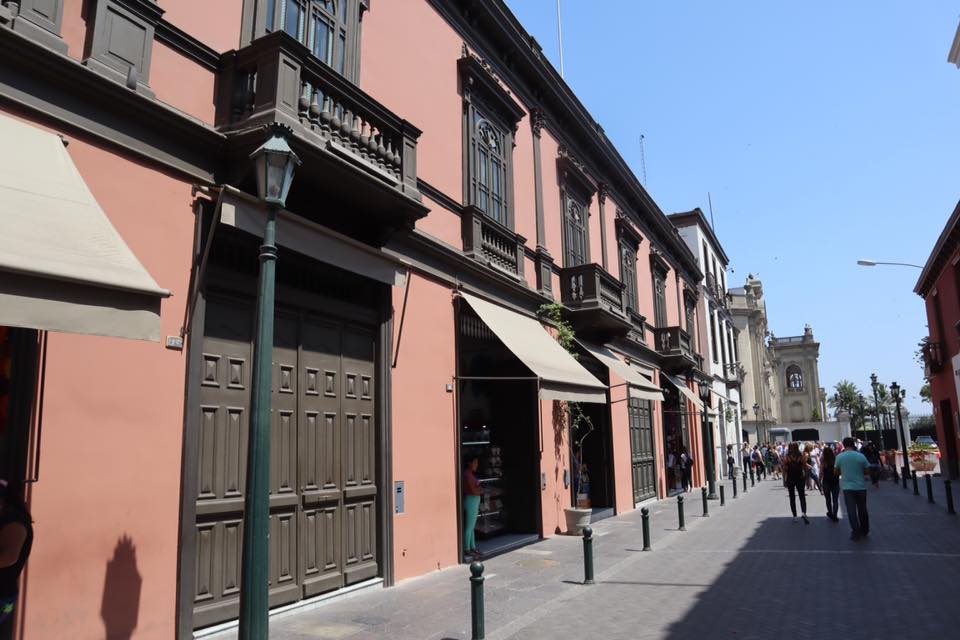
Another flight and we find ourselves in Guayaquil airport where we are staying close by at the Holiday Inn.  An early flight the next morning took us to Lima, the capital of Peru. Founded by the great conquistador Francisco Pizarro in 1535. Our hotel was in Miraflores, 30mins drive from the airport. Most of the drive is along the ocean front. A beautiful introduction to one of the more affluent districts that make up the city of Lima. It is a town known for its shopping, restaurants, and nightclubs and popular with the tourists. That afternoon we wandered from our hotel down to the Parque Del Amor, on the water’s edge. Checked out the shopping, the fantastic views over the water, beautiful parklands and watched a picturesque sunset. The next morning, we were up early for a tour of the city of Lima which proved very interesting. The first main attraction was the San Francisco Monastery. A glorious Barrroque building known for its boned-lined catacombs( containing an estimated 70,000 remains). A spectacular cupola or dome over the main staircase was carved in 1625 out of Nicaraguan Cedar.  After visiting the main square Plaza Mayor, Government Palace, and many more major sites of Lima we headed down to the Huaca Pucilano, the adobe pyramid that was ancient Lima’s ceremonial heart. This is a most fascinating place to see and with a very informative guide, we learnt the history of this massive  excavation site. A more detailed account can be found on the website http://huacapucllanamiraflores.pe/huaca-pucllana-hoy/   This site was amazing to walk through and to be able see the massive works being meticulously completed to their original status.

The afternoon was free time, so we tackled the huge local markets, wandered through Spanish style buildings and colourful streets, and then investigated a local art gallery. With tired feet we headed back to our hotel for a fine dining treat after which we fell into bed exhausted.  

The next morning, we are picked up for our flights to Cusco and then driven to our Sacred Valley of the Incas (8500feet elevation) accommodation. The river valley is very fertile with lush green slopes surrounded by mountains in the distance. Our hotel was very pretty  and as rest was recommended at this stage, to allow our body to adjust to the altitude, we had no problem taking it easy and enjoying some much-needed quiet time.

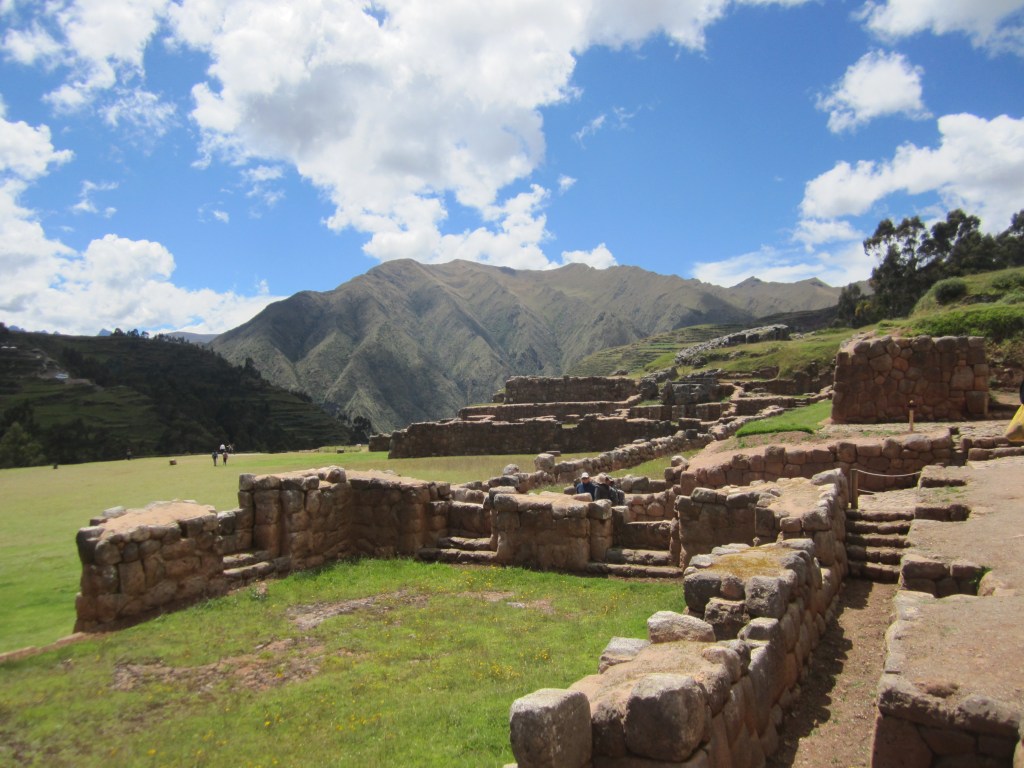
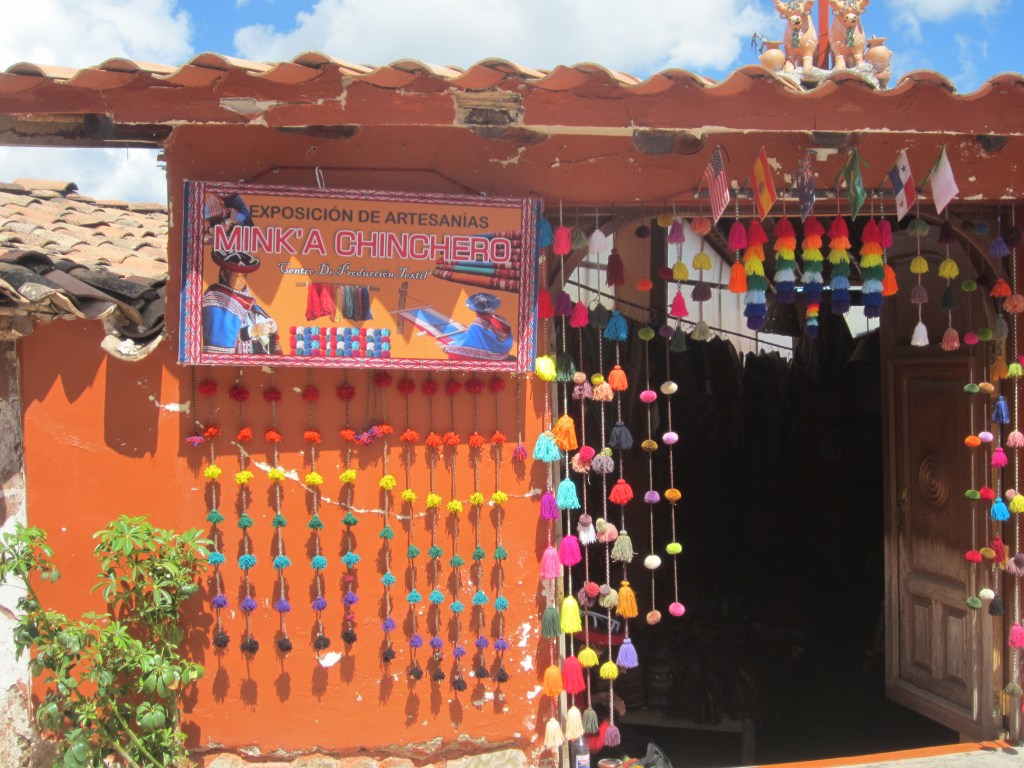
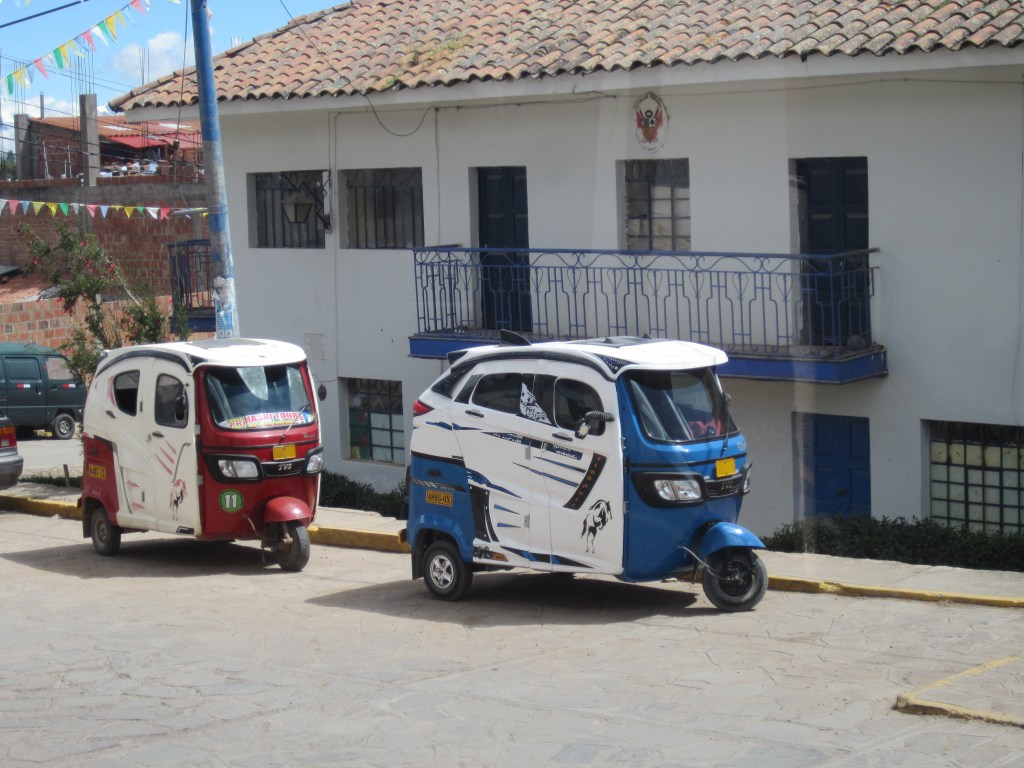
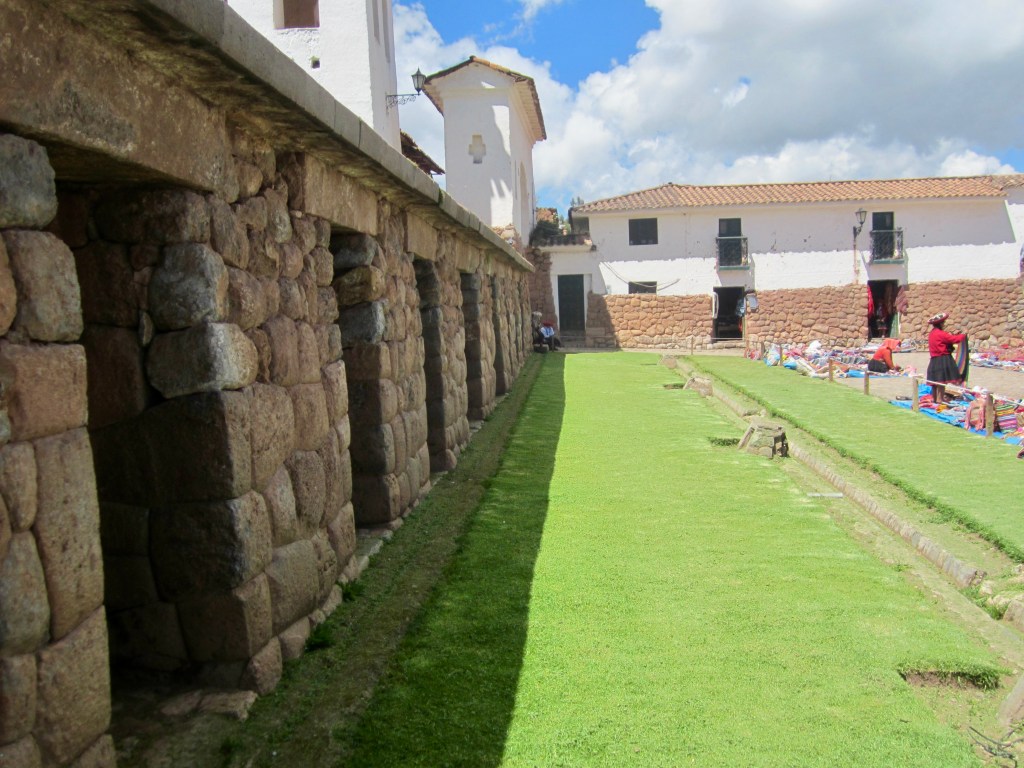
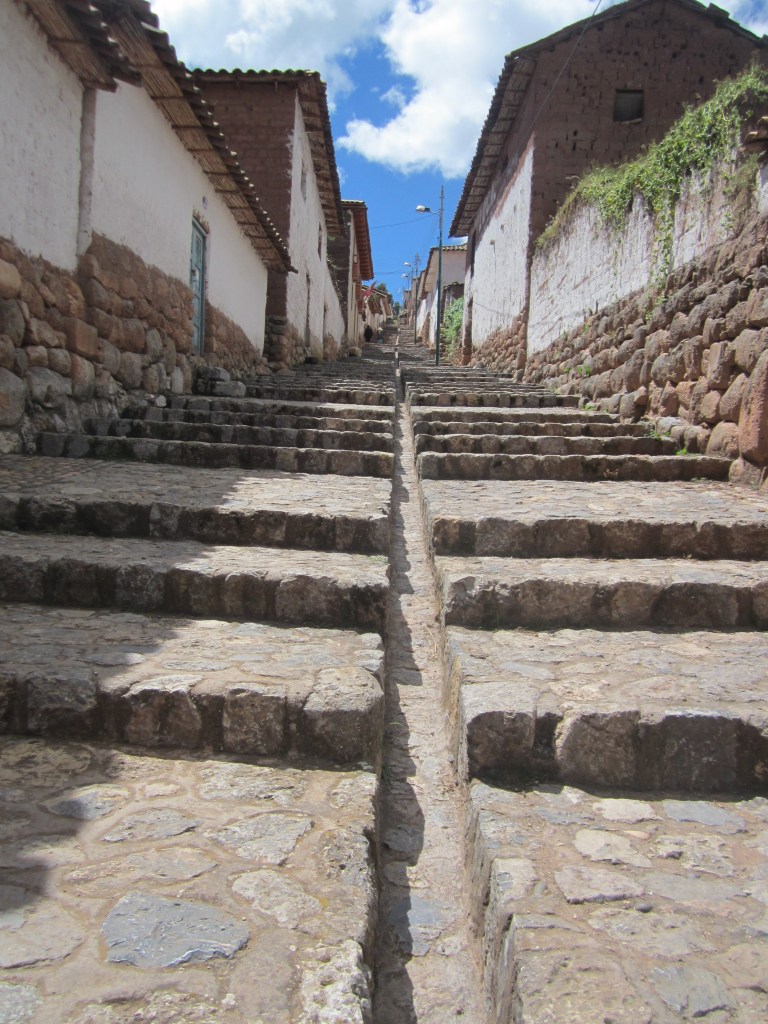
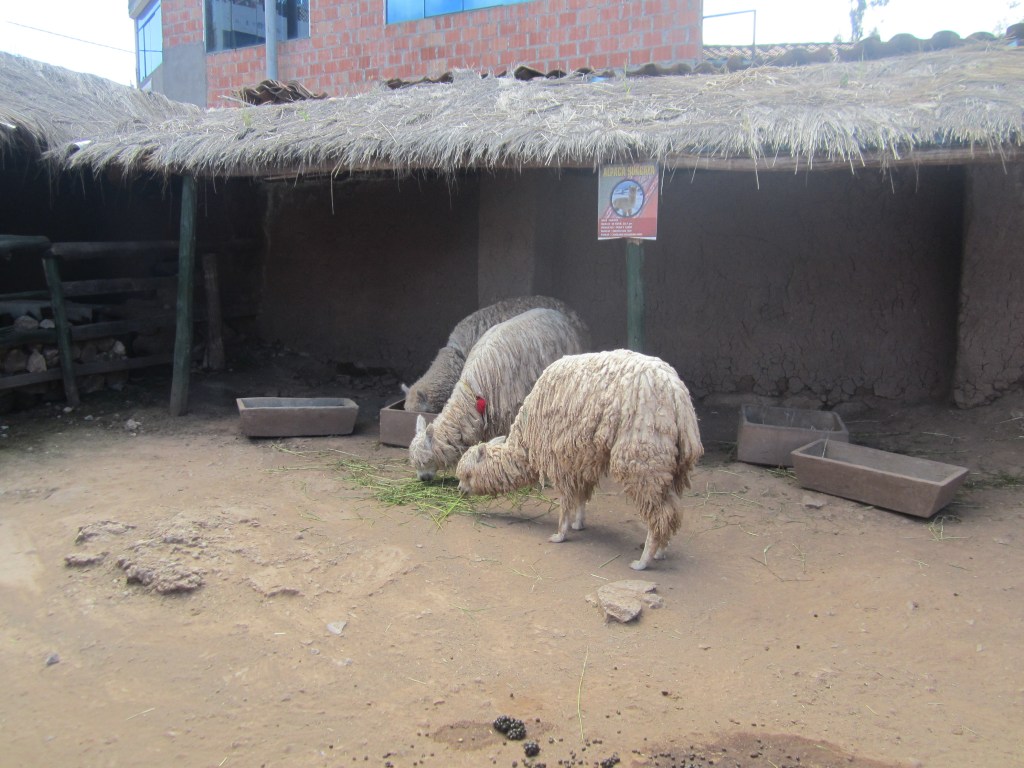
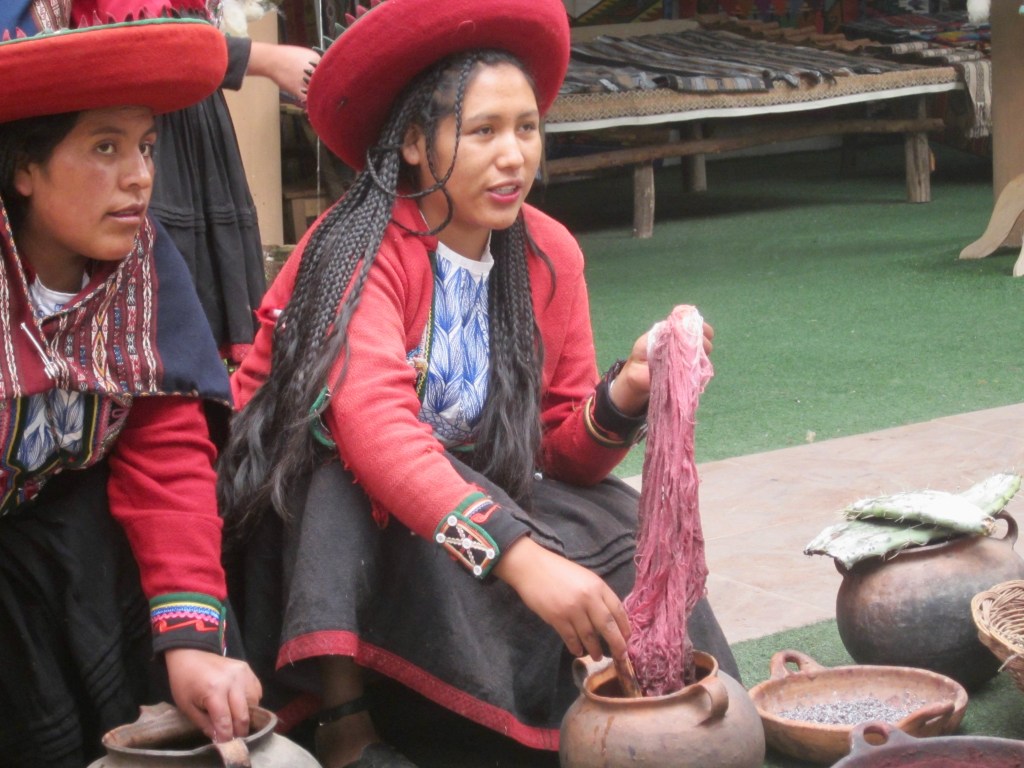
The following morning, we headed out with our guide to visit the people of Chinchero and visit the Inca’s Balcony. We were treated to a tour of the streets,  introduced to occupants in traditional dress and shown the ancestral way in which they process the wool and how they obtain the vivid colours used in their textiles. Chinchero is an ancient town and a wonderful place where you can still feel and see the Inca culture as it was in the past. The streets are tiny, the people are beautiful, and the way of life is simple. I was fascinated by the cute three wheeled vehicles known as Moto Taxi’s  Of course, there were markets to wander through, souvenirs to buy and many stairs to climb. A glorious ancient church to investigate and time to watch the various breeds of Lama’s grazing.

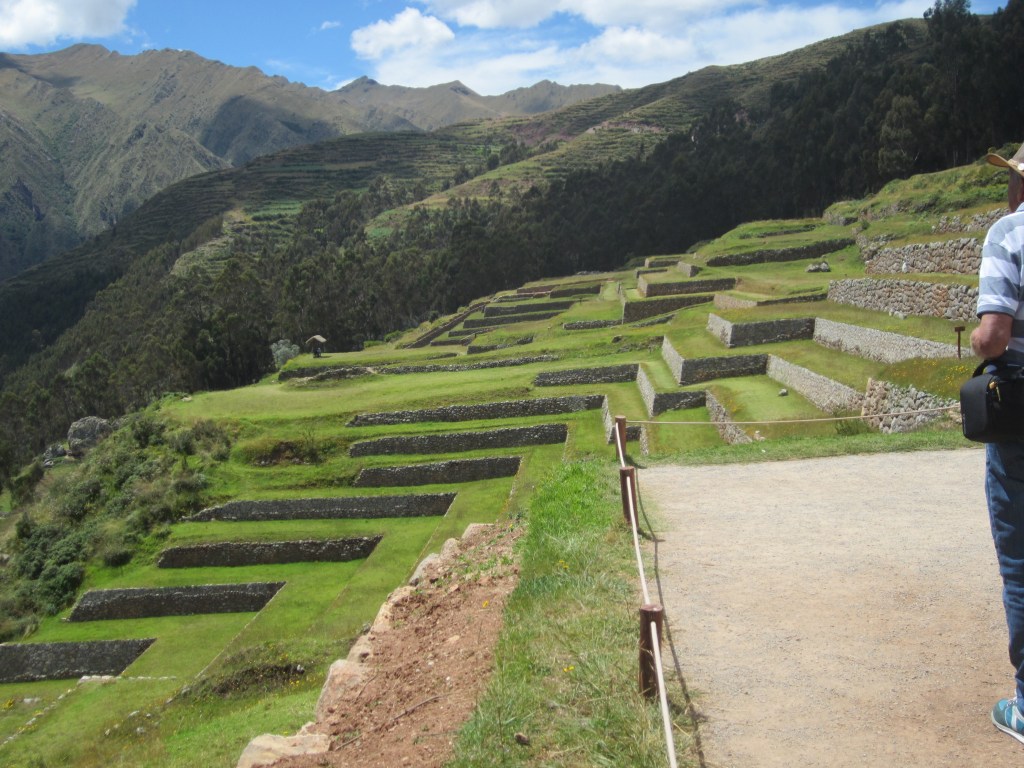
A light lunch and back on board our bus to visit Ollantaytambo, one of the most monumental architectural complexes of ancient Inca Empire. It is well known for the terraces dug into the slopes of the mountains. The terraces were used for agricultural purposes. The terraces are quite large and high. Unfortunately, I did struggle to reach the top as the altitude and the sheer height was a little too much. I ventured maybe 3/4 of the way and promptly sat myself down and waited for Ken to return. I feared, if I was struggling with this, would I make it to the top of Machu Pichu. I would soon find out. For now back to our hotel to pack for our trip to Machu Pichu the next day.

Inca Balcony’s
Inca Balcony”s
Moto Taxi’s
Streets of Chinchero
One of the many variety of Llama
Traditional Dying of Textiles

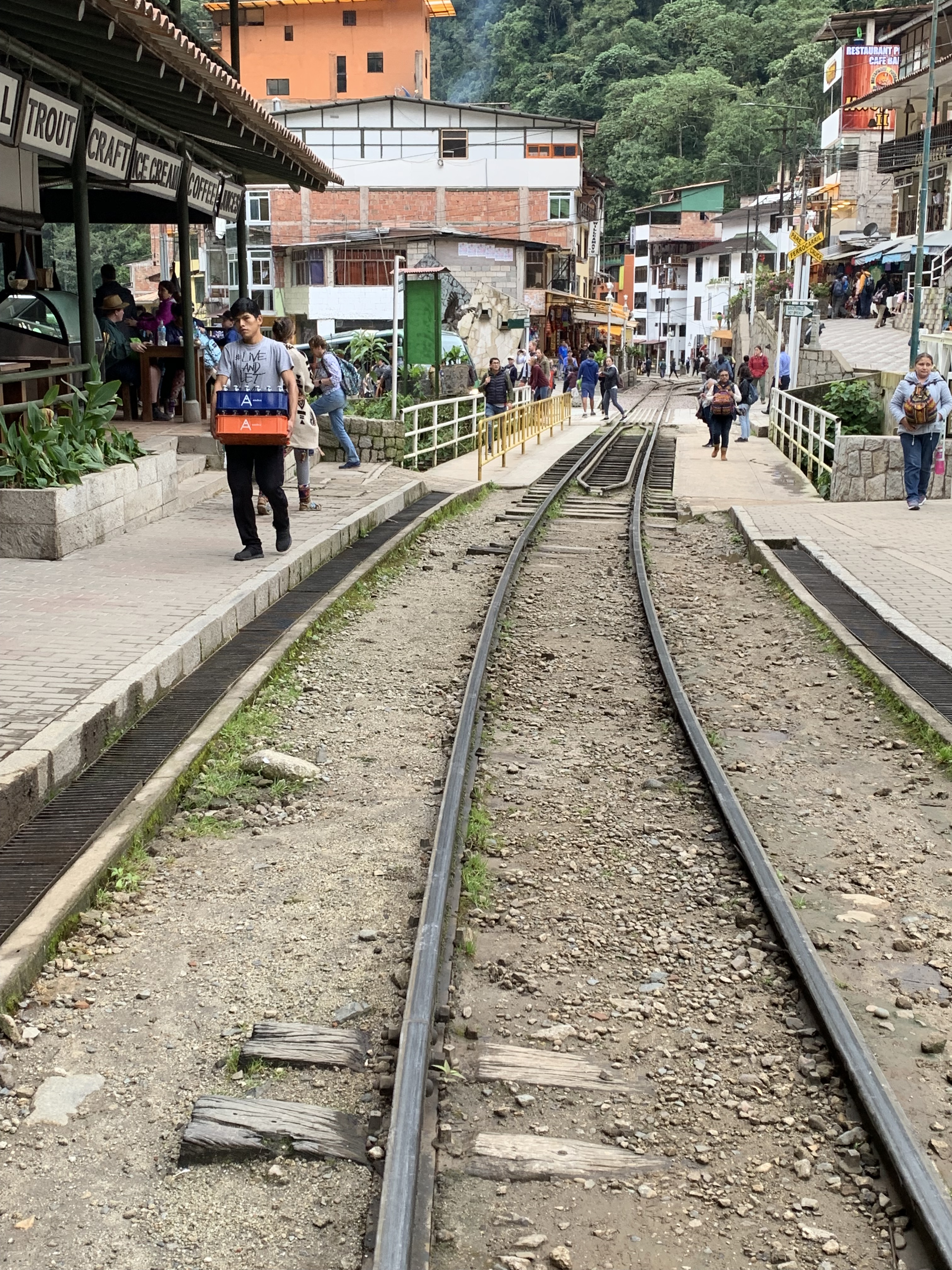
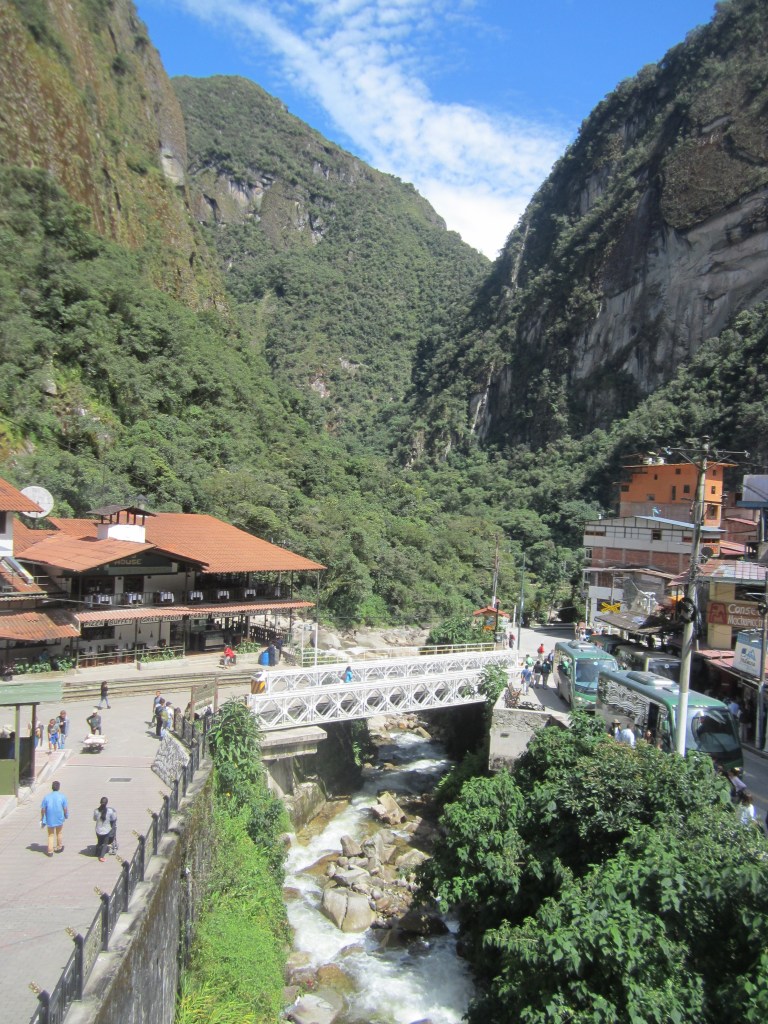
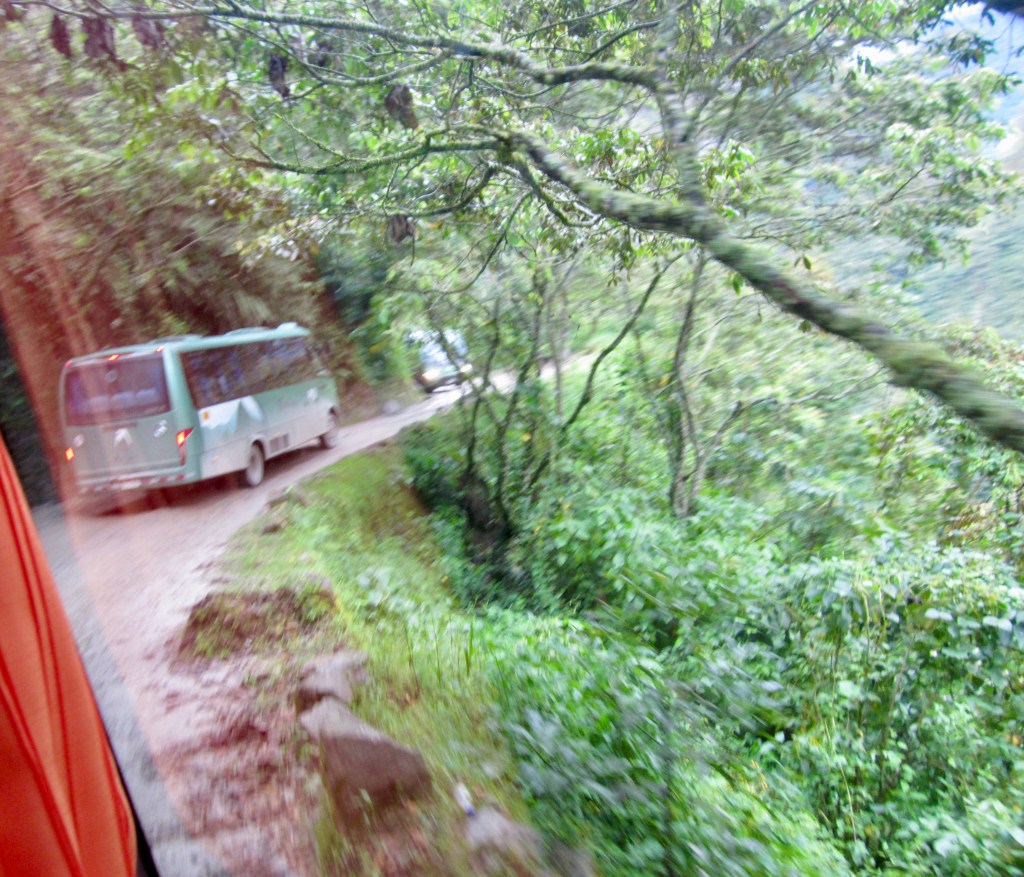
Ollantaytambo station is where we board the Vistadome train to take us to Aguas Calientas. The trip is about 1.5 hours in a carriage with panoramic windows to view valleys and mountains throughout the whole trip. Morning refreshments and a commentary keep you entertained. When reaching our destination we are shown to our hotel with a couple of hours to investigate our surrounds. At 12.30 we had to board our bus for Machu Pichhu. We lined up with many other travellers to board the bus for the half hour trip to the mountain top. We headed out of town and started up the mountain drive. The road was quite narrow with no guard rails. On one side, in many places it was a sheer drop to the valley floor, and on the other the looming face of the mountain was close. Taking the bends was a skill known only to our driver and passing other buses on their way down the mountain was a huge challenge. My knuckles were white from clenching the top of the seat in front the whole way. Finally reaching the top safely we alighted with the many other people waiting in line to buy tickets etc. On a booked tour we were lucky enough to get entry quickly.

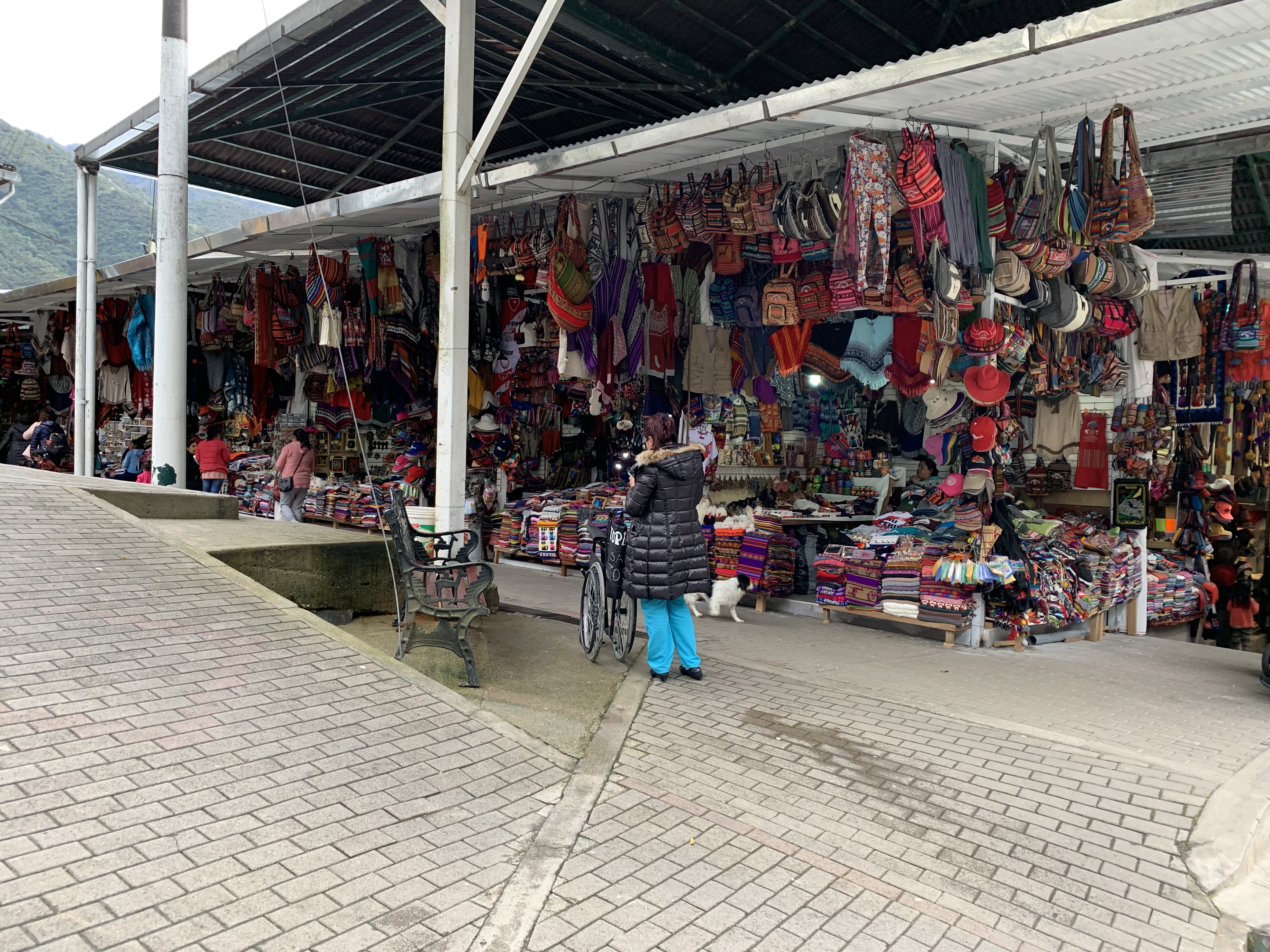
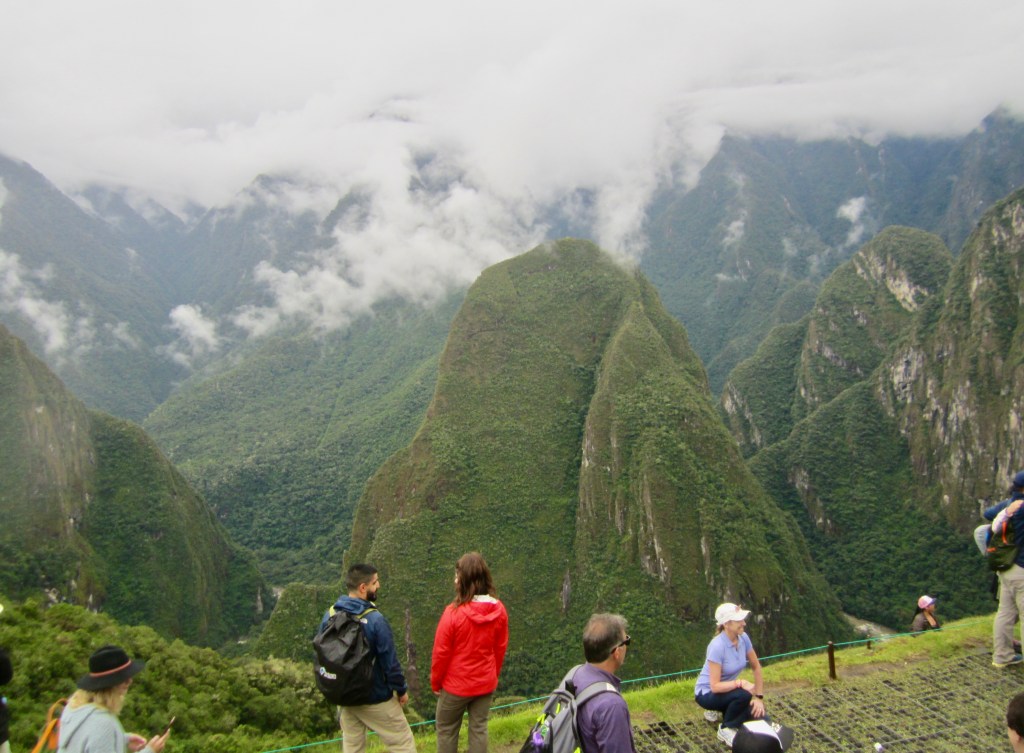
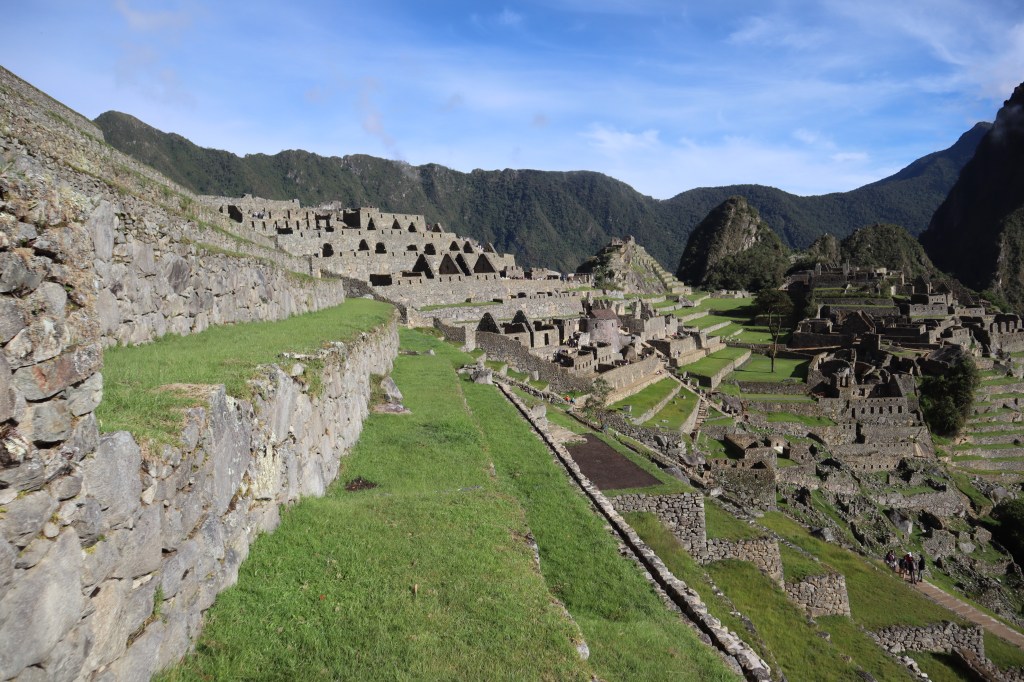
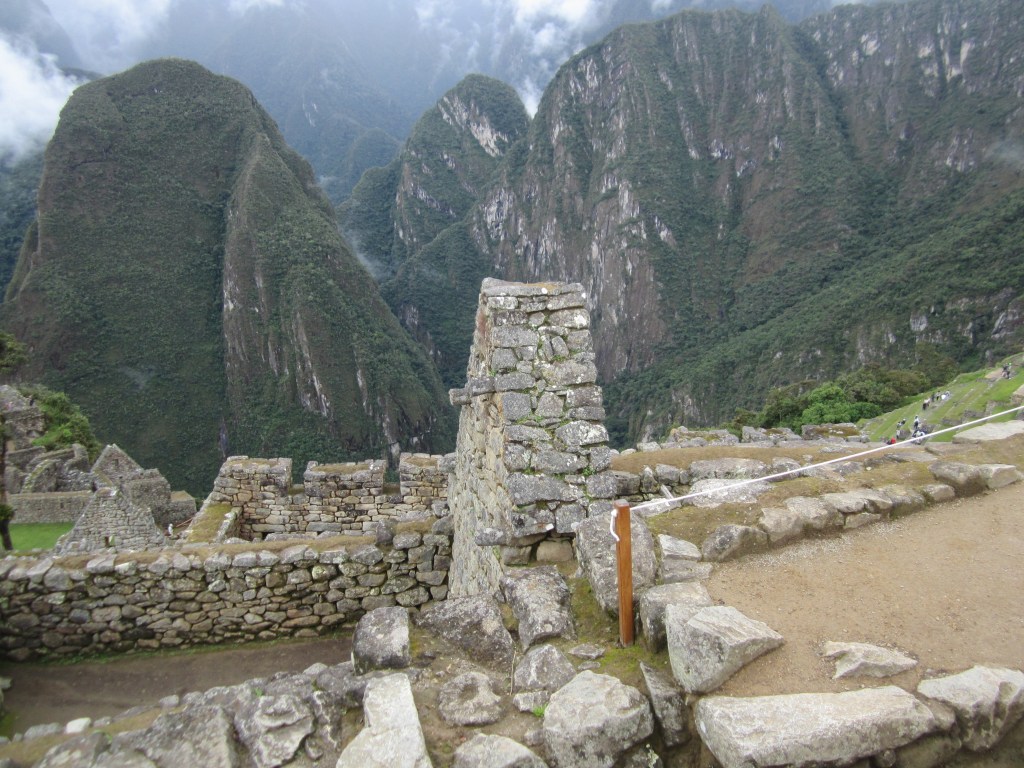
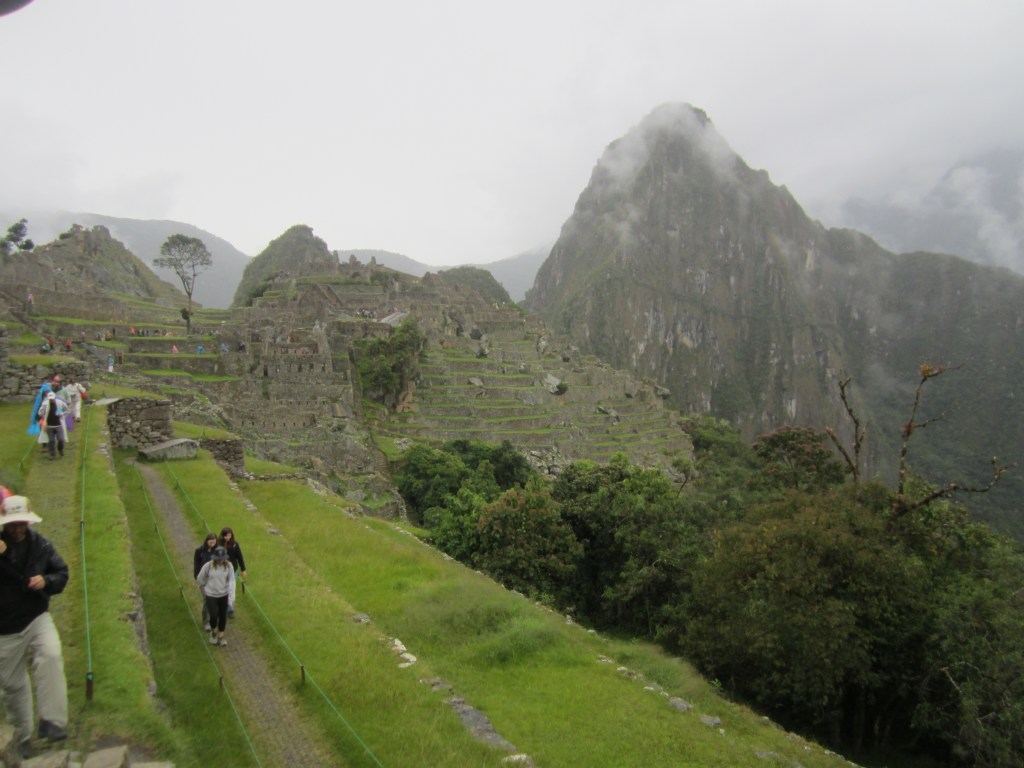
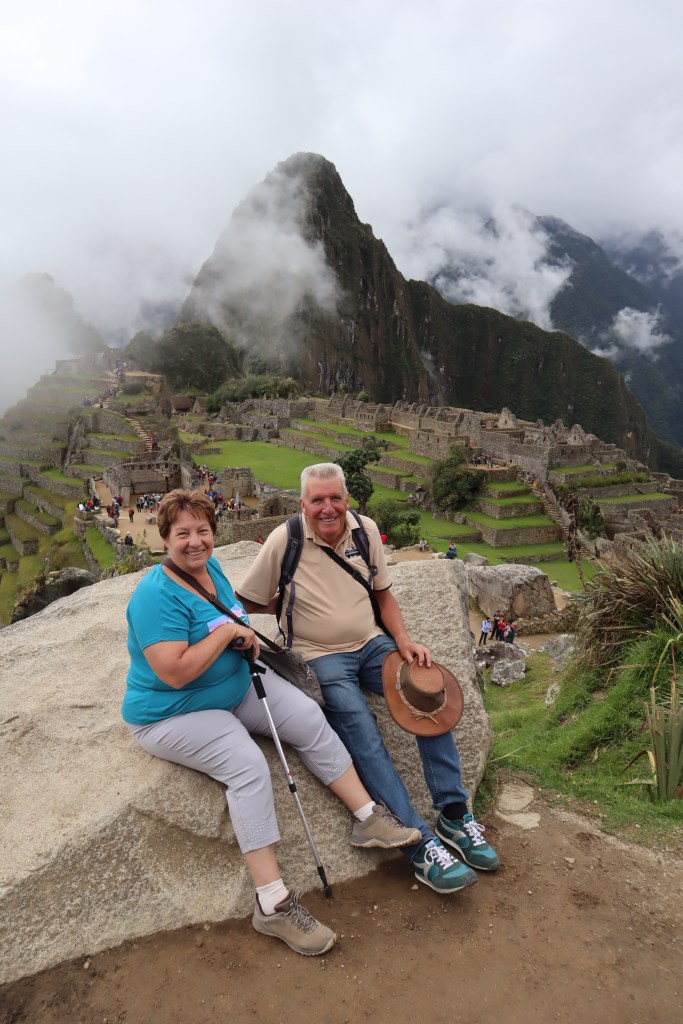
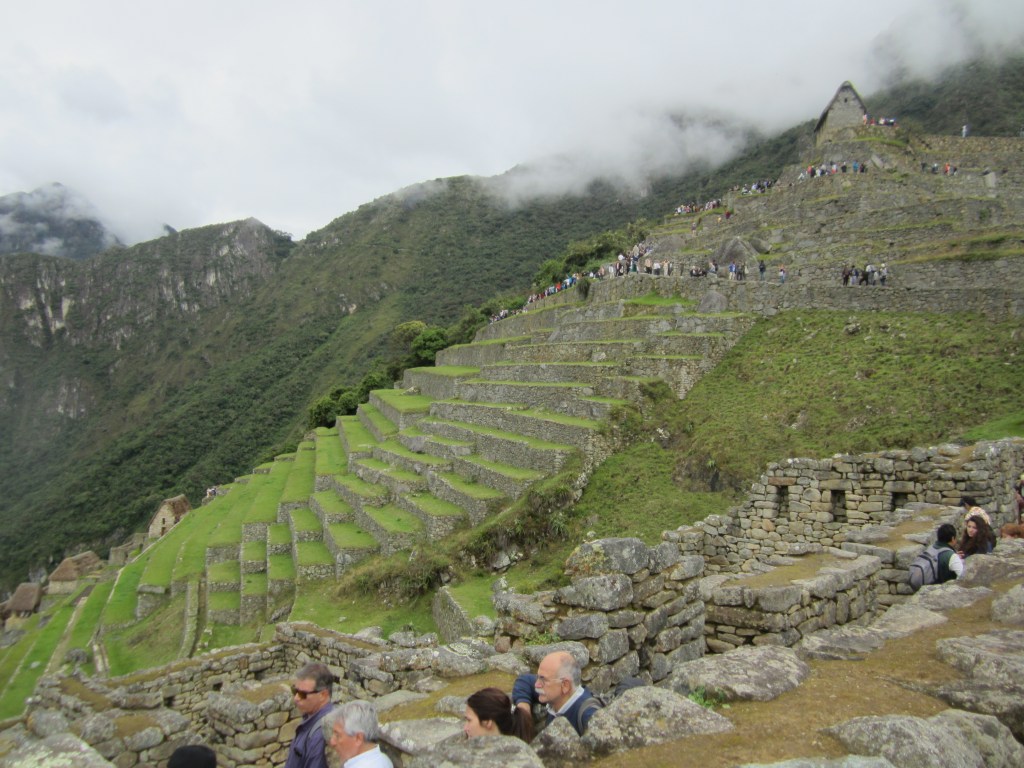
We had seen the pictures, heard of its grandeur from others but until you are there, you cannot really appreciate its beauty. Machu Picchu is a very special place. It was misty when we arrived which added to its mystique. A guided tour helped us to understand the lives of the priests and their servants and craftsmen who inhabited this citadel. The mystery of the destruction of this settlement remains today as there was no written records kept. Some excavation has discovered skeletons, artefacts and some woollen clothing. Machu Picchu is an Inca citadel set high in the Andes Mountains. Above the Urubamba River valley one feels like they are above the world. Even though surrounded by crowds of people the isolation of the settlement could still be experienced. Built in the 15th century it is renowned for its sophisticated dry-stone walls that fuse huge blocks without the use of mortar. The stonework was intricate and precise. The intriguing structure of buildings that play on astronomical alignments and panoramic views. It is not a place you can describe fully. Photo’s do not do it justice. There is a feeling experienced here that is unique.The scenery is stunning even in misty rain. The trip to get to this place is massive and the intrigue of how anyone ever lived here is mind blowing. We wandered the many tiers and walked the many levels. Our bodies were exhausted and our minds full of wonderment. Another hairy drive back down the mountain, a wander through the streets ending with dinner. Collapsed into our bed that night we slept well satisfied with what we had experienced. The next day started with blue sky and sunshine. Our tickets allowed us a further visit the next morning so Ken chose to head back up the mountain for more photographing. I decided to investigate the town a little more so headed out to discover some history, beautiful architecture, massive markets and the school and shops which the locals call home. I must say they are a very hardworking community with the town being built on the side of the mountain. All deliveries of building materials including bricks for housing, food, supplies of all types are delivered up and down the mountain on hand drawn trolleys and carts. I struggled pulling myself up. Their tenacity is remarkable. The next day we headed back to the station for our very entertaining train trip back enjoying a fashion show of authentic alpaca apparel. Most interesting experience. Overall this last few days were an incredible and unforgettable journey.
I hoped you enjoyed this post. The next leg of our trip part 4 is Cusco, Iguassu Falls in Brazil and Argentina. The final chapter – part 5 will cover Atacama Desert and a visit to Easter Island.

Please feel free to comment if you wish. If you have been to these places I hope you enjoyed them as much as we did.

New Adventures in Australia-2023

With covid monopolising the last 2 years we have decided to do what many others have. Discover Australia rather than travel abroad..

As you would have read in my previous travel blogs there is usually an eclipse happening at some time during our travels.Our next big trip will be no different. Exmouth in Western Australia will experience a Hybrid Solar Eclipse on the 20th April 2023. A good excuse for us to discover the beauties of the western coast of Australia.

Our first discussion were how would do this, Car, Boat, Airplane or Train or a combination. All options were available but we knew in 6 months time the options would reduce as places book out. It is expected that thousands will make their way to this tiny peninsular to see the spectacle that is an eclipse. Add to that a picturesque place and the school holidays and you have an accommodation problem.

As we want to see as much of Australia as we can, our decision was to drive ourselves. Now, do we use our car, hire a car or a motorhome. Weighing up the costs for each method the answer became clear to us. We decided to purchase a camper trailer with the idea of being able to sell it when we had enough of driving ourselves around.

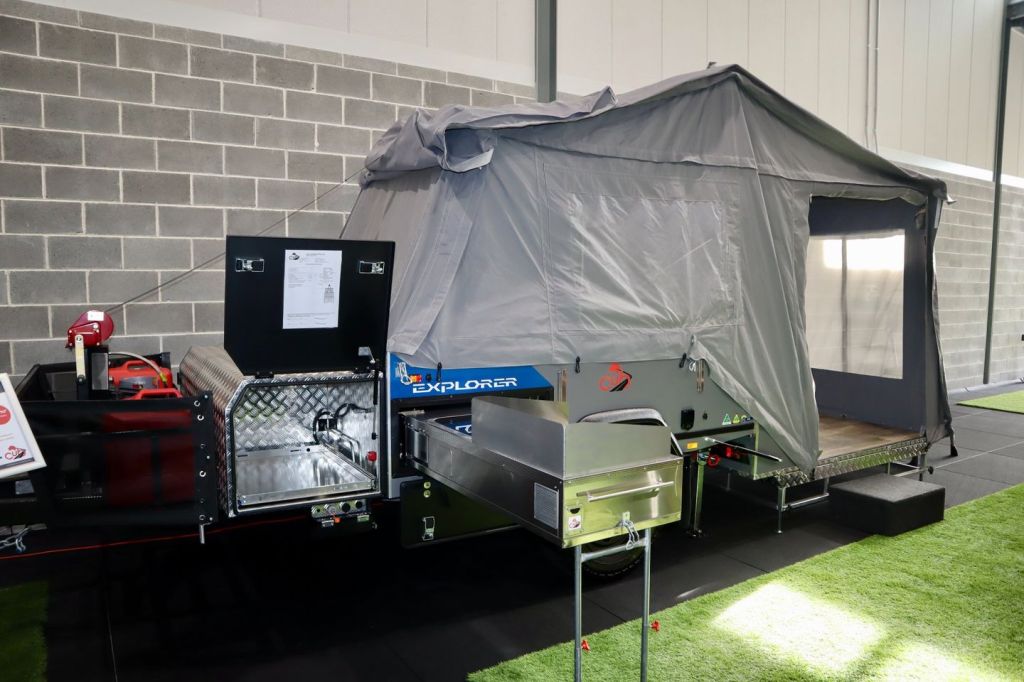
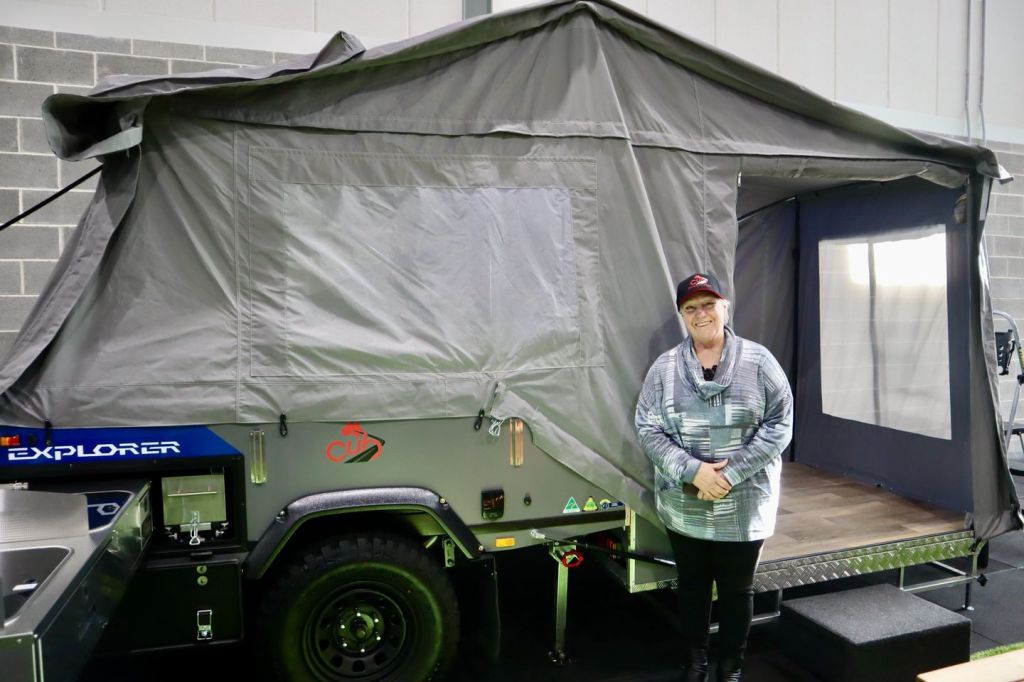
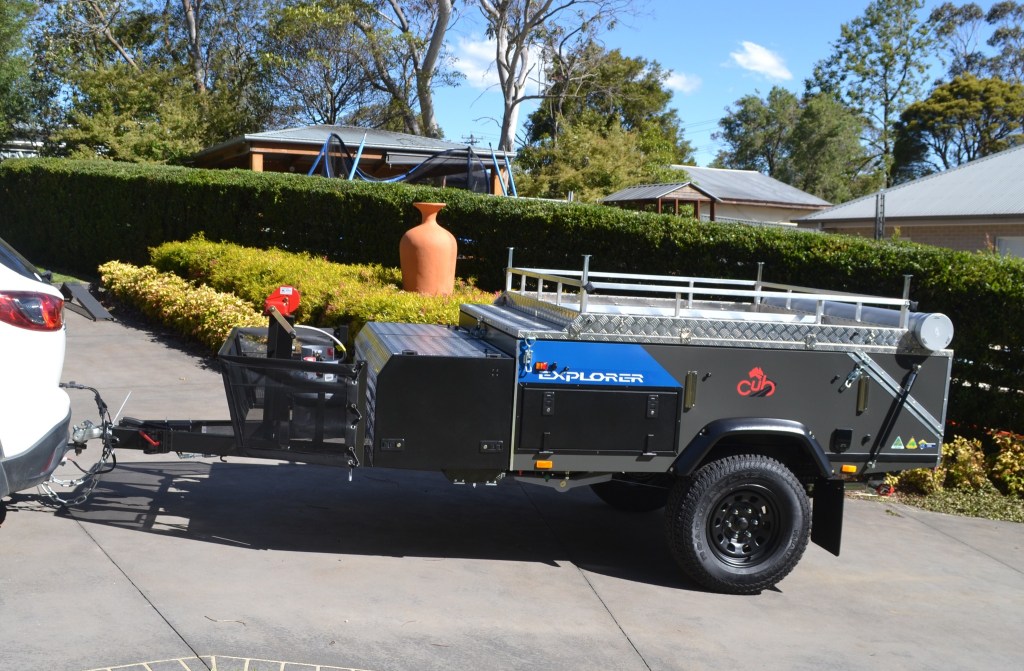
We have had one before, ie 30 years ago when we were much younger, fitter and more adventurous. I believe my hesitation was valid. We started to look at what was available which promptly eliminated the possibility of my wish for pure luxury. The caravans and motorhomes were way outside our budget which is why we settled on a camper trailer. These are definitely more comfortable than they were in the 90′”s. We opted for an Australian built Cub Explorer. For one it was towable by our existing car and even though a little more expensive than we expected was doable if we were careful.

As noted previously many people had the same idea so our wait period was just under 6 mths. We picked up the van early December 2022 with much delight. We can only speak for Cub but the handover procedure is intensive. Over 3 hours of instruction and advice. We wondered why on earth it would take that long but it did. There are a multitude of little things one needs to be clear on. You do receive a manual also but the actual instruction is absolutely necessary. After the very exhausting 3.5 hours with a quick lunch break the instructor helped us hook up the trailer and checked the lights which to our dismay were not functioning correctly.

Not a great start and a way to add some apprehension to the whole idea of roaming around the countryside on our own. To the rescue, Cub were straight onto it and immediately sent us across the road to the factory to check it out. Once there the staff jumped into action and told us to go for a coffee and relax while they find the problem.

After a half hour or so we received the call to go back and pick it up. All fixed with much apologies and guarantees that everything would be perfect going forward. A huge sigh of relief and we were on our way home, towing our 2nd home behind us. We are home and are happy as it fits into the garage perfectly, allowing enough room for the car and comfortable movement about the garage.

The following day, the first challenge is to open the camper as per the instructions. Season the canvas and then close the camper as per instruction. Opening it is easy and trouble free, maybe 10 mins maximum. Once inside we were elated and our minds started visioning us set up outside the camper, sitting back in our chairs with a wine in hand while watching a sunset or snuggling in our bed listening to the rain on the roof. That daydream was pushed aside quickly as we attempted to close the camper.

Out come the instructions and away we go. All went well for 5 minutes. There is a detachable deluxe awning with the model we purchased and it is recommended this is left on the camper when closing it up. The instruction sounds easy and we watched the instructor do it all by himself when we were at the factory. We gave it our best shot once, then again and again but to no avail. There appears too much awning to be able to close the trailer down without force. On top of that the canvas walls were looking very crooked and strained in places. After many sighs and murmurs of frustration we decided it needed to be reset. Again instructions are fairly clear so we reset the canvas, but still not sure and still with difficulty we eventually got the trailer closed and decided to try again in a few days. Xmas was looming and celebrations waiting to be to organised.
We waited a few days and tried again with the idea of being prepared to go somewhere for a few days over the xmas new year break. Again it opened without problem but appeared completely out of shape again. We, rewatched the videos regarding the resetting and also the close up procedure. We tried again but unfortunately it was quite a hot day and we were a little short on energy. I was beginning to think we had made the wrong decision and my spirits were a little deflated. We managed to get some things packed into it, getting an idea of the weight and eventually got it closed again. All was not easy sailing. Our next try now would be after Xmas day instead of going away we would work on it again.

Once we were refreshed after the xmas frivolities we started from scratch again, reset the canvas again and in doing so realised our error as we went. Finally we were able to get it right and achieve the process fairly quickly. Practise makes a difference and my thoughts were heading in a more positive direction.

Now for the fun part we need to pack it and weigh it. This was going to be a challenge.We knew we would have to be careful with the tow ball weight. A spreadsheet had been started. Over the previous 6 months we followed a few travellers on YouTube, watched many videos and listened to much advice from existing cub owners. The message was clear although conflicting. You will always pack more than you need and always be prepared for something going wrong. Needless to say the spreadsheet set-up changed several times with bins and crates, food and tools all being tried here and there many times until we came up with something that worked physically. The weighing finally happened only to highlight we were overweight. A couple of quick shopping trips to get things right, divorce close on our heels we repacked, eliminated and we redid it all again until we got it right. Finally we were seeing the light. Patience and tenacity were ruling the way.

It was the eve of the new year and our street party was about to happen so the camper trailer was put to bed until 2023 I am hoping my next blog will be about our first venture out in our new home.

Please like and share and comment if you have experiences similar. Hopefully I will have more to report soo

Ballarat/The Grampians/Mungo National Park

Ballarat to Mungo National Park 30th March to 6th April 2022

In April 2018 Ken was attending the NACAA (National Australian Convention of Amateur Astronomers) held bi-annually over Easter. That particular year it was held at Ballarat, NSW from 30th March to 2nd April. I decided to join him, and we extended our trip to encompass The Grampians in Victoria and Mungo National Park in NSW.

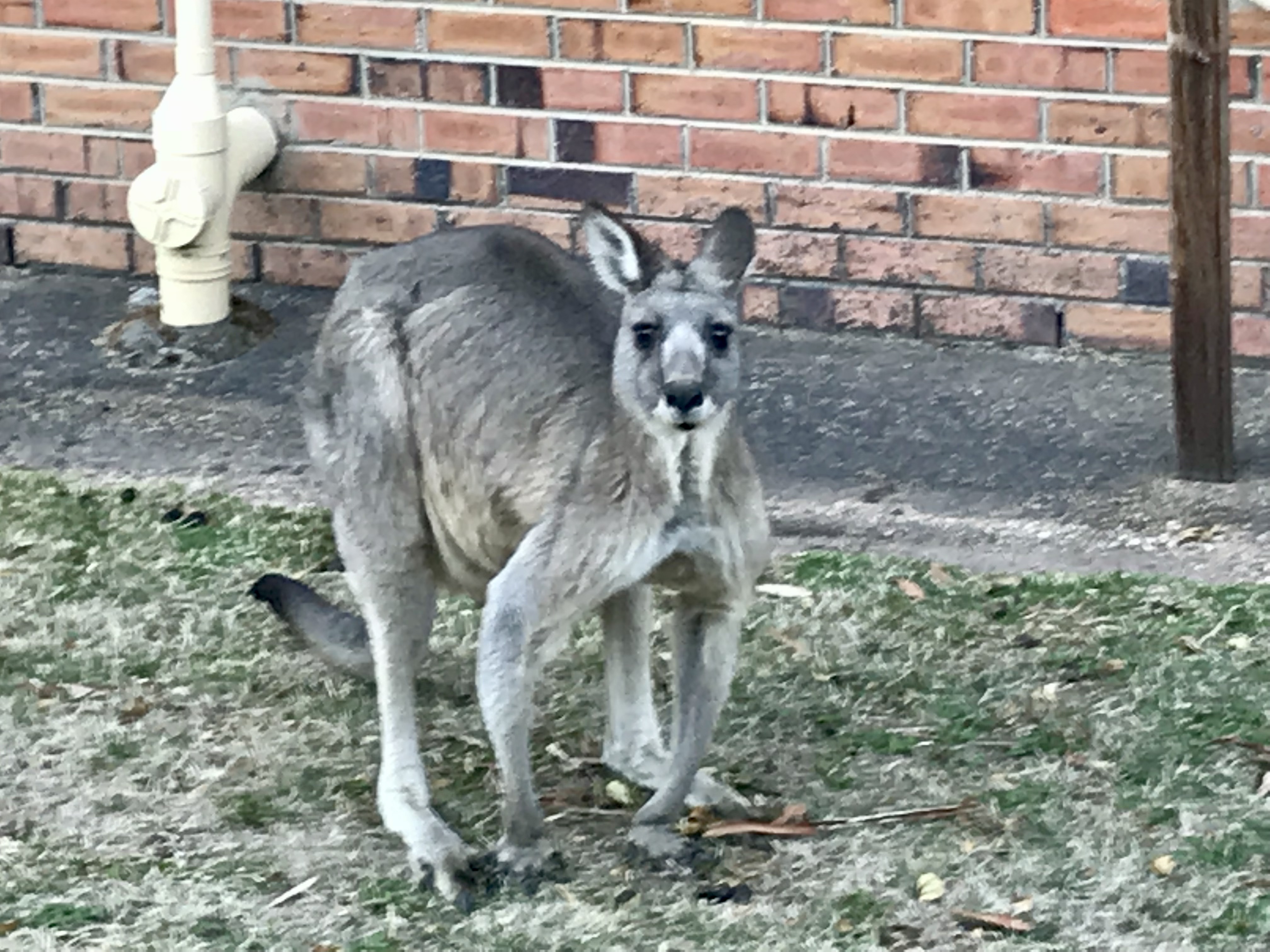
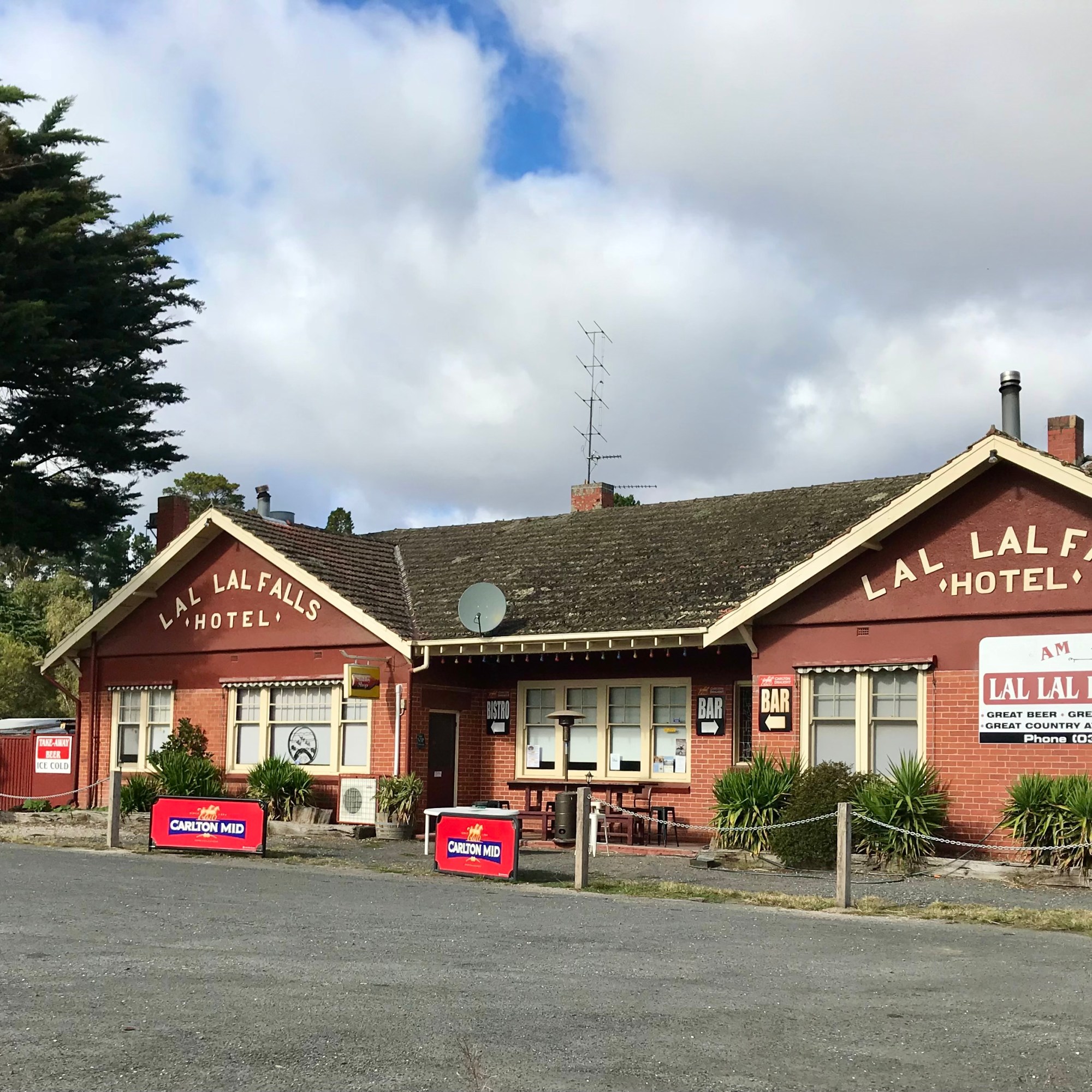
We had not been to Ballarat for quite some time. We arrived at the Mecure Hotel at Ballarat the day before the start of the conference. We first went for a drive to a local area called Lal Lal Falls. This town originated in 1885 as a sheep station. It is only 20 mins out of Ballarat with a tiny population of under 500. The waterfall was not flowing but there were a couple of very easy walks close by. It is a very pretty countryside with an abundance of kangaroos leaping through the trees. The conference is a series of talks on varying astronomical subjects and a visit to the local Ballarat Astronomical Society’s clubhouse to meet up with the local astronomers and view their facilities. We met some friendly, interesting people and enjoyed a  light dinner before wandering back to the hotel with an early start the next morning.

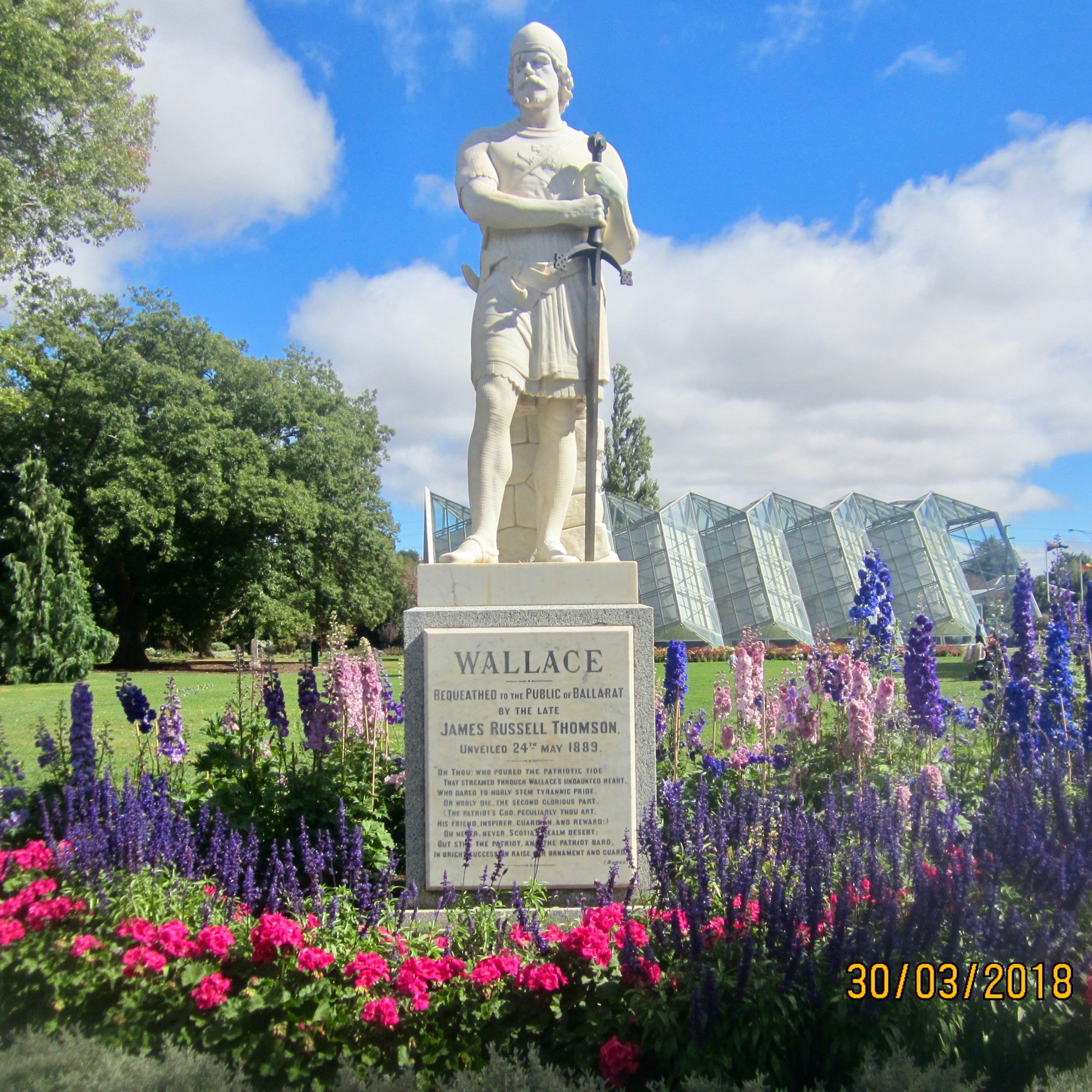
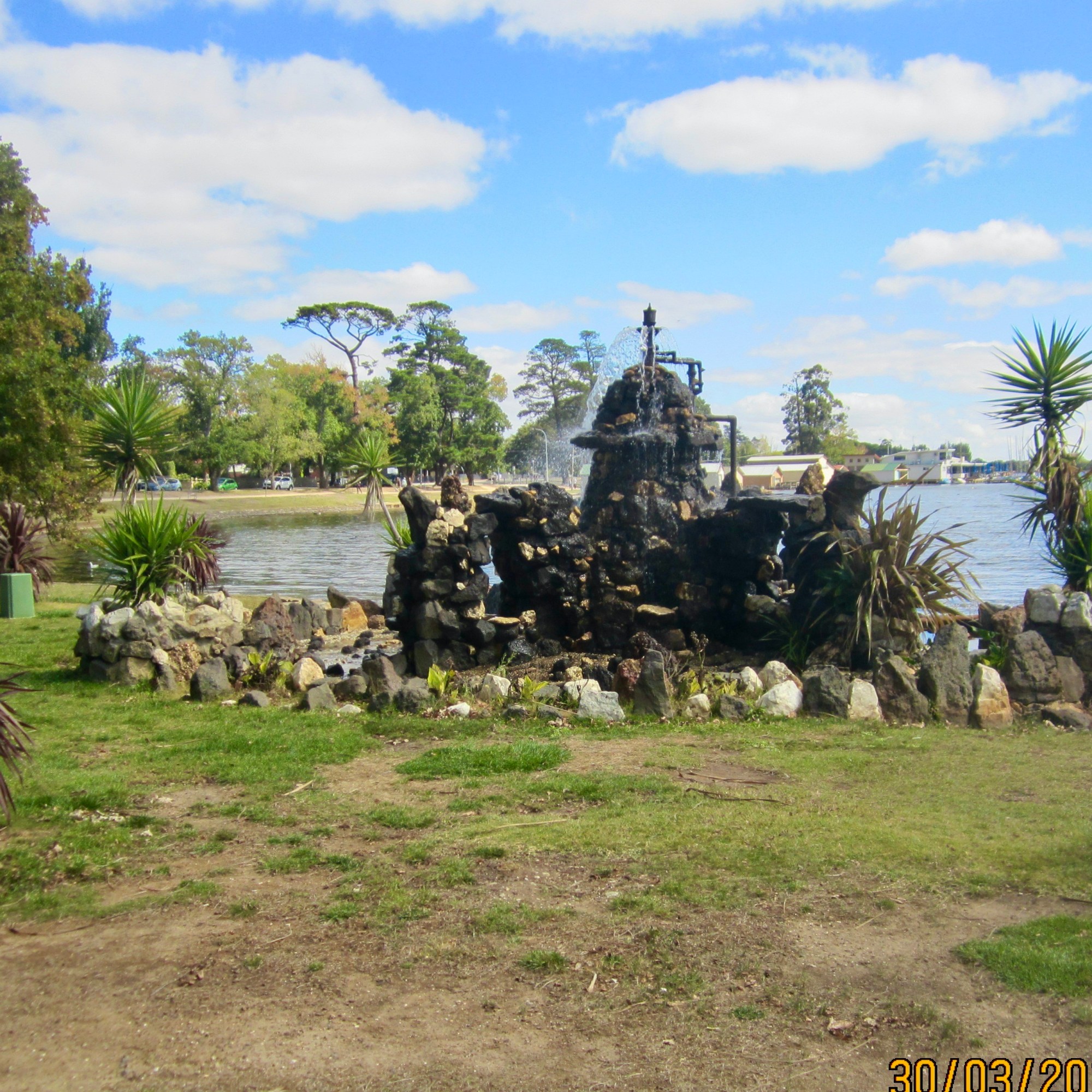
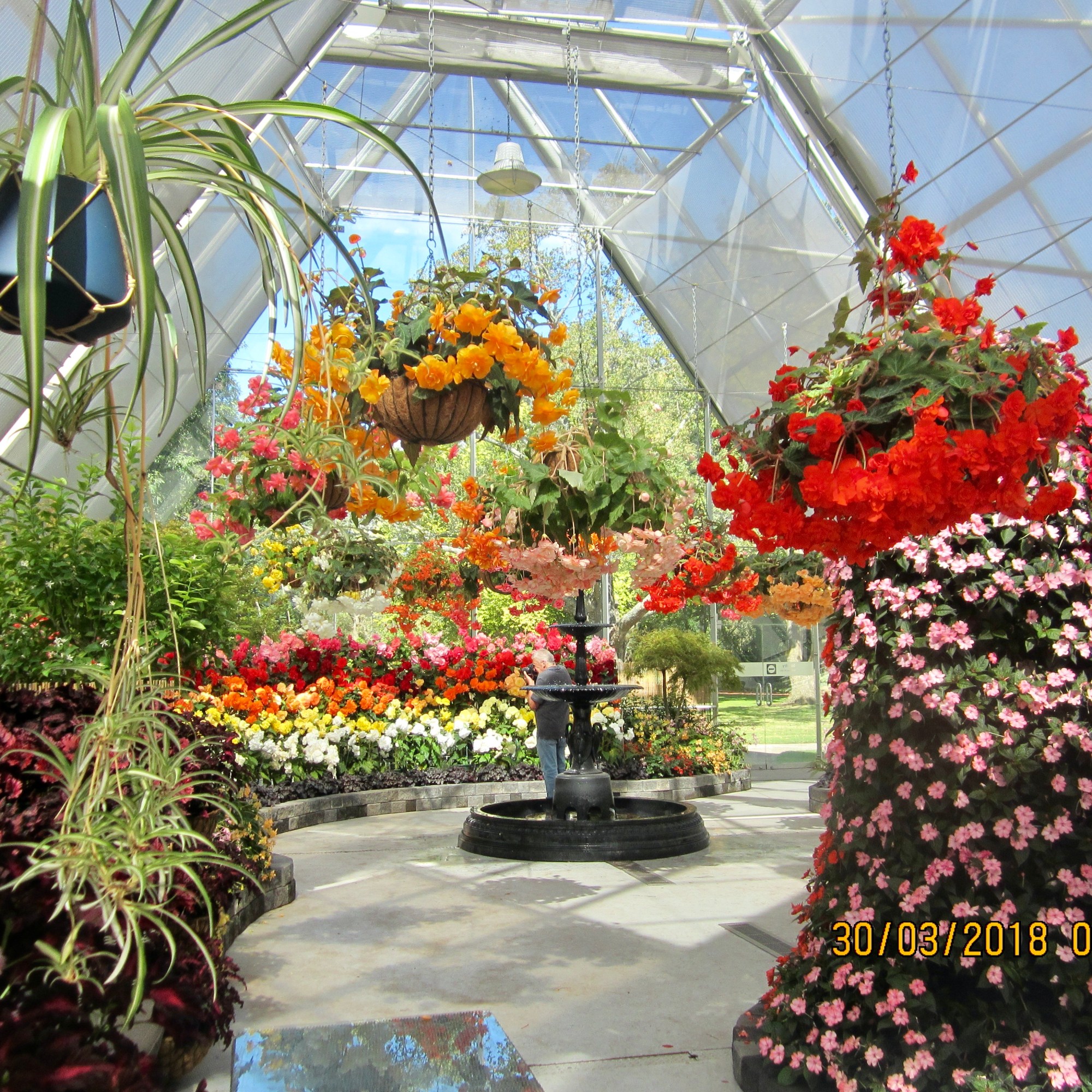
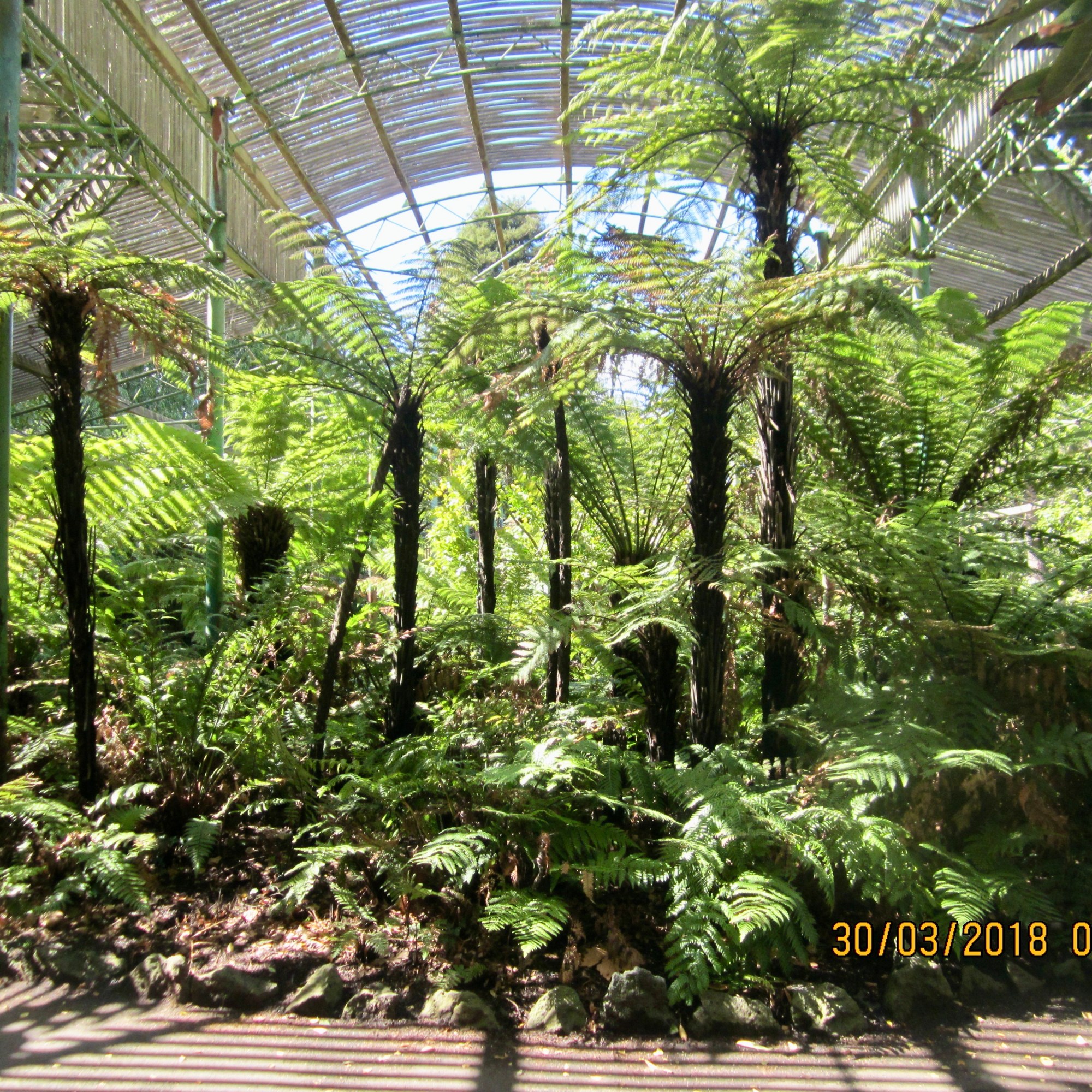
We visited the Ballarat Botanical Gardens, one of Australia’s most significant cool climate gardens. The grounds are beautifully kept with many features such as a conservatorium and a hothouse together with many statues including the avenue of prime ministers. Lunch in their café and then off to walk the six kilometres around Lake Wendouree. The lake is an artificial man-made shallow lake opposite the gardens. It has a paved walking track completely around the perimeter which can be taken at your own speed. It is long but easy with many different views to be taken in. The ducks and swans, birds and artifacts surrounding the water are very pleasing. A very relaxing day overall.

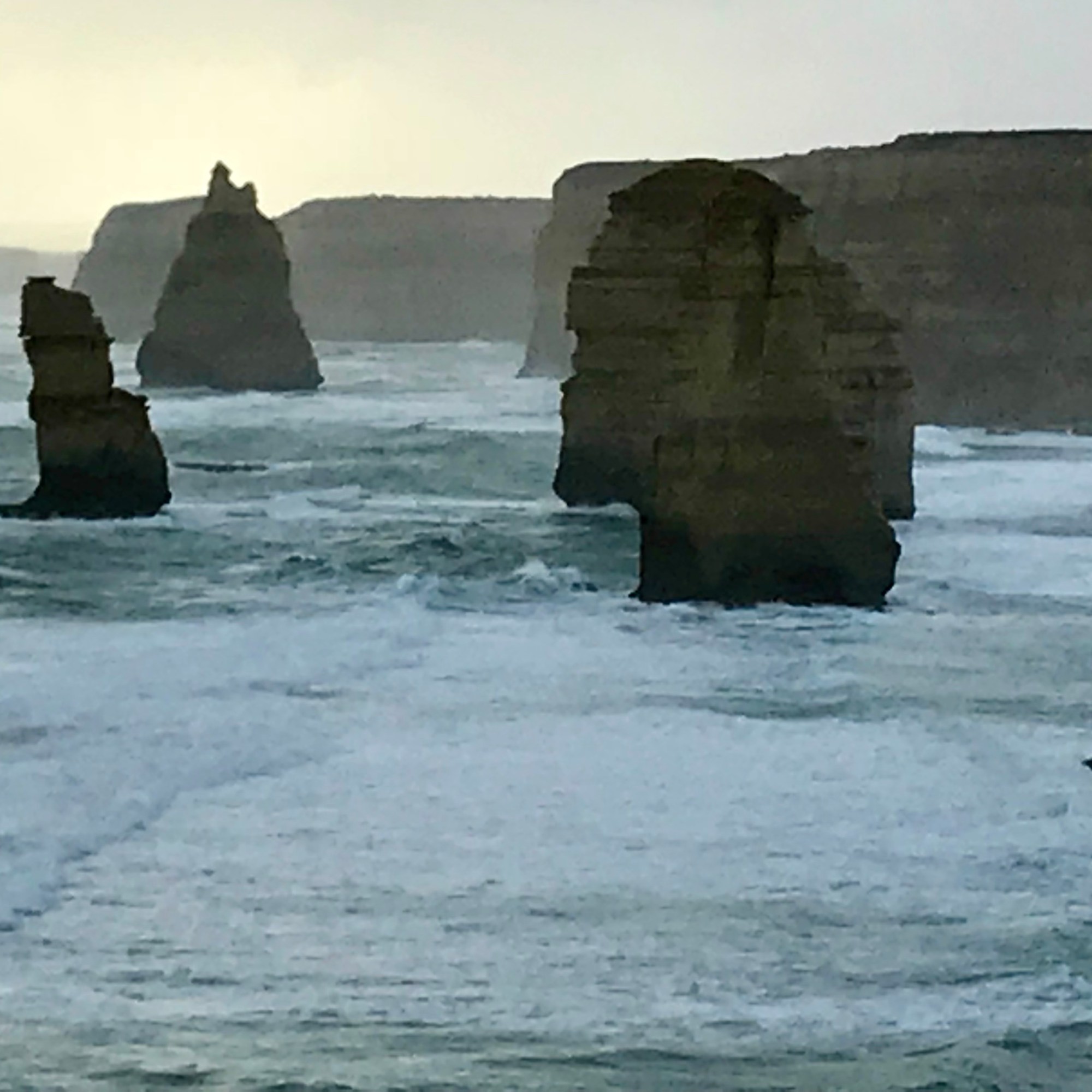
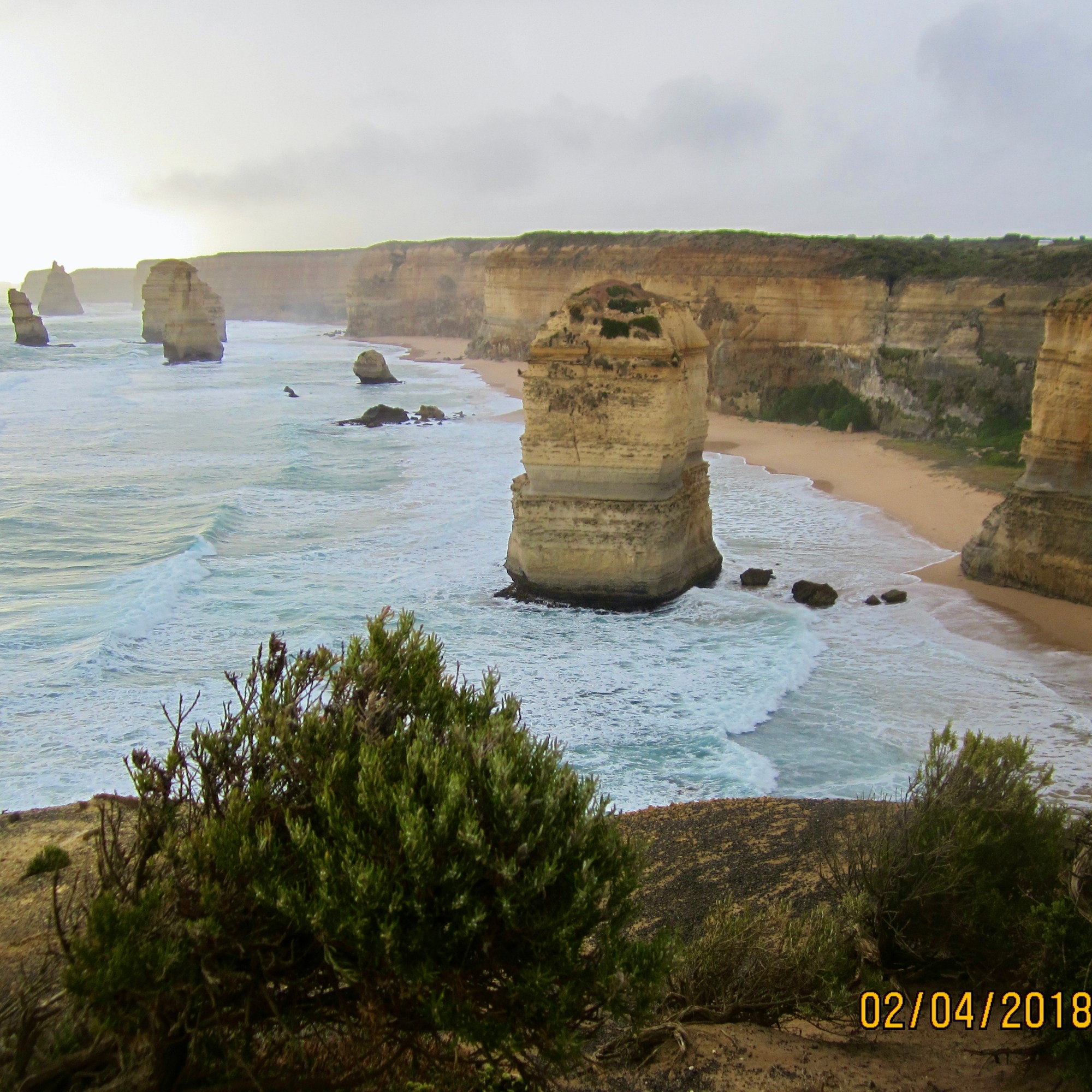
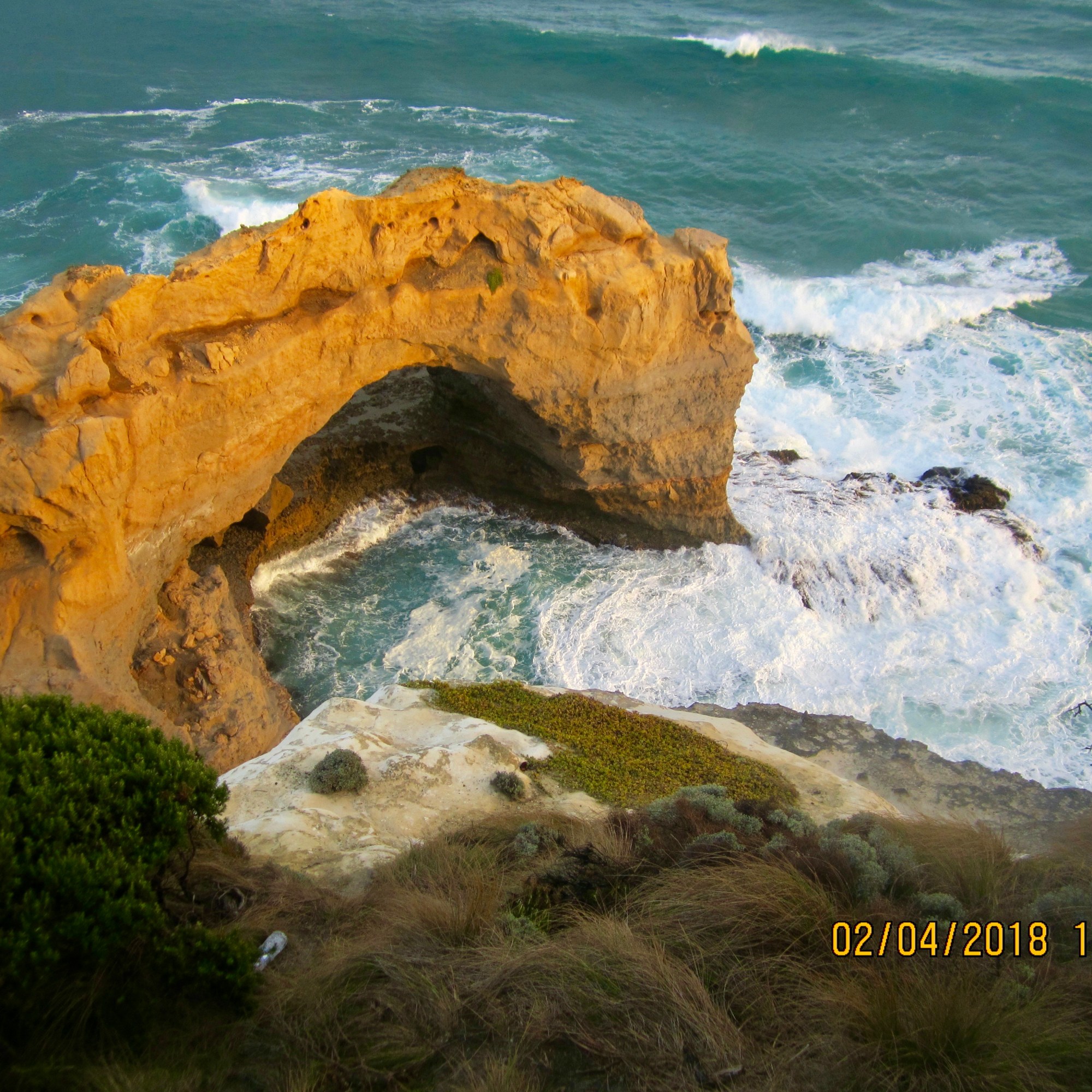
The Great Ocean Road is the next leg of the trip. From Torquay to Allansford. The road is over 100 years old and is 243 km of ocean views. We have been on this road many years prior, in fact, I think there may have been 12 apostles the last time we were there (some had collapsed in the intervening years). This time however a lot less. The road is easy, the views are fantastic and it with now improved facilities, tourists are well catered for. This is a good thing for the country but obviously more people and more traffic frequent the area.  We still loved it and highly recommend it. Whether it is sunny, cloudy, or rainy the beauty of the coastline is not diminished. There are many things besides the ocean to see, lighthouses, artifacts, walking tracks and activities are plentiful. On this trip, we were not stopping off too much as we had more to see.

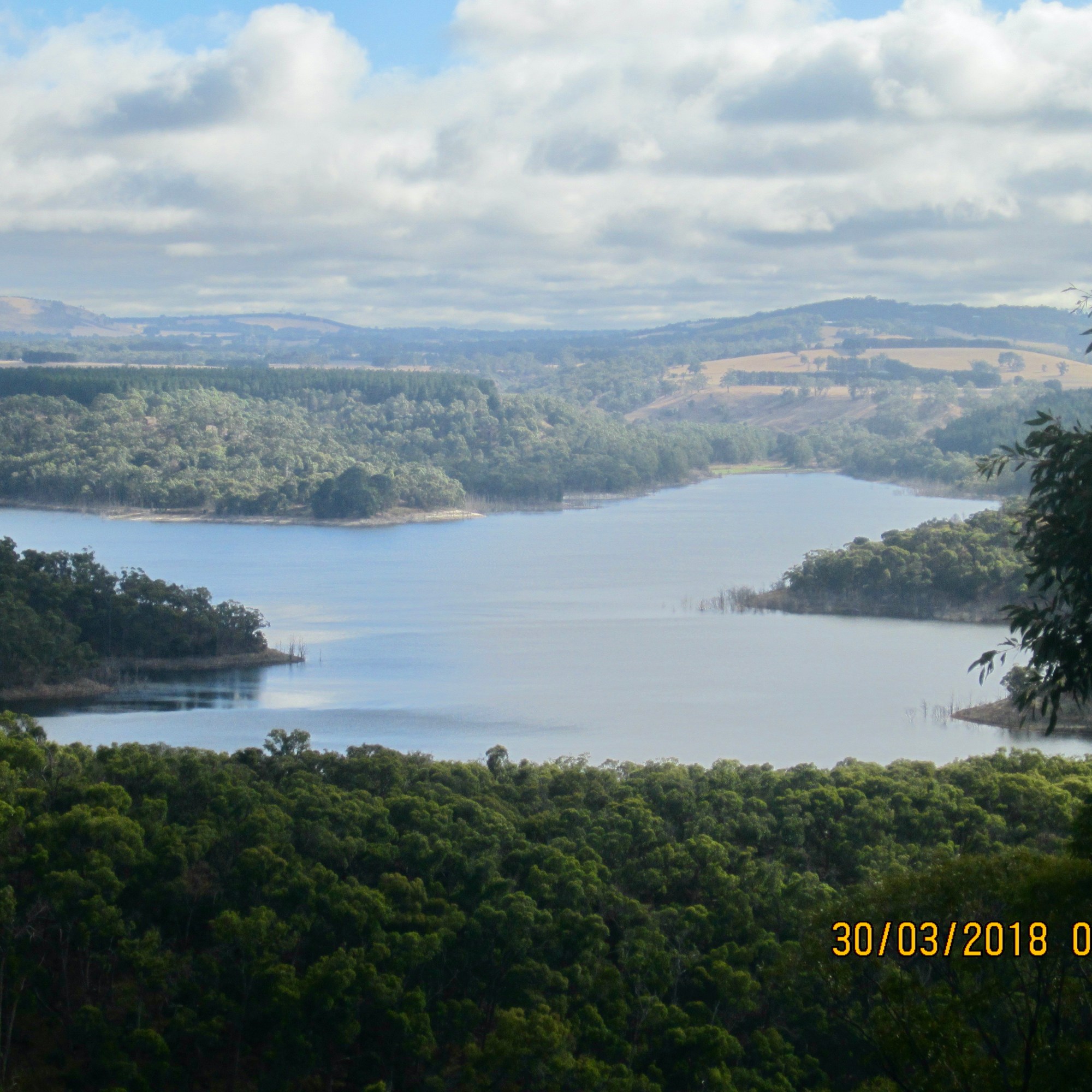
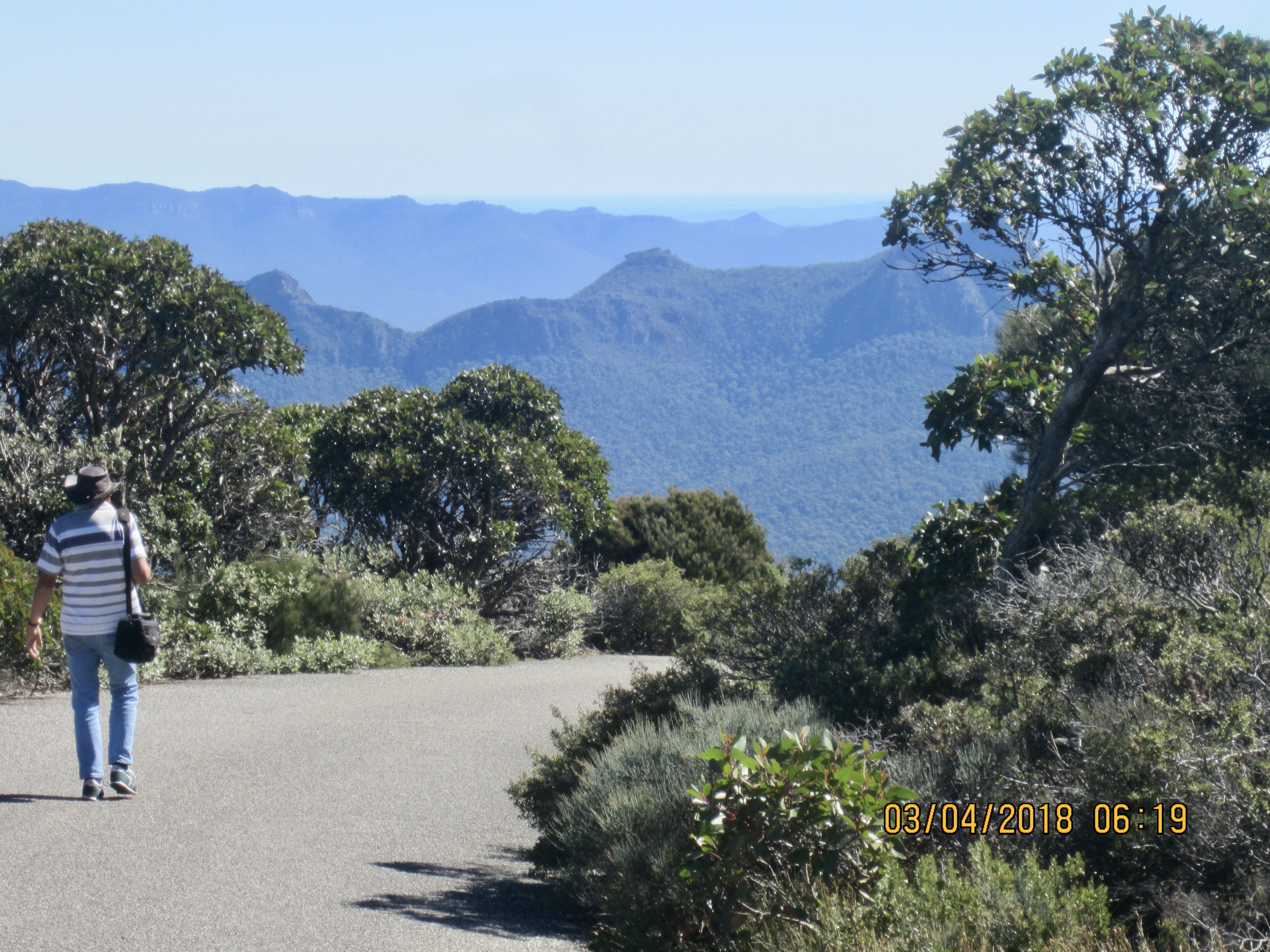
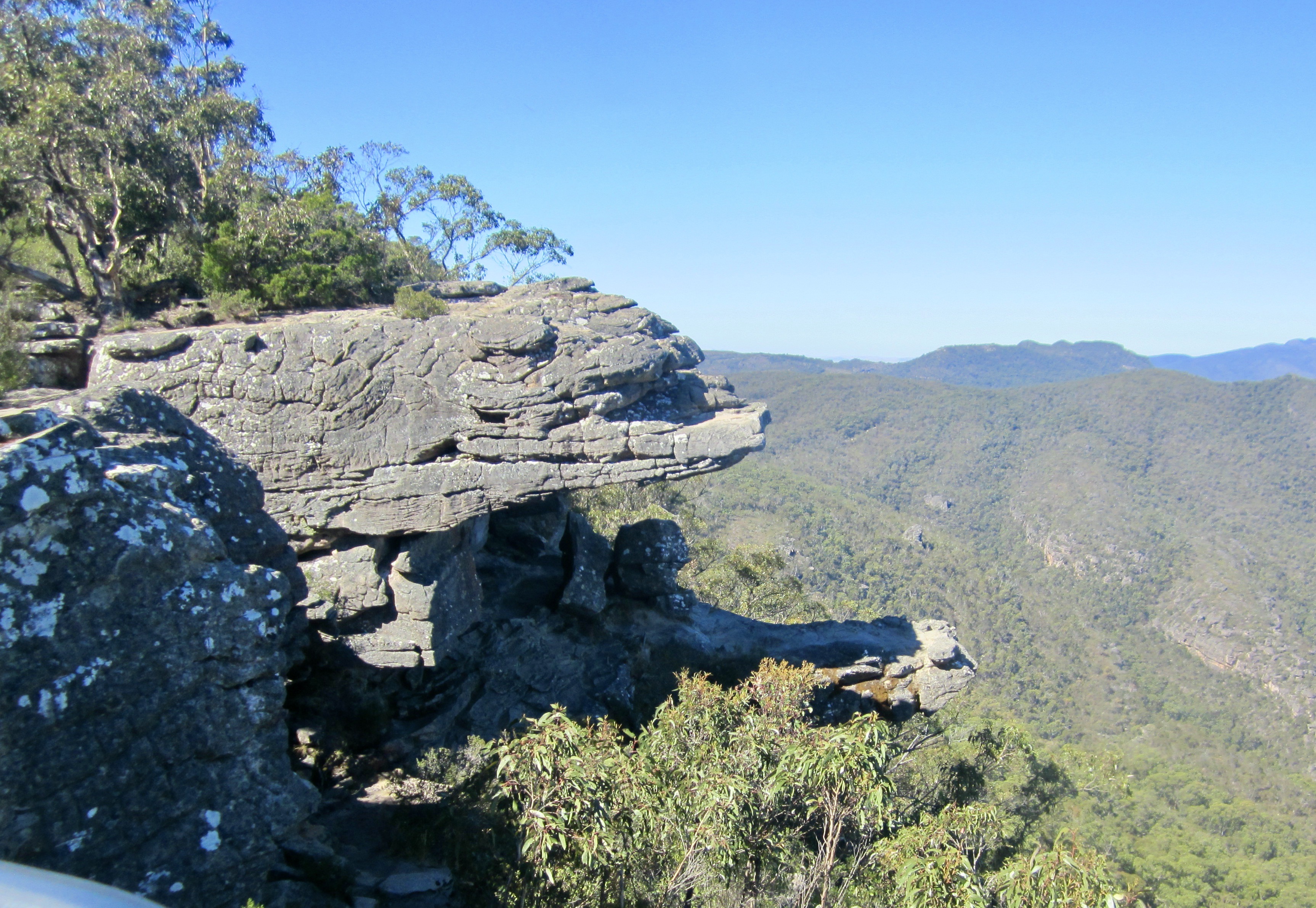
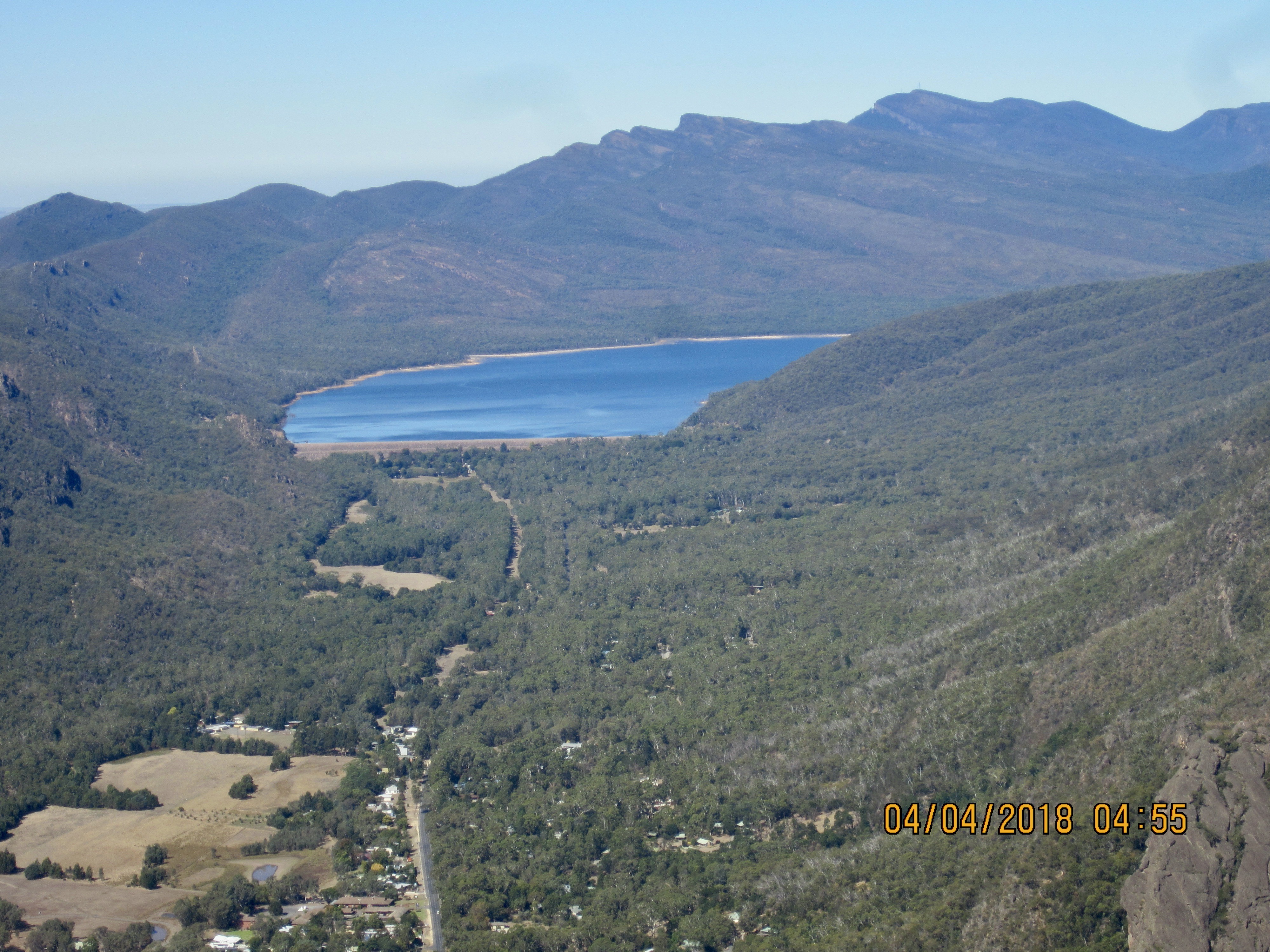
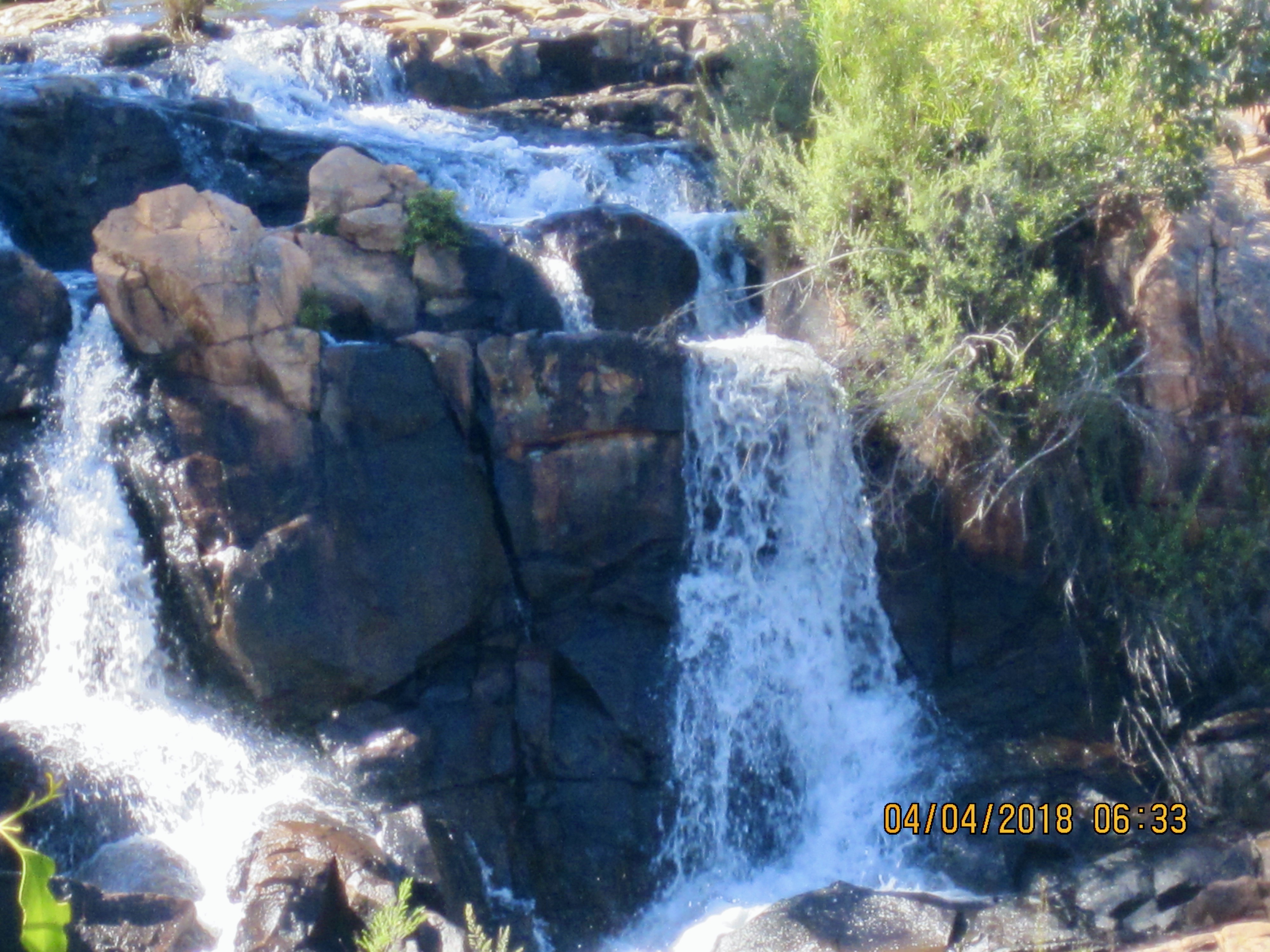
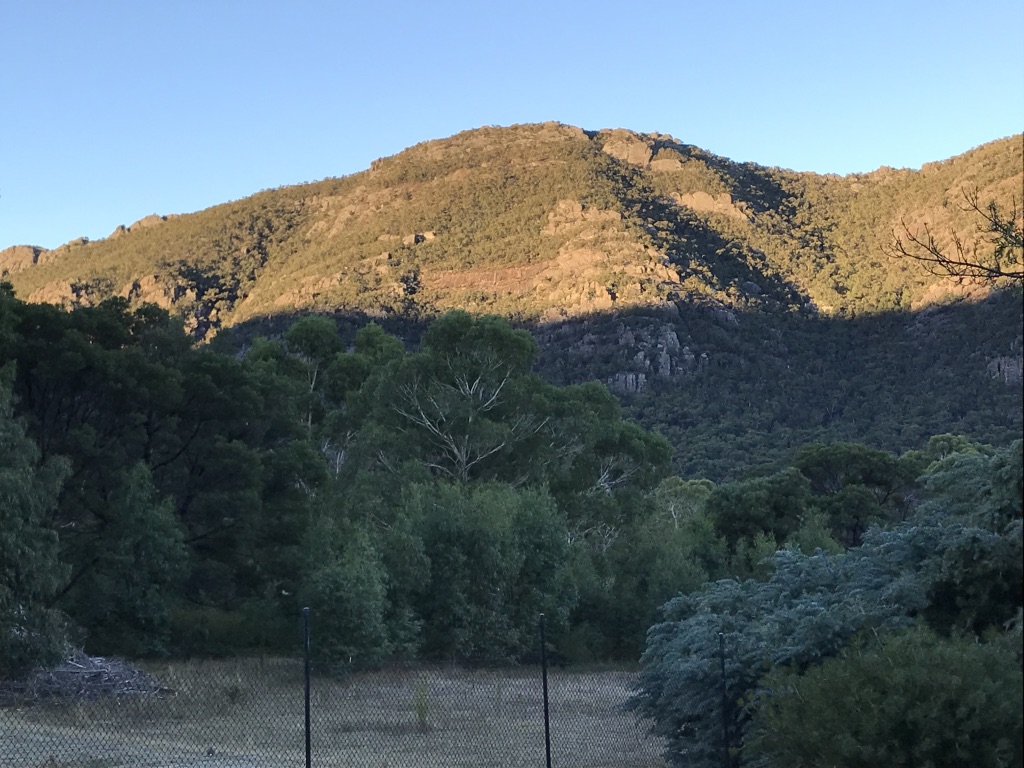
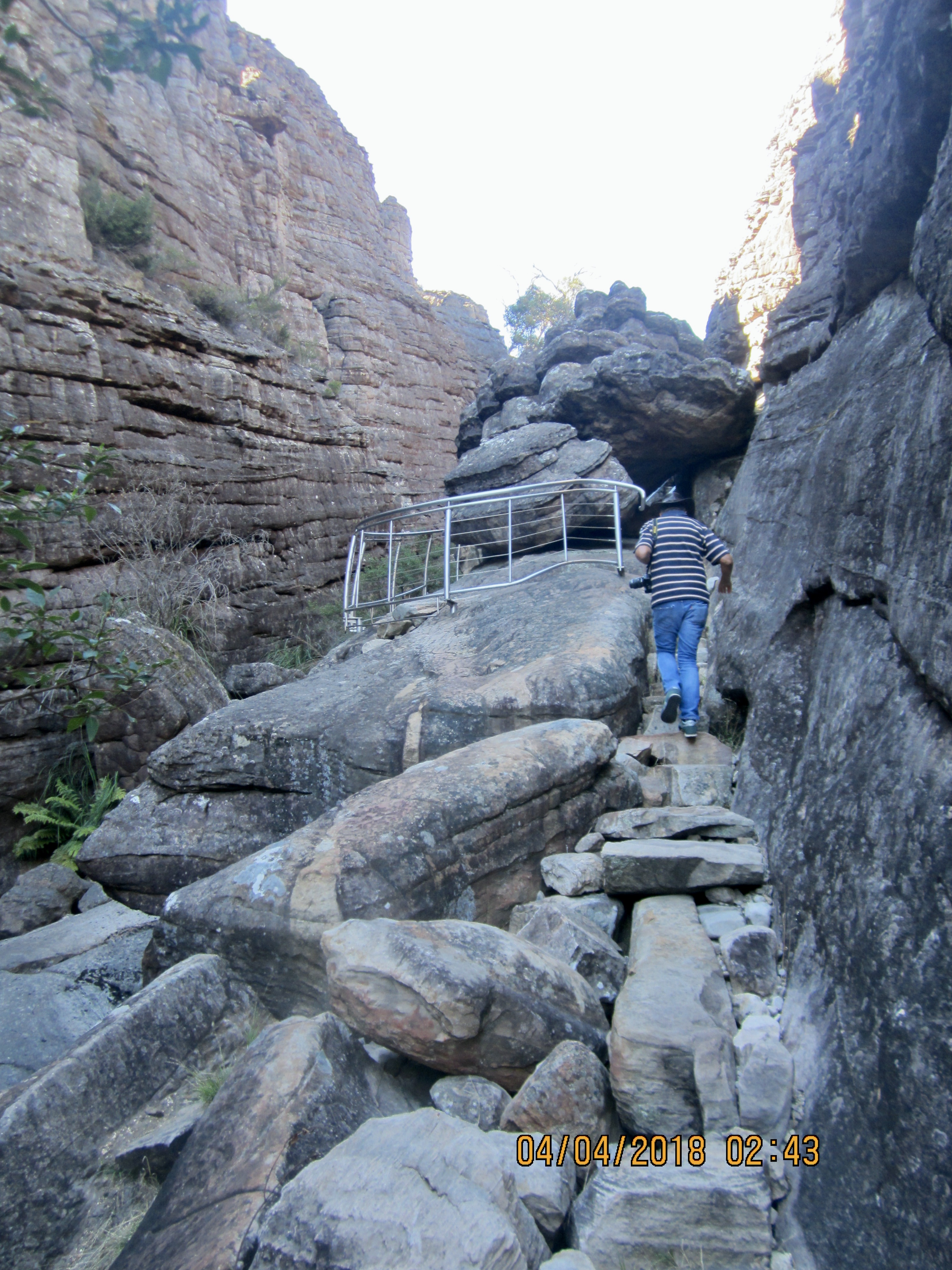
After visiting the highlights along the road, we turned off and head to The Grampians National Park. This park spans an area of 413 thousand acres. It is a series of low angled sandstone ridges. The area has bushwalking, hiking, rock climbing, fishing, canoeing, camping, animals, pubs, café, lookouts and much more. It is peaceful, spacious, and the animals are friendly and plentiful. We were there for the great walks and lookouts. Hopefully, the photos below give you an idea of its beauty and its accessibility.

We spent a couple of beautiful days here and then headed on our way to Mildura and the start of our short stay in Mungo National Park around 115 km from the town centre.

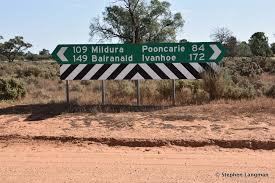
There is approx. 80 km of dirt road into the park and then a further 80 km out the other side to exit.  We had arranged to stay at the lodge in Mungo for two nights. The worry with this entry is that if the road is not accessible then you are stuck at the lodge. It is a bit of a concern but everything we had read indicated it was worth the effort. Go to mungolodge.com.au for information on accommodation and tours. According to Wikipedia, the park is part of the Unesco World Heritage-listed Willandra lakes region. It covers an area of 274,210 acres. The main feature of the park is Lake Mungo, the second largest of the ancient dry lakes. The Park is noted for the archaeological remains discovered in the park.

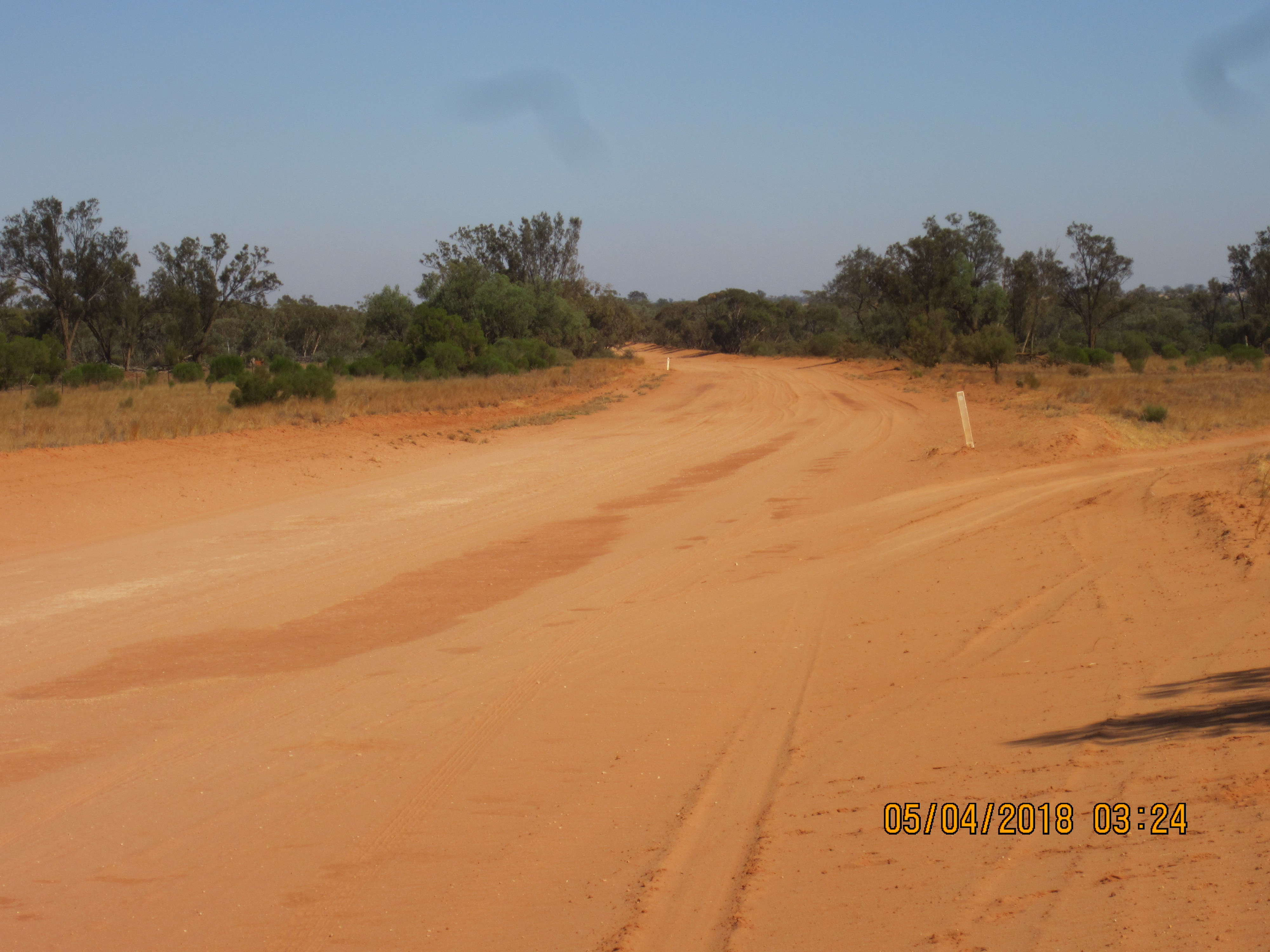
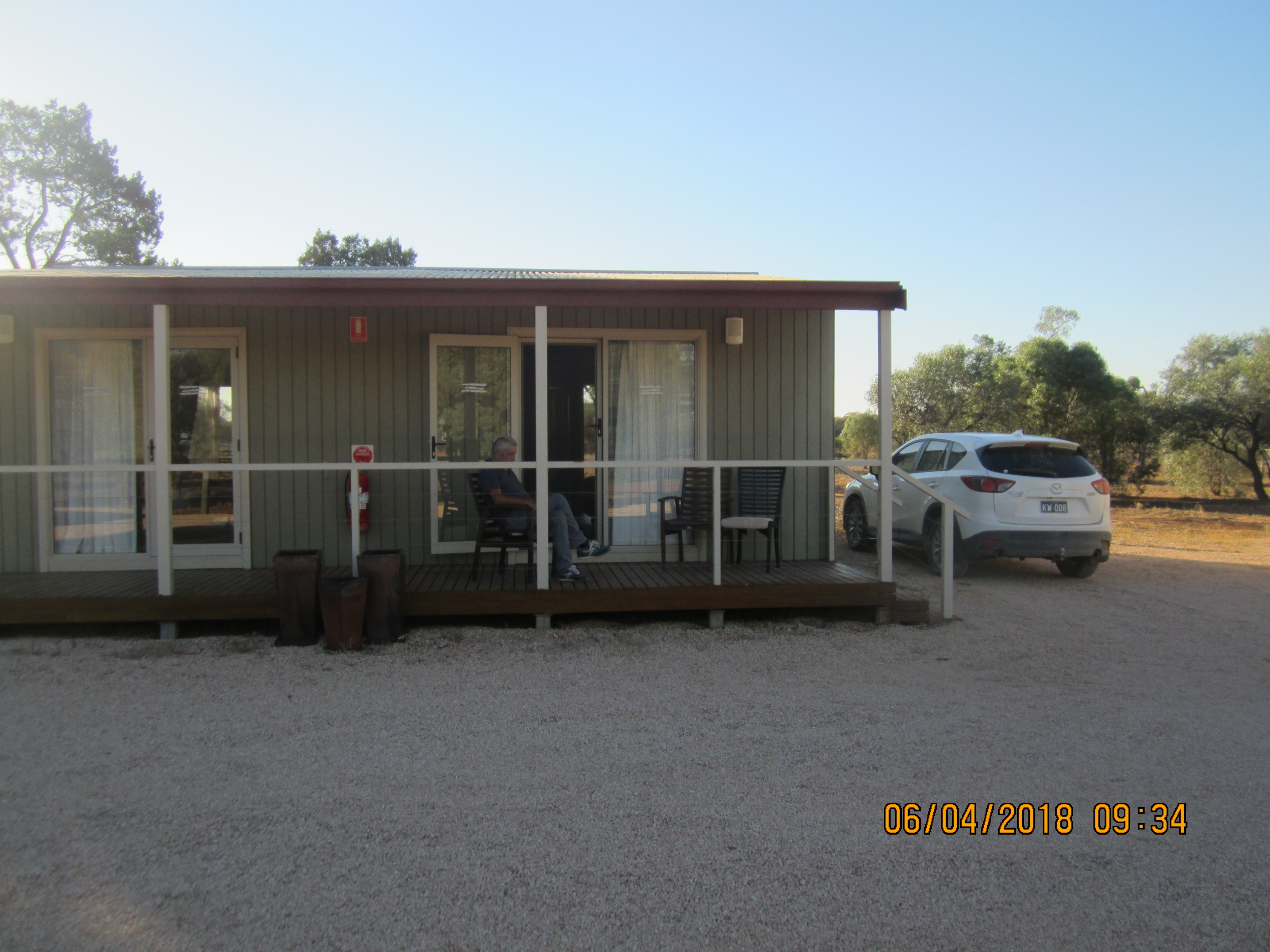
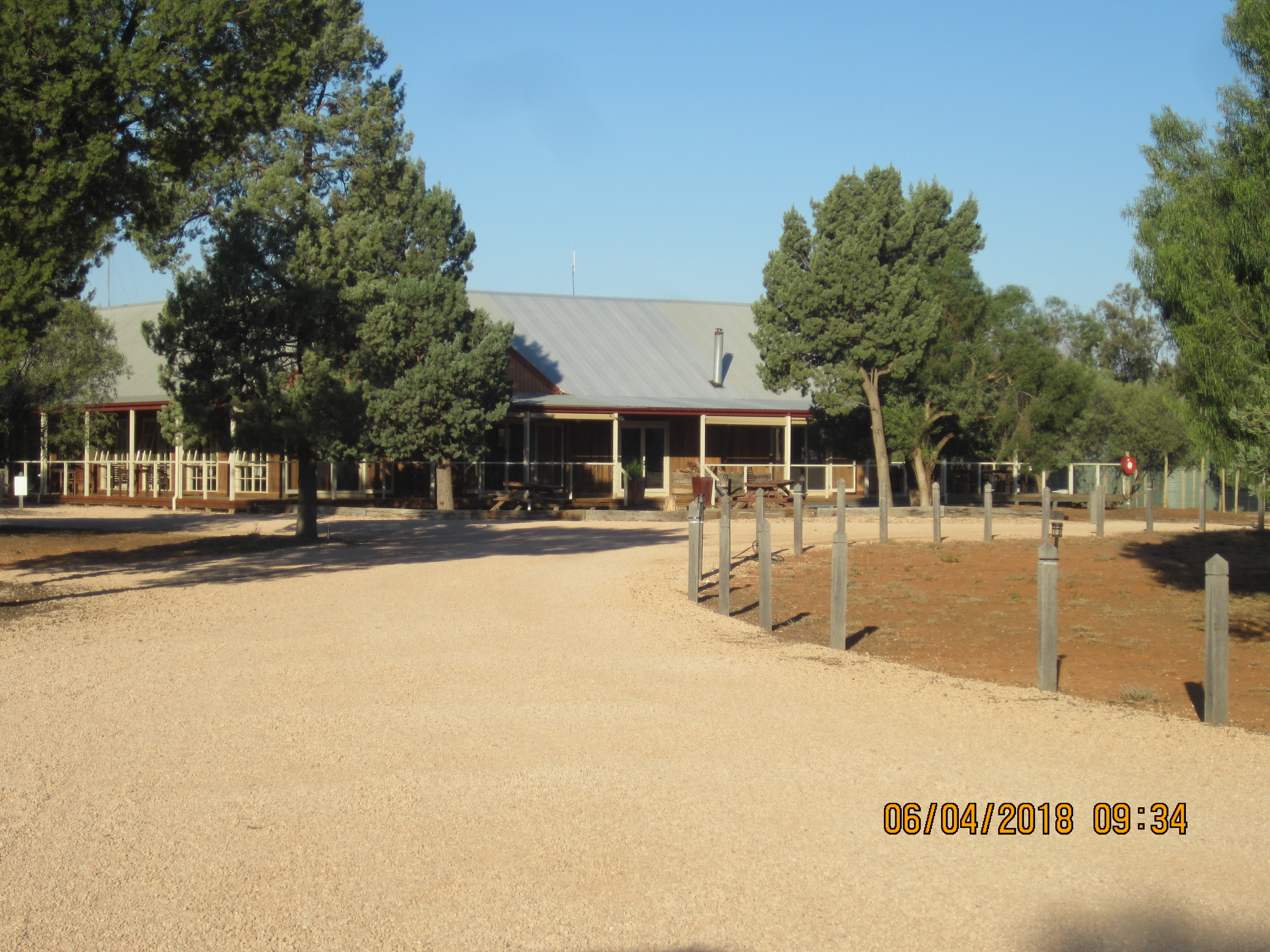
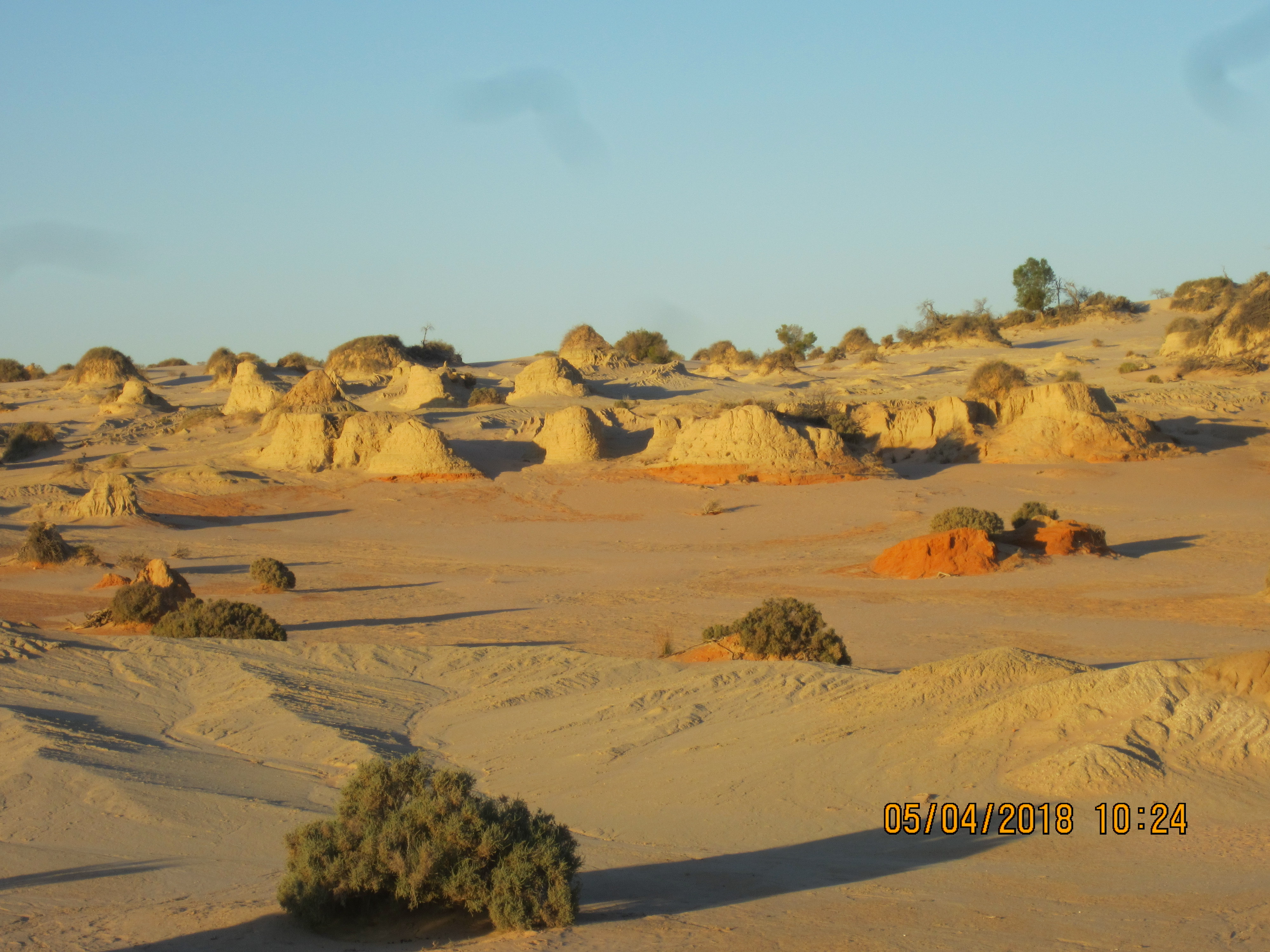
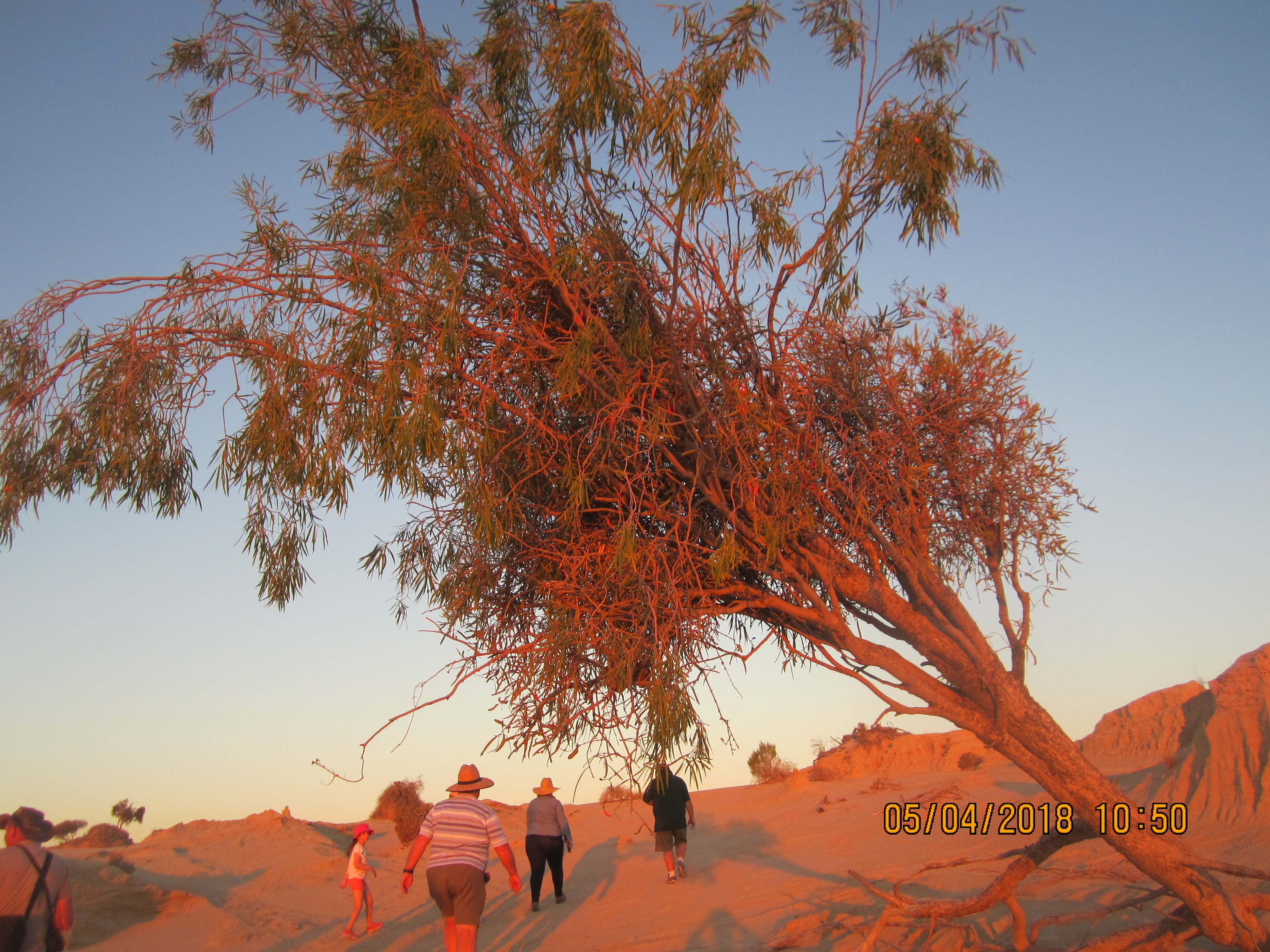
We grabbed a takeaway coffee and drove out of Mildura with some trepidation about the quality of the road we were about to endure. The long and wide dusty road stretches in front of you with the typical low lying Australian bush lining the sides of the road. Looking ahead the vast blue skies, green foliage, and deep orange of the road project a stunning view into the wilderness. The road was deserted, we passed the odd vehicle heading back to town. About an hour and a half into the drive we come across the Mungo Lodge. What a pleasant sight. The lodge area and the cabins are laid out in a large circle dotted with shady green trees. The lodge itself is clean, bright, and welcoming. Once registered we headed to our cabin. It was just perfect, large, clean, and very comfortable. A beautiful breeze flows from front to back and a quaint veranda out front and a small porch out the back. All the comforts for a relaxing couple of days. We had booked tours so unpacked and headed over to the lodge for more details. The owners and the staff are super friendly and helpful, and we find ourselves on the Walls of China Sunset Tour.

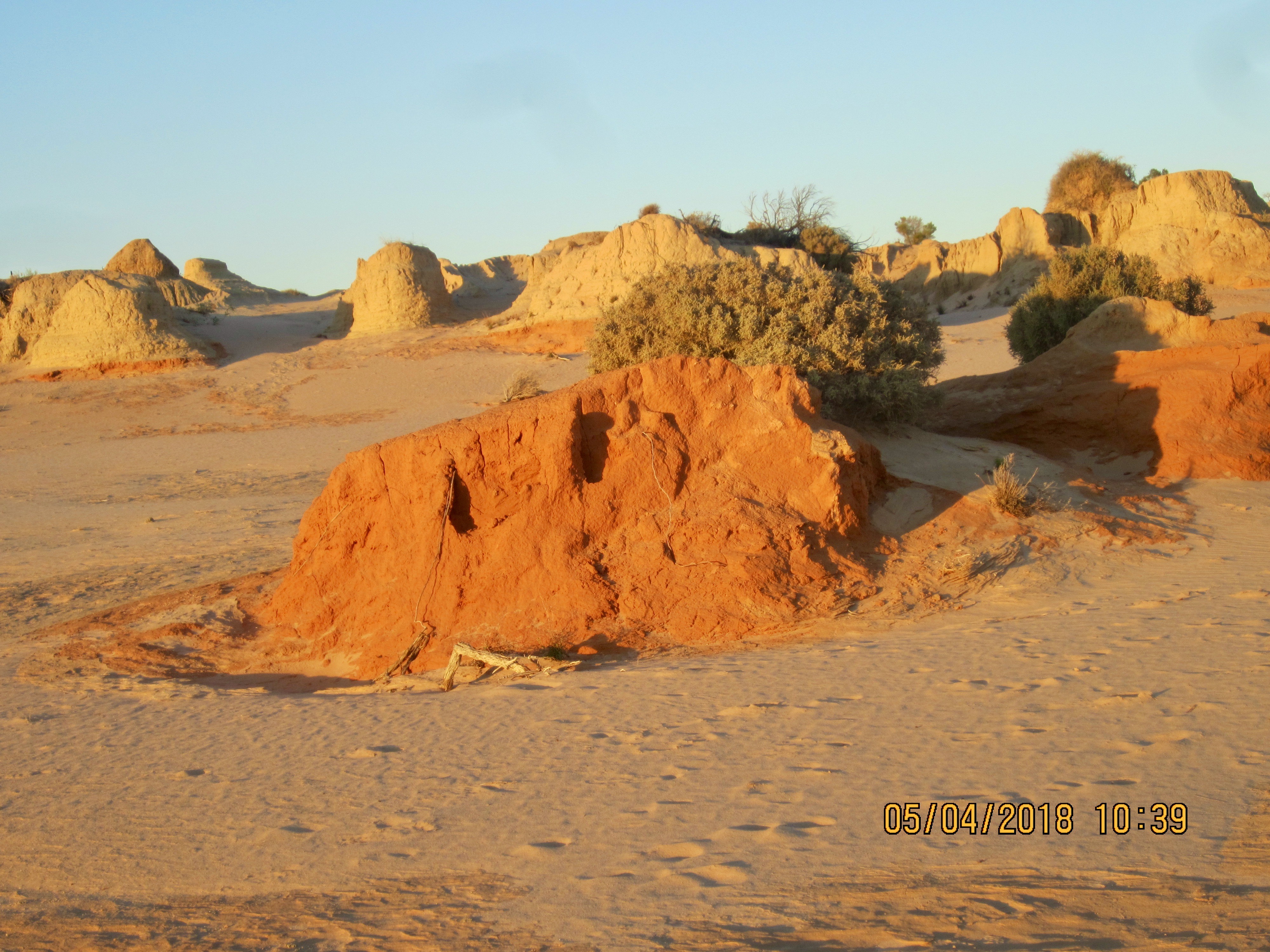
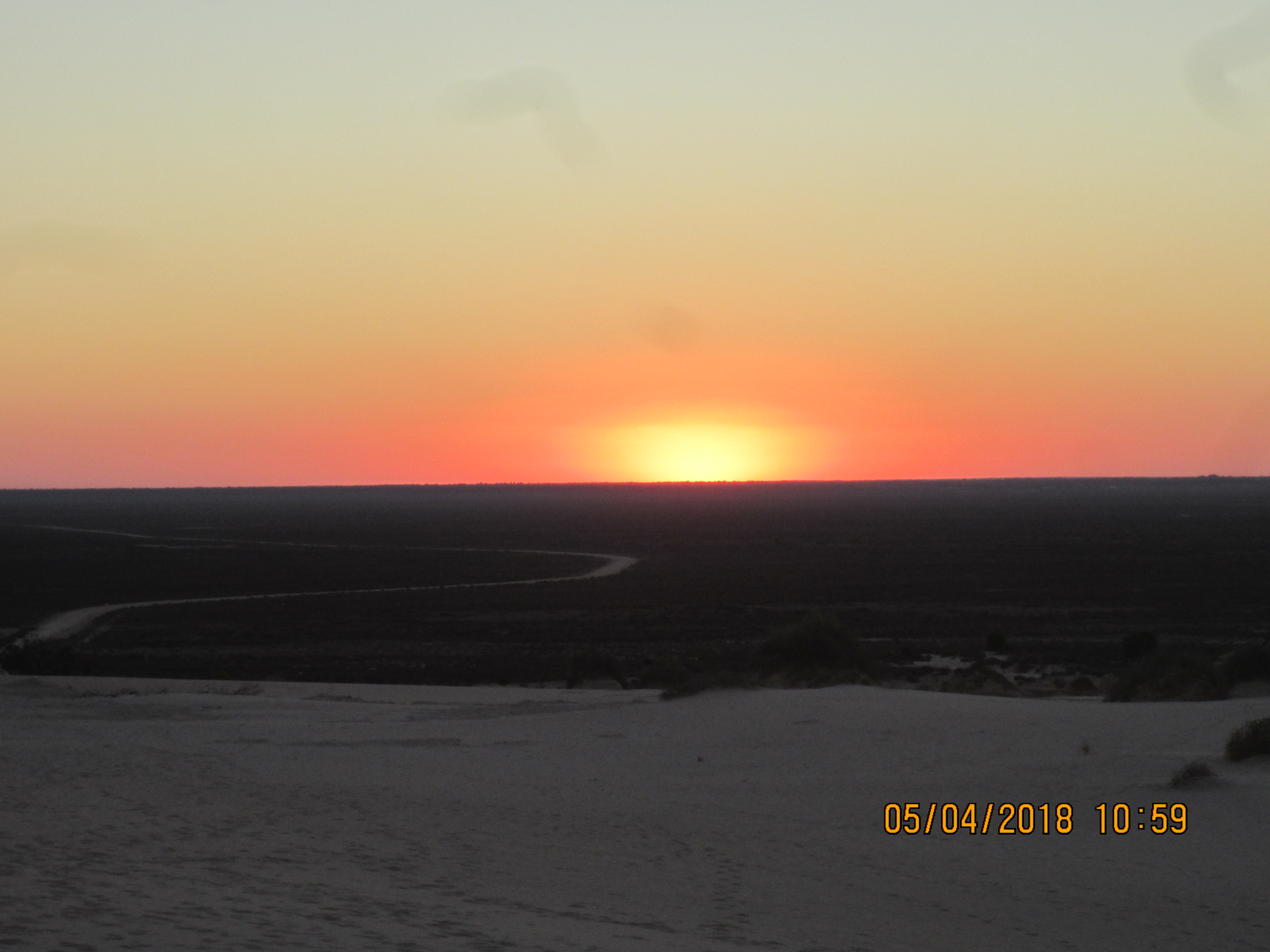
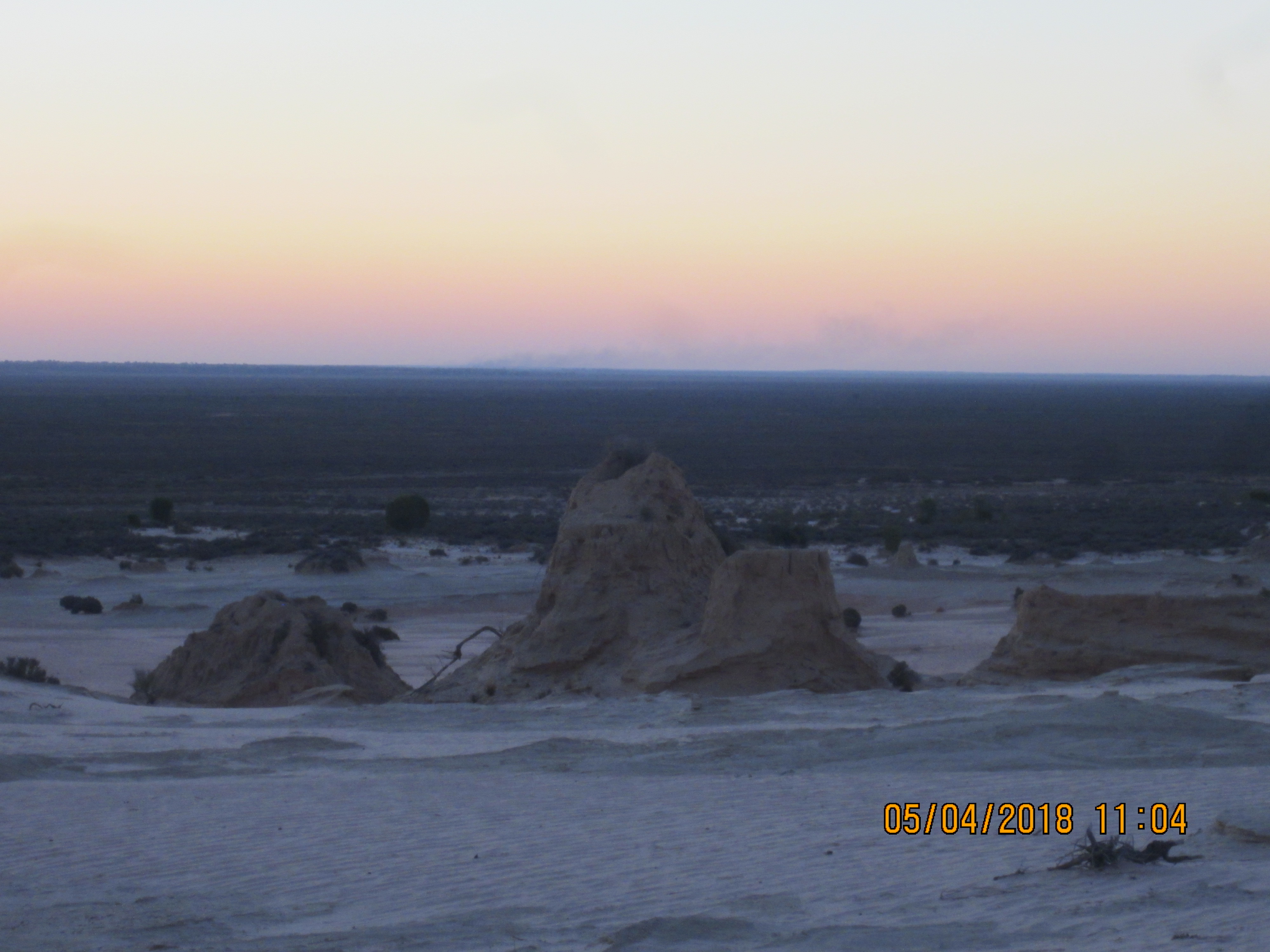
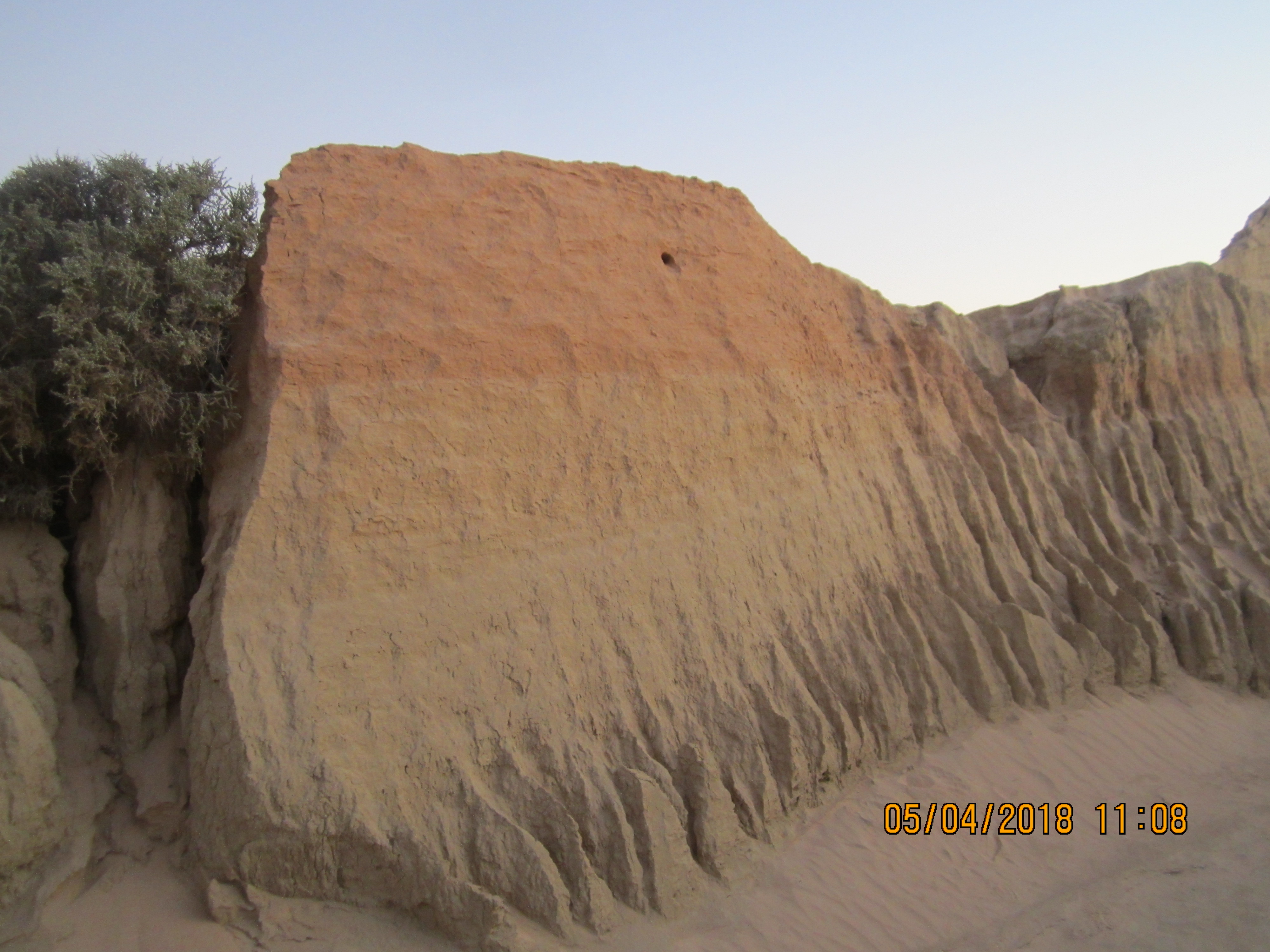
A small group of people, an excellent guide and a perfect night resulted in a very awe-inspiring evening followed by dinner and drinks. I am hoping the photos say enough as words do little to describe the beauty of the area. The changing colours of the landscape minute by minute were awesome to see. 

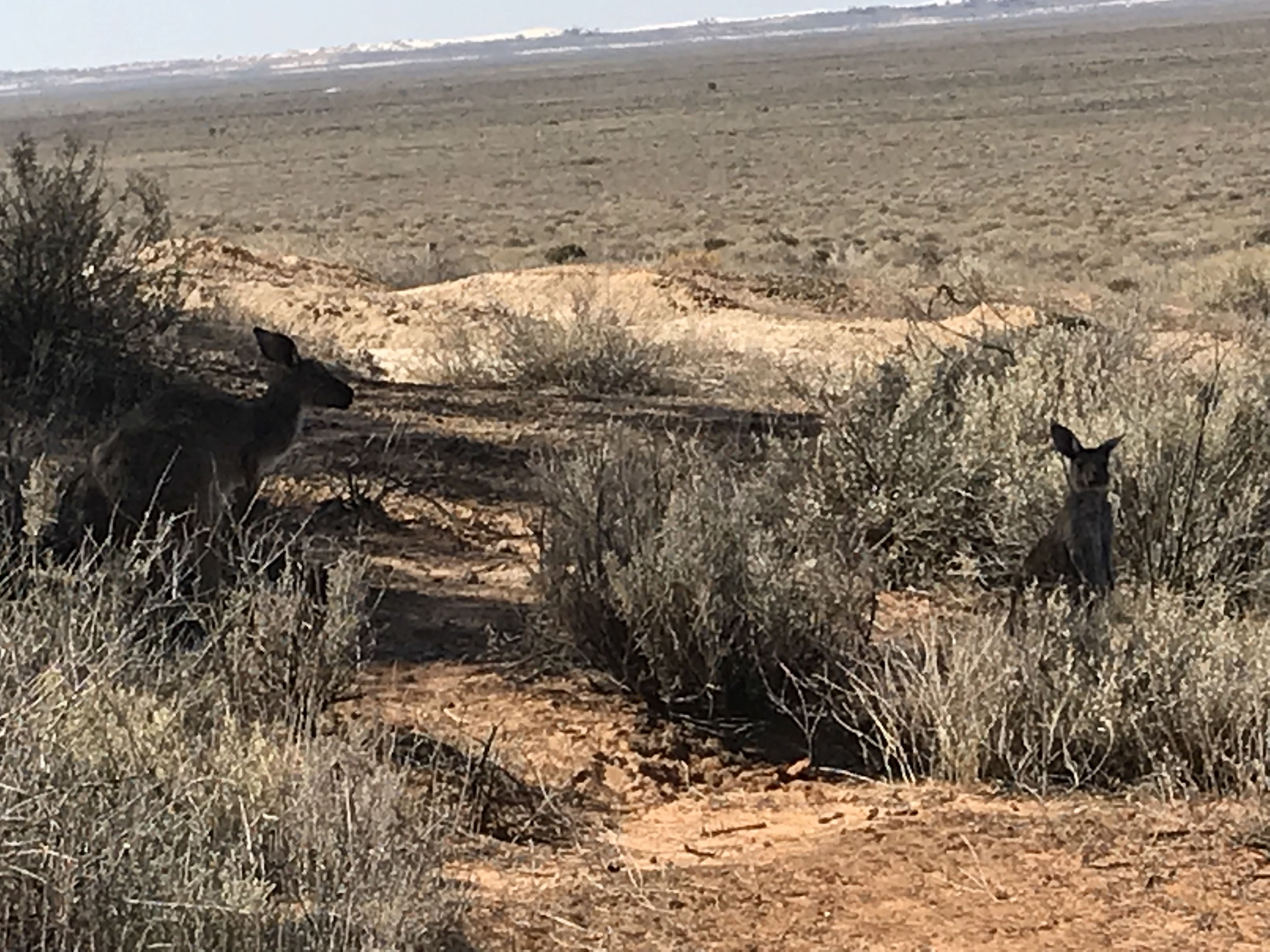
The following day after a quiet relaxing evening was very interesting. We did a small drive and a walk to the surrounding area. The landscape is lunar-like, featuring dried up lake beds and sand dunes for miles. Scrub and berries, small trees, and desolate areas where you think nothing could live. Keeping our eyes alert, we found a small kangaroo and her baby, lizards, and other crawling beings. 

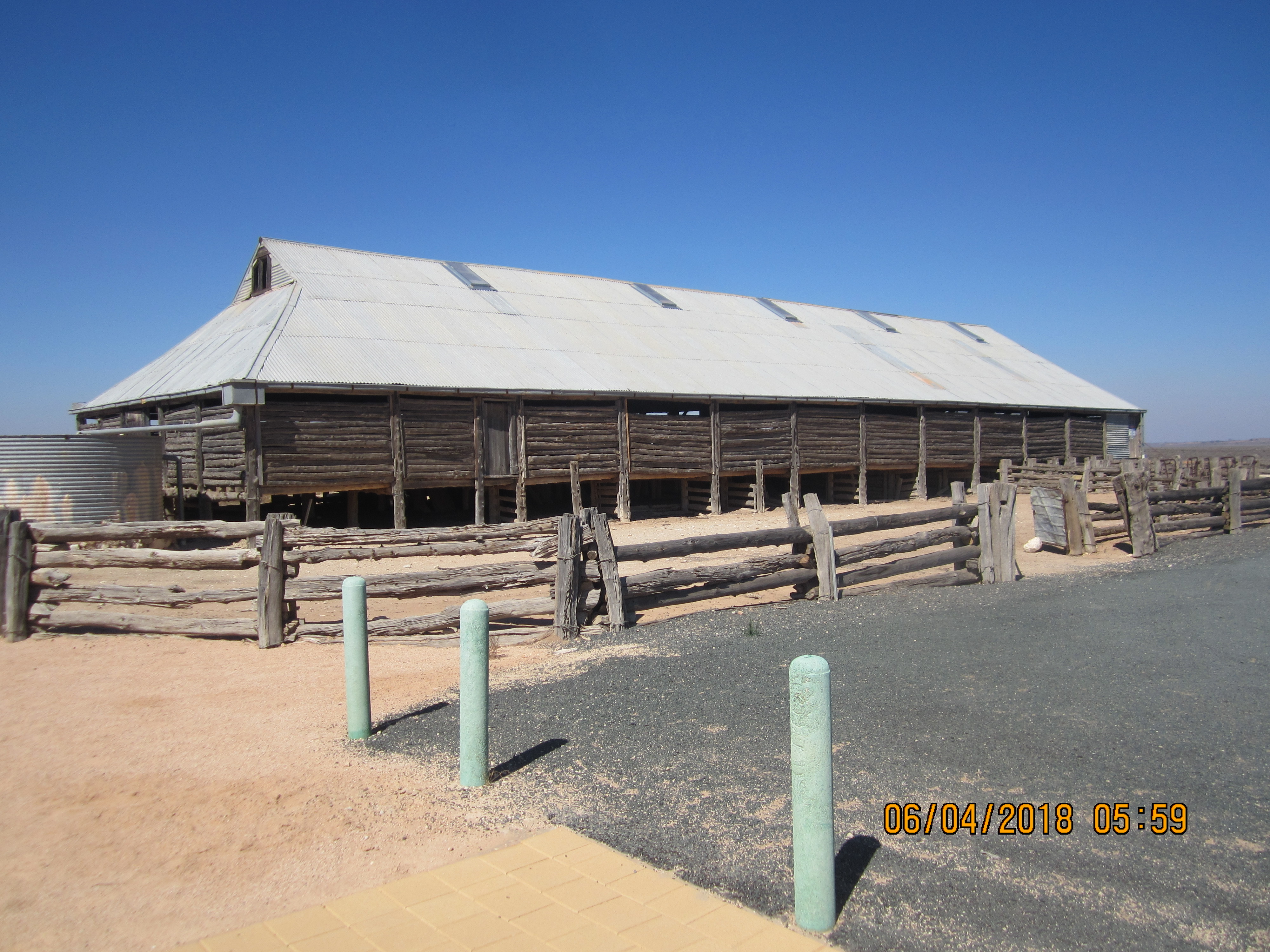
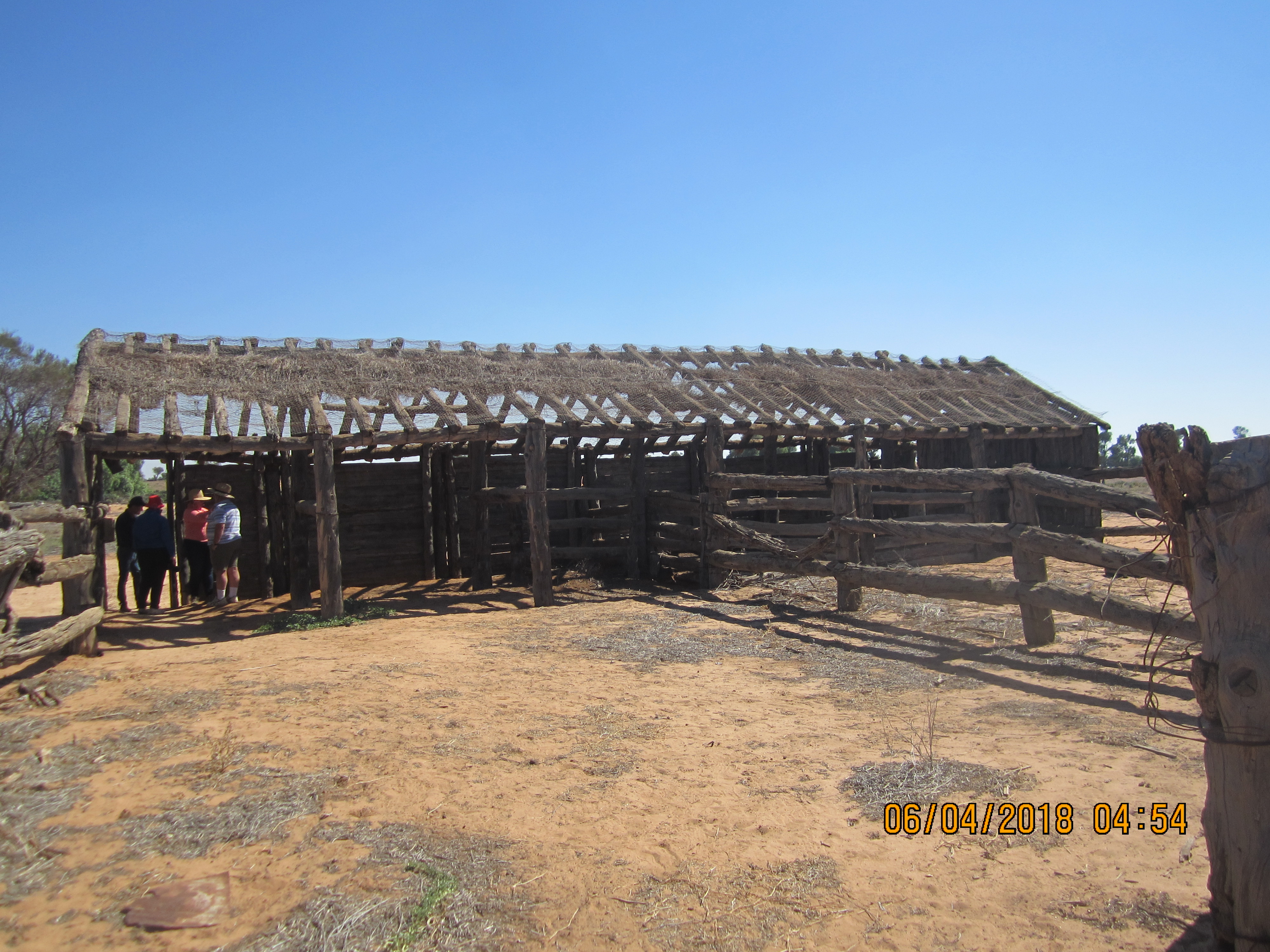
After morning tea another organised tour began. The Mungo Woolshed and Visitors centre, the Zanci Station Homestead. Once again, our guide was very knowledgeable, easy to listen to and had many stories to tell. The land is harsh and from the stories told, the people that lived on it were warm, resourceful, and very resilient. We were told The Mungo Lady story, of bones that were discovered in 1968 by a geologist named Jim Bowler. They are said to be about 40,000 years old and show clear signs of intentional cremation and a ritual burial. A further search in 1974 disclosed the bones of a man, buried on his back with hands crossed in his lap and red ochre sprinkled on his body. The details of this ritual showed signs of an advanced culture.

To finish the day a walk around the grounds of the lodge had some interesting moments. Emus, birdlife, lizards, and kangaroos. Dinner and some wine under the stars saw us heading to bed, happy and content with our visit.

An early breakfast before packing and heading the opposite way out of Mungo along another dirt road toward Balranald approx. 2 hrs away.  From here we headed to Orange to meet up with some friends for dinner and an overnight stay. 

That ends our extended trip and we head home to normality once again. I encourage you all to travel around this beautiful country of ours. There is so much to see. I look forward to reading your comments below. Have you been to any of these places and what did you like or dislike about them?

Thank you for reading.

Conversations as Seniors – Writing v Verbal.

Articulating oneself is not always easy especially as we age.

Recently I heard one of my daughters relay an old conversation of ours onto someone else. The subject matter of which we were referring to was of a very emotional content. What amazed me when I heard her version was the number of times my words were misinterpreted. Hearing it back I can understand this, as my emotions controlled my words and articulation left the building. Interestingly I am aware of this when people talk in person and understand totally how arguments develop, however the exchange of words I am referring to was all in writing.It highlighted to me that behind the words we choose to write, there are a lot of meanings that are not conveyed to the recipient. I have always thought this when verbalising conversations and for that reason had relied on writing as a medium. More extensive words can be used and more time taken to exchange. Sadly I now believe I am mistaken.

One would think the written word would make it easy to remove some of the ambiguity of the English language. I find when I write I start with an idea, or quote or statement and add my thoughts. What happens though once I start rereading,editing, and interpreting, quite often a new angle or a new perspective is reached. I then change things a little and go through the process of editing again. Writing for a blog, a journal or an essay is completely different to having a written personal dialogue with someone. There are so many factors which effect human interractions. Generational differences, environmental influences, experienced behaviour with the subject matter and the actual timing of the exchange.In general communication is often very flawed. This is not news to most of us, especially those of us in our senior years. We have all had many occasions over our lifetime when we have regretted what we have said as it was fuelled by anger or fear and even love. Equally there are many times we wish we had said more or offered more but at the time were guided by different influences.

Articulating what one wants to say is hard and listening to what is being said is a skill few of us have. I have completed several communication and training courses and therefore should be good at relaying and receiving but when it comes to my family or emotional issues I fail miserably in verbalising or writing my thoughts clearly. My emotions are always heightened and my need to keep things calm are always present. The result of this is compound. When you are worried about what to say your mind is occupied and you are not listening as you should. You are constantly thinking how I can convey my thoughts without sounding mean, judgemental or thoughtless. In the process of “being so thoughtful” you may in fact be missing the whole point of the conversation. You are constantly behind the conversation. In personal situations the effect of this for many people may result in less conversation, less understanding and in many cases more arguments and more distance.

These days we no longer wait a week for the letter to arrive and then savour every word written, we no longer use the telephone to talk and listen for hours. Family members and friends are often busy with multiply commitments thats time together is often infrequent and sadly I have noticed in recent times even emailing is becoming redundant outside of business needs. We are texting, using messenger, instagram and facebook to communicate. There are only so many words you can use in a text and as our fingers are not as nimble as those younger than us it is not always an easy task. I will admit face-time and zoom meetups are a quiet blessing if you can master the technological problems that come with them.

I wish I had an answer to this accelerating situation in todays’ modern world but unfortunately it eludes me.

An unexpected gift.

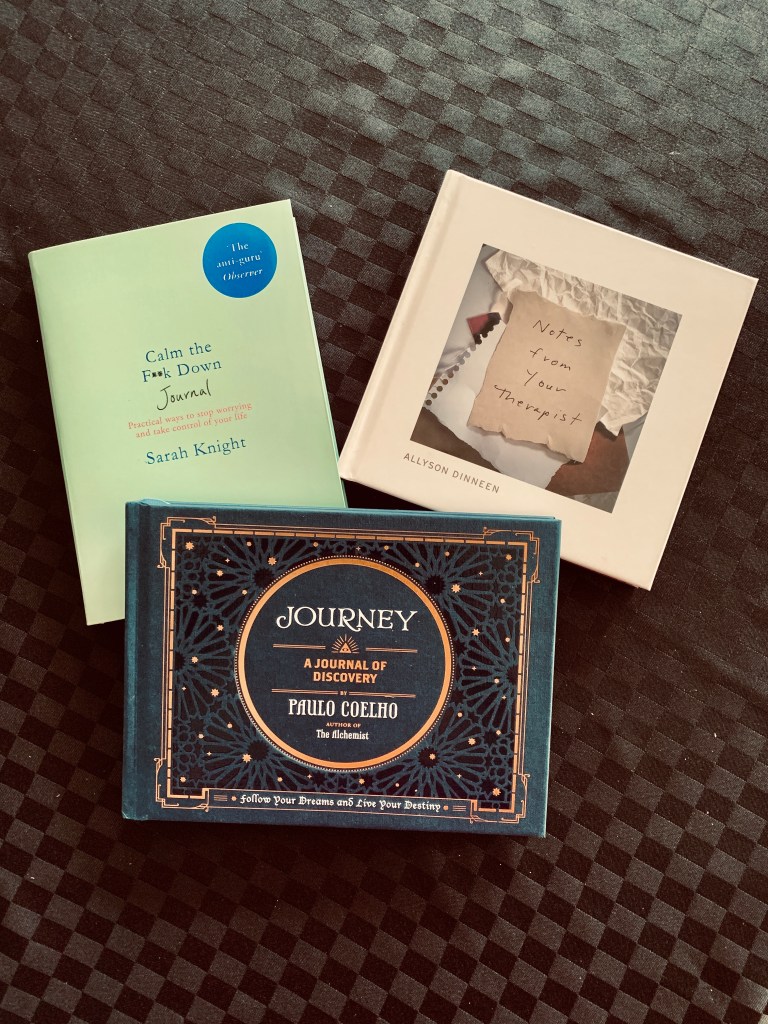
For Christmas this year I received a set of inspirational and questioning journals from my youngest daughter. She knows I like to write and thought this would help with some ideas for my blog.

To be completely honest, I was not sure at the time she was right. It is not something I would ever have considered buying for myself. I am not someone who reads inspirational quotes or positive thoughts for the day, however I do find human behaviour fascinating and I expect looking at ones own behaviour is a good place to start. Trying to keep an open mind I started to explore the journals. I was pleasantly surprised and quite amazed at some of the questions posed. Questions that I had pondered in the past but not spent time investigating. One question that was asked implored me to think and explore my thoughts.

What do you want most in life?

The burning question that keeps the world turning. The question we ask ourselves continuously throughout our lives. The question we at times spend way too long pondering and then other times we push it aside for another day as it is too hard to answer.

Now getting close to 70 I can reflect on this and answer it fairly easily. Not with-standing  world issues, which I would hope applies to most people, to eliminate poverty, eradicate violence, protect all children, accept all beings for who they are and discover amazing things. We want to have a sustainable world in which to live and in an ideal world we would have peace. Who does not want this?

I believe to answer this question as an individual the answer is dependent on time and conditions within our lives. What I want most now differs to what I wanted in years gone by.  I only speak for myself here.

Overall – Late teen years I wanted freedom, independence, and excitement – personal level – I wanted  love and laughter in my life.

Overall – In my 20’s I wanted stability after a childhood of instability. Regular income, loving family  and good friends- personal level– I wanted my marriage to be strong and I wanted children.

Overall – In my 30’s I wanted to purchase our own home and I wanted safety, stability and a good future for my children – personal level – I wanted to be a good, honest, and approachable mother.  I wanted to improve my education and improve my ability to earn a higher income.

Overall – In my 40’s I wanted financial security and more time for fun and relaxation. Time  and money for Travel. Success for my children both in education and career – personal level – I wanted to be liked and valued by my family.

Overall – In my 50’s I wished for improved health services. I  wanted  longevity in our business – personal level. I wanted to fix my children and husband who were all struggling with ill health.

Overall – In my 60’s  I wanted Good Health, financial security, more foreseeable possibility of retirement – personal level . I wanted our life to slow down and to be easier.

Overall – Now approaching my 70’th year- I want people to learn from the experience of a pandemic. I want people to stop blaming the government for every shortcoming in their life and to take responsibility for their own actions. ( a sweeping statement, I know, a discussion for another blog). On a very personal level I just want to live long enough to be able to enjoy my retirement with my husband, I want good health for myself and my family members and my friends.  I want laughter, excitement, I want to be able to try new things, travel to new places and experience life in general.  

On Reflection

On an introspective level, I would like to stop bitching and complaining about people and situations at hand. I have noticed as I grow older, I have less tolerance and I am more bitter and less compassionate in my thoughts. I am guessing this is just a tiredness we get after a lifetime of pushing our own agenda’s, trying  always to be right or knowledgeable or simply trying to be noticed.  It is not a good look and not a productive way to live.  It is something I need to work on.

“If everything went the way we wanted, soon we would no longer have anything to write about, nothing to quide our daily thoughts.”

Paulo Coelho’s Blog

What do you give a senior person as a gift.

It seems simple when we, being older people, say we don’t want gifts, we have everything we need. You may have read in a previous blog about my feelings about celebratory days. Therefore you would know I do not rate them as a priority in my life. Having said that I like to be spoiled the same as most people. To feel loved and pampered is so uplifting. It is a motivation to keep living, especially for those who are ill or those whose lives are sad and lonely.

The type of gift is what is important here. In todays world, particularly in our lucky country many of us own our home, have money to buy what we need and as we age we need a lot less. I only speak for myself in this post but I do think that if you give the following it will be appreciated.

Time is what we want, whether it be time spent with those who makes us happy or time spent doing the activities or the hobbies we enjoy. Time to be heard and time to reminisce. What we need is to feel respected and loved. By this I personally mean we like to think we are of value and our experiences and insights gained over the years have not been wasted.

I am sure a lot of us remember back when we were teenagers or young adults and thought of our parents as old, unwise, out of touch and intolerant. I can recall these feelings on some occassions.

I am now old enough to realise how thoughtless and even cruel that was. I did not value the time I had with the people who knew the most about me. I did not respect the experiences and the knowledge they gained through the multitude of changes they went through over there existence. I had not experienced the hardships of war and the depression. I had not lived through several pandemics I had not experienced death and destruction. I often think about the confusion of migration and the introduction of new cultures and traditions. In addition to this I wish I knew more about their lives as children, what toys they had, what they did with their friends. We will never ever really know what the world was like before we entered it, if we rely only on books or google to enlighten us. Talking to an older person will give you so much more colour, depth and yes maybe a little license will be taken with the story but it will be worth it. Life was so different in generations before us. It has only been in recent times that I have taken the time to think about this. What I do know is I now regret by own lack of insight.

Next time you are thinking what can I give grandma or the elderly neighbour or anyone for that matter, buy the chocolates, the flowers or the new appliance they may need but pair that offer with a visit, a phone call or an invite for coffee. The exchange will be more than worth it for you and I assure you the person receiving will value that time above everything else.