Camping in Capertee Valley February 2023

Ken saw a very appealing reference  for a National Park camping ground only 2 half hours from home. This one you needed to register and pay a booking fee of $6.00.

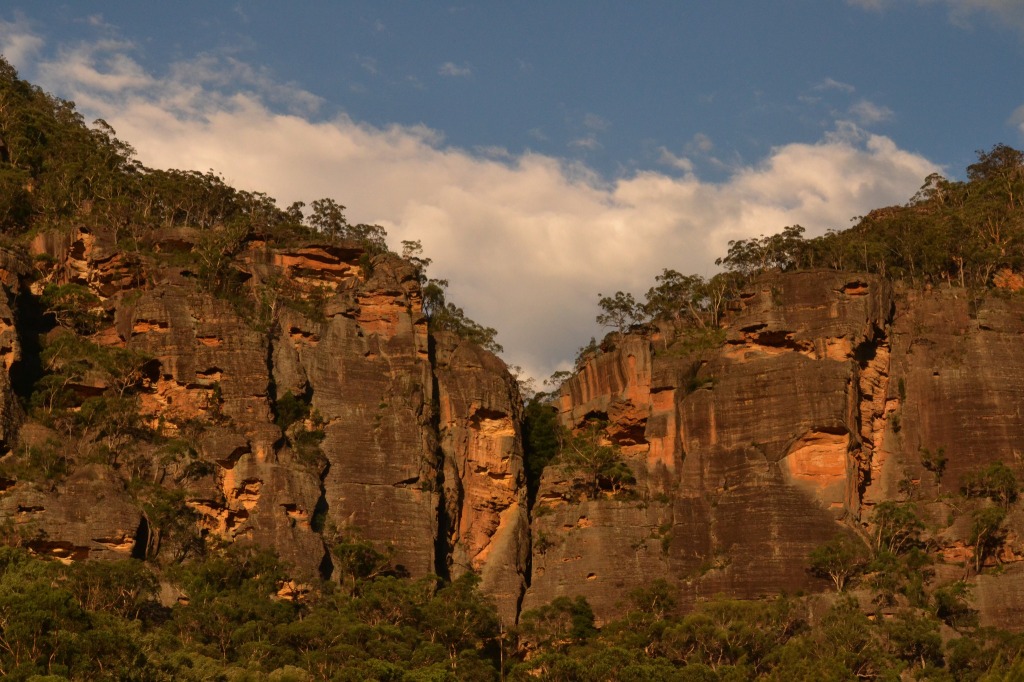
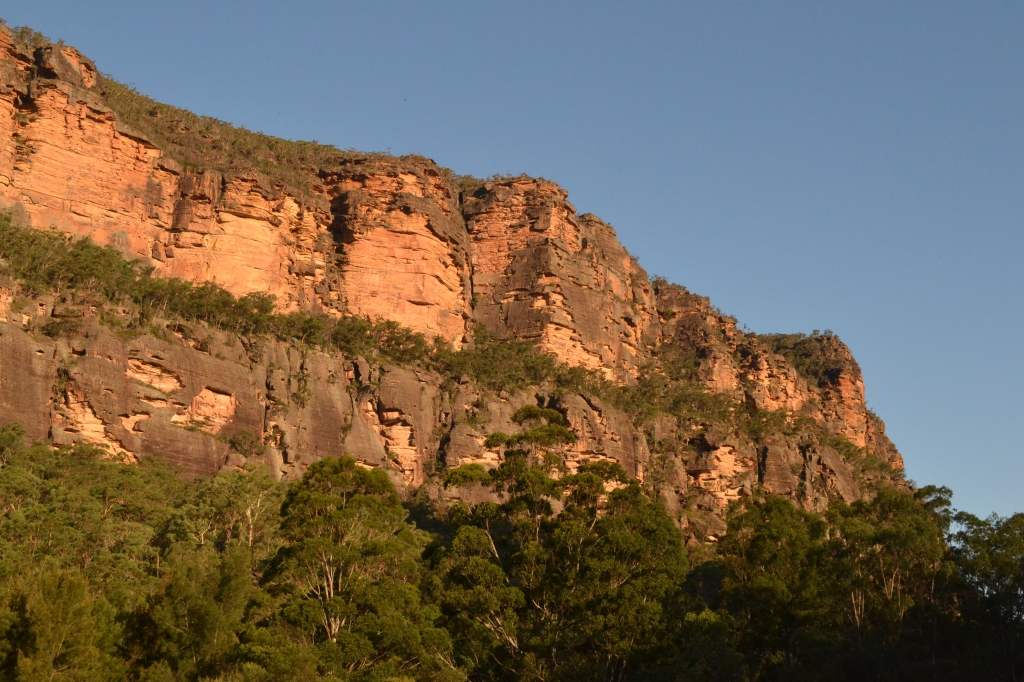
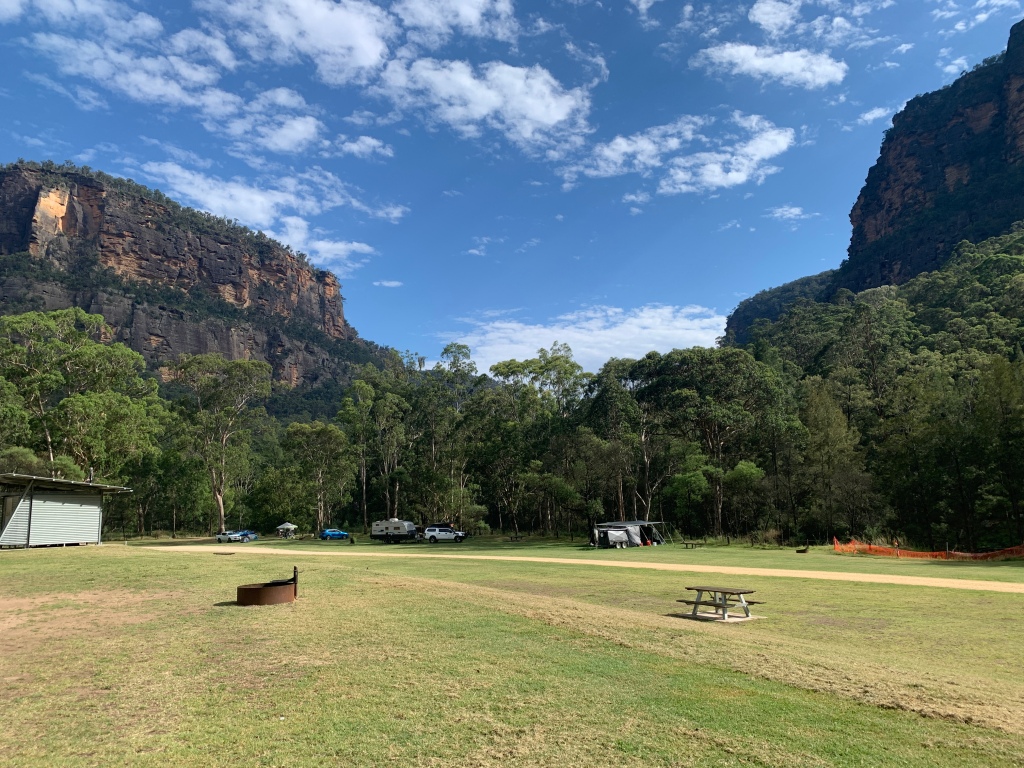
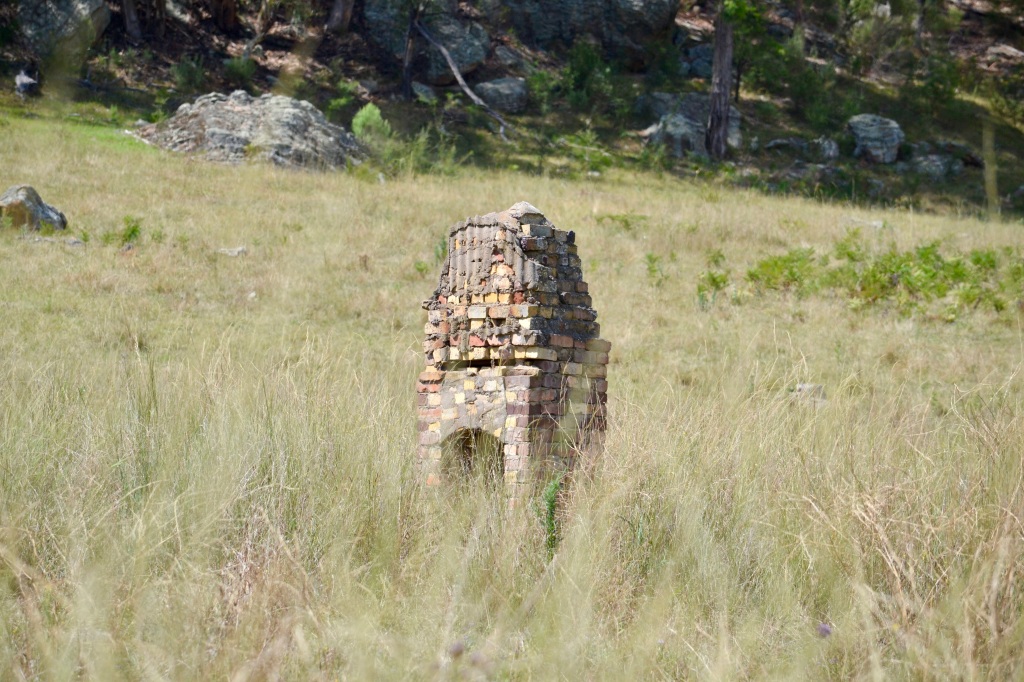
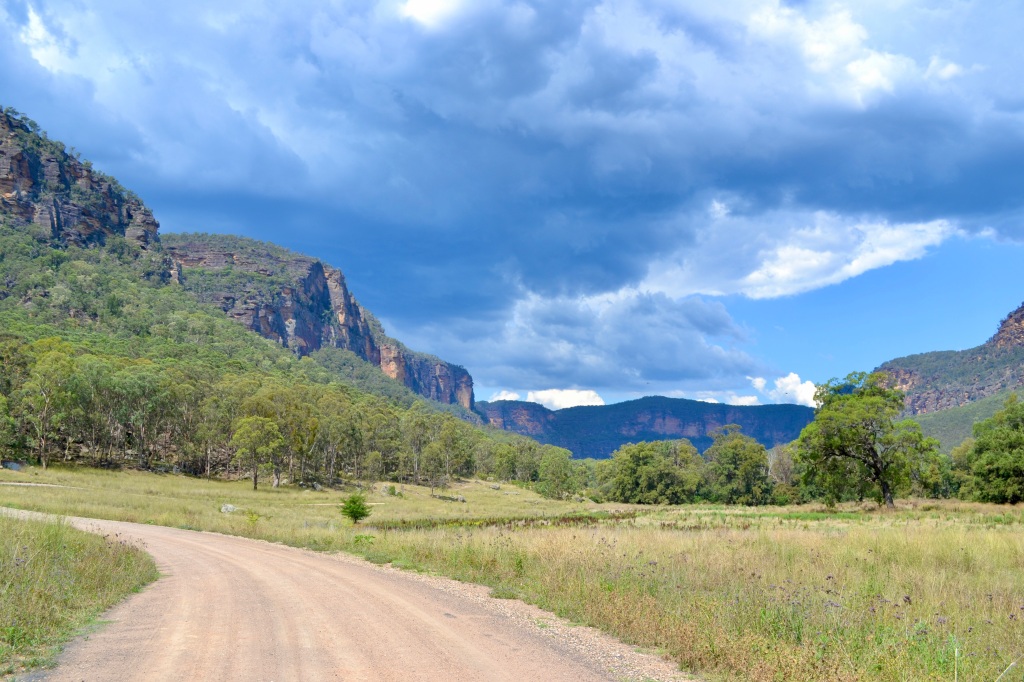
The weather at home, the week before was dismal so I was beginning to wonder whether we should venture out at all. Luckily by Thursday the forecast was improving and on the Friday morning we woke to sunshine.   We hurriedly got everything together, had an early lunch and headed off for our three-day adventure. The drive into the national park is a spacious valley of wilderness, a canyon with  Red faced mountains climbing on either side, looming up into the sky. A few ruins of chimneys and machinery can be seen along the way. The road is narrow but not too much traffic to spoil the serenity of the drive.

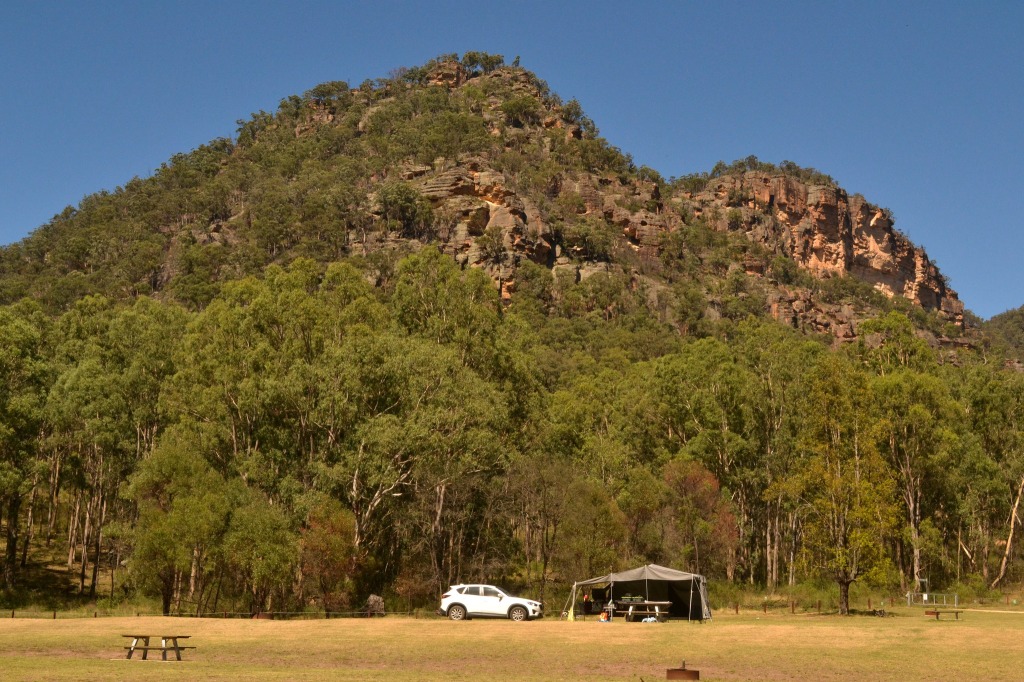
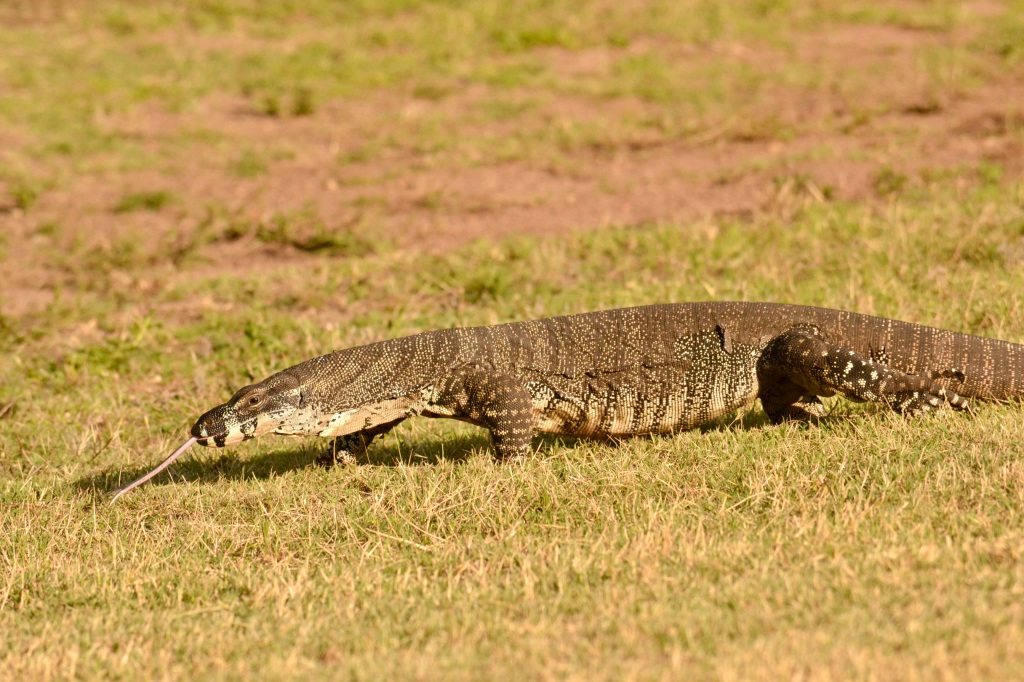
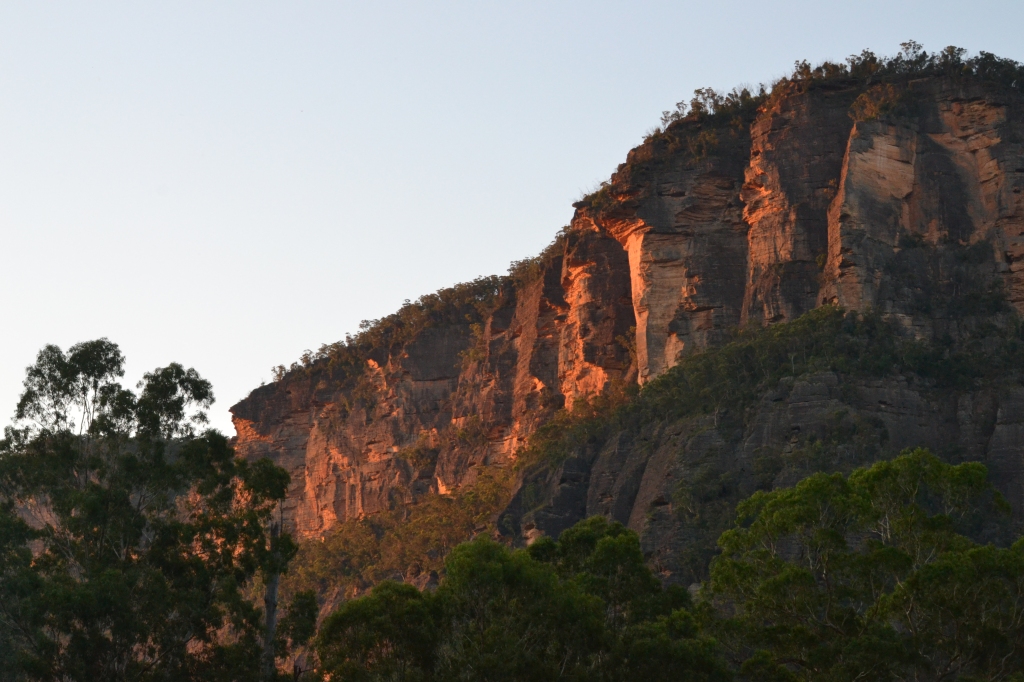
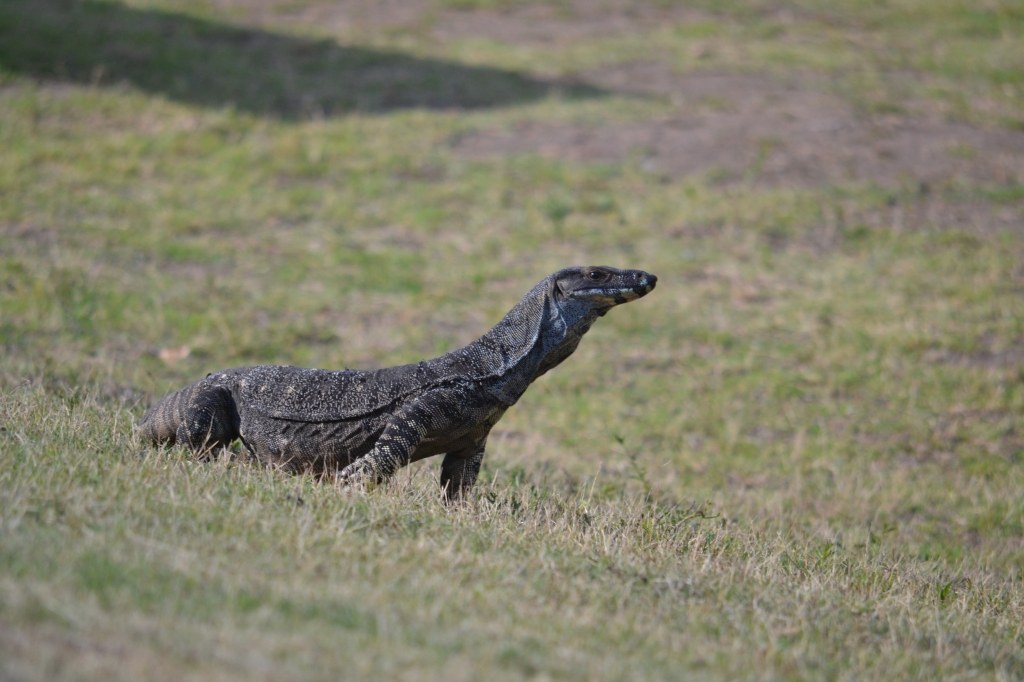
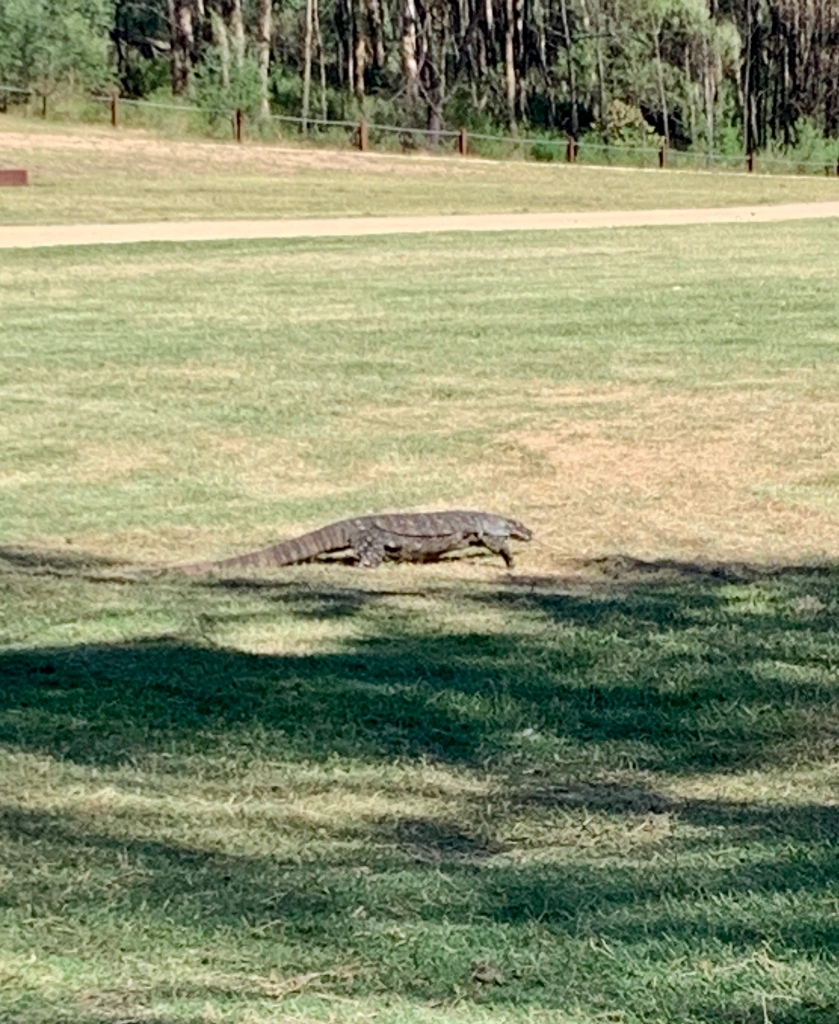
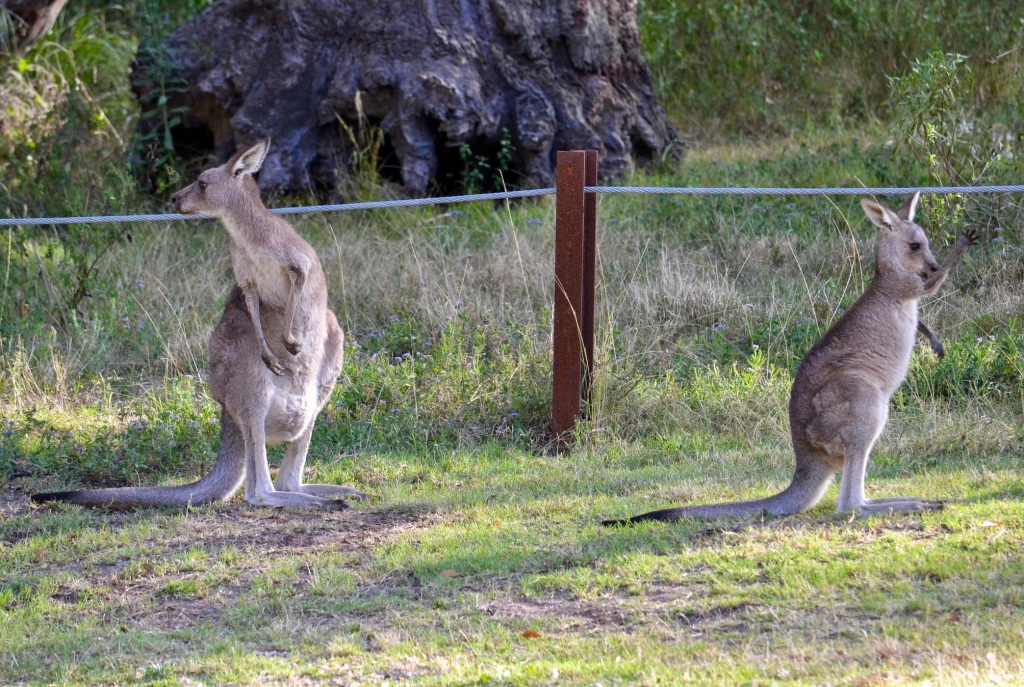
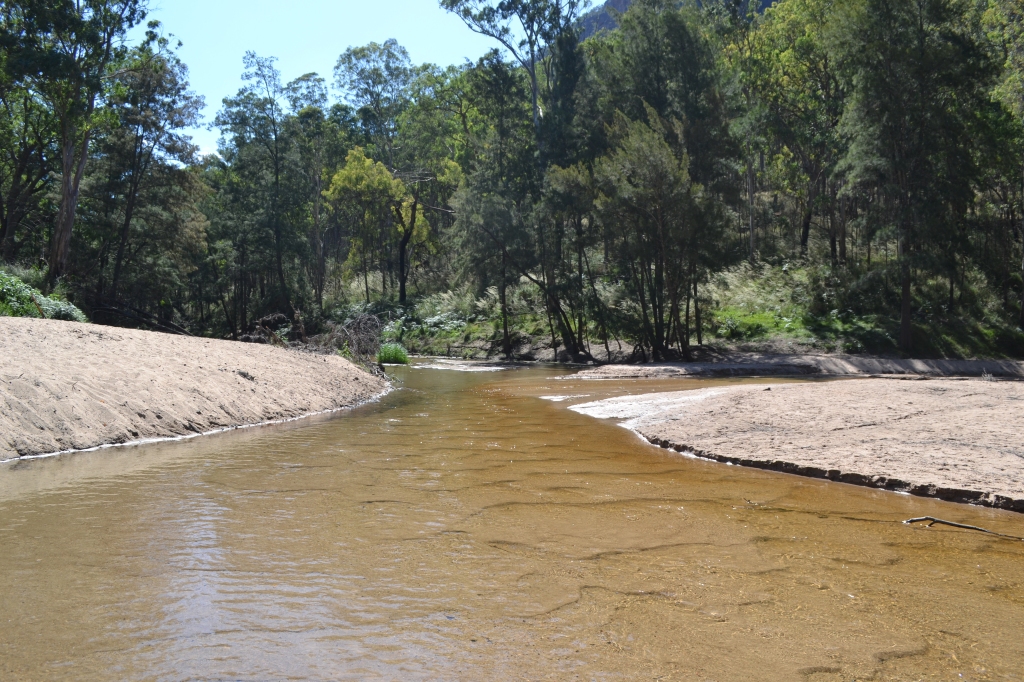
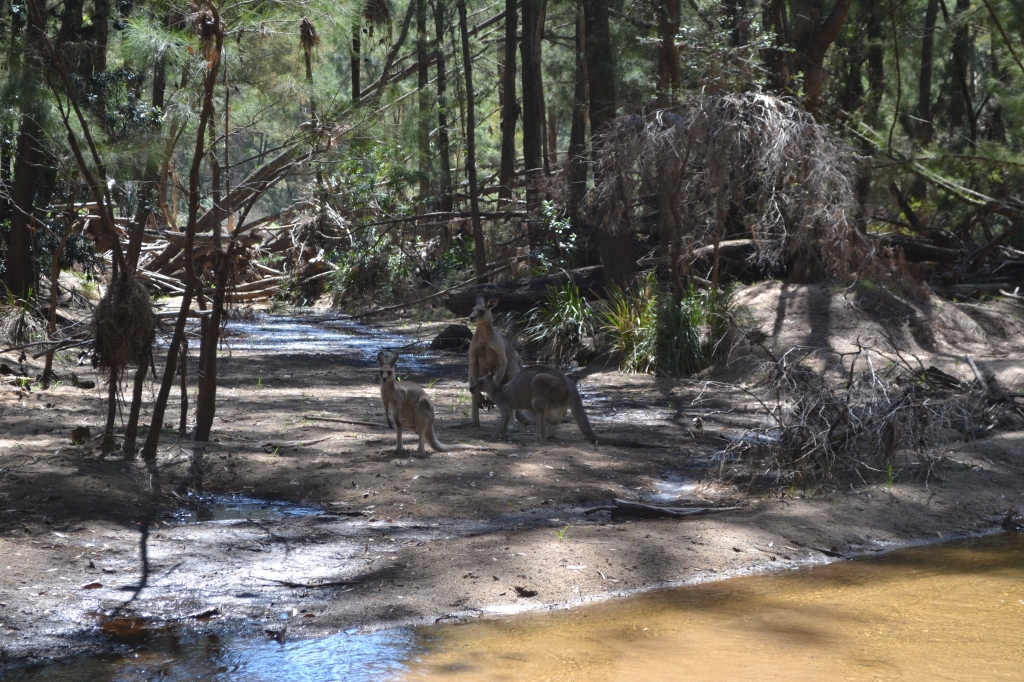
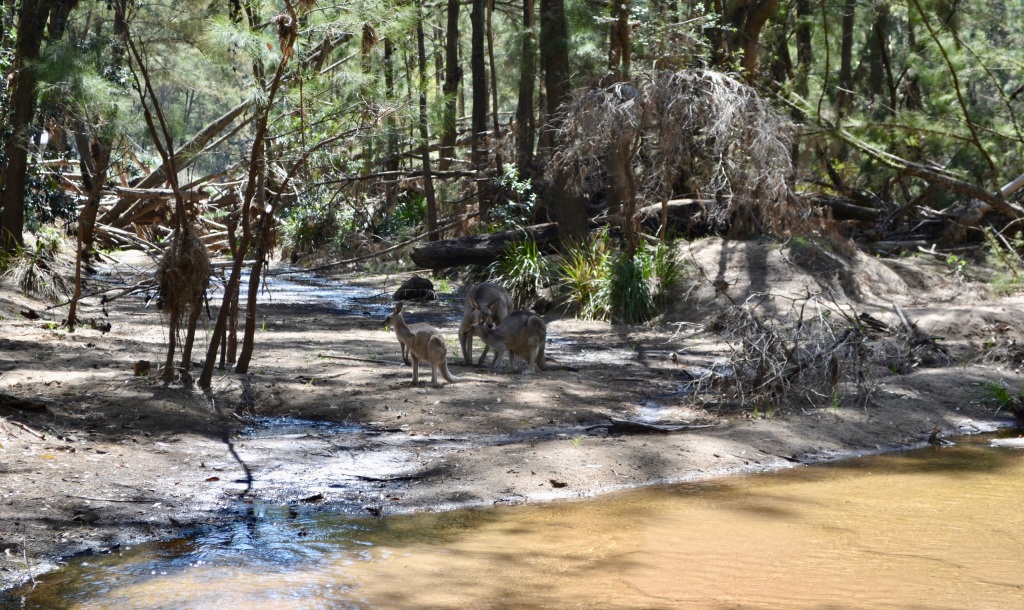
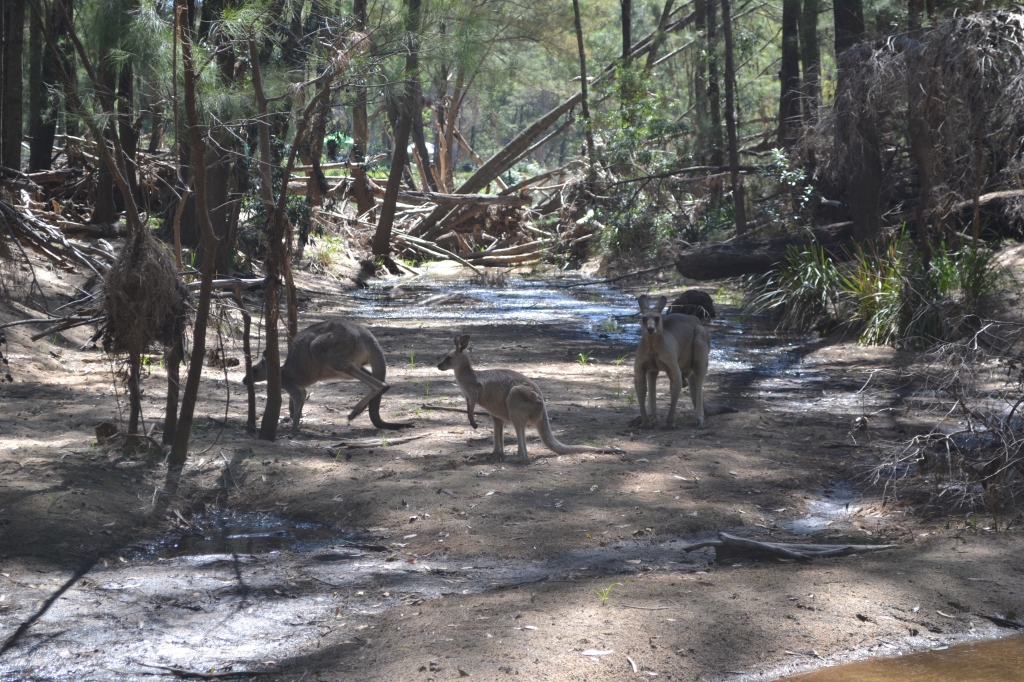
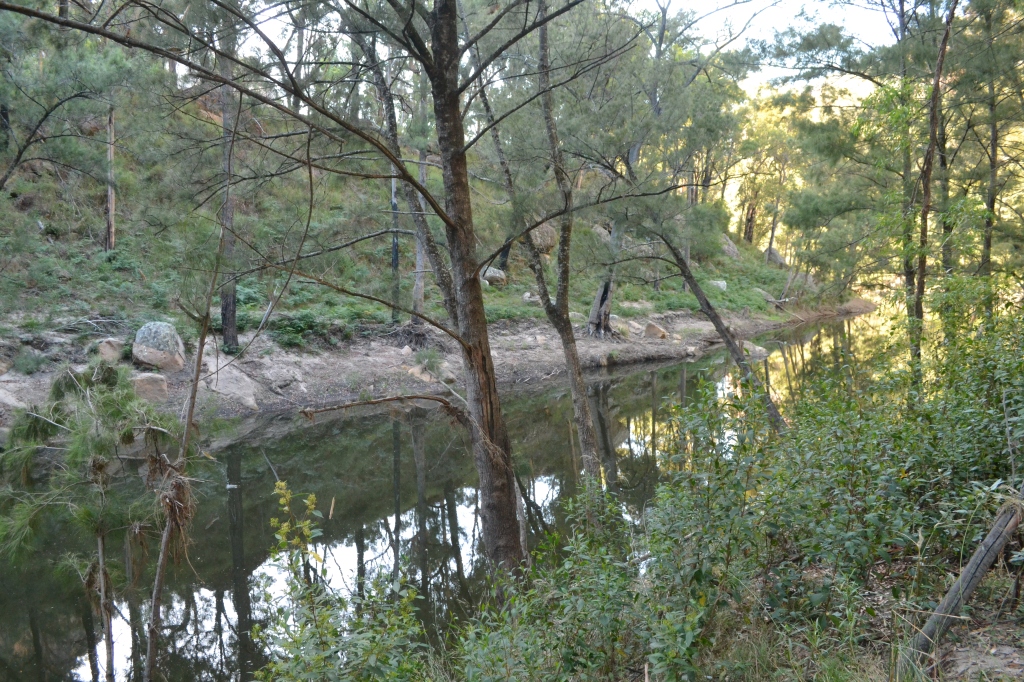
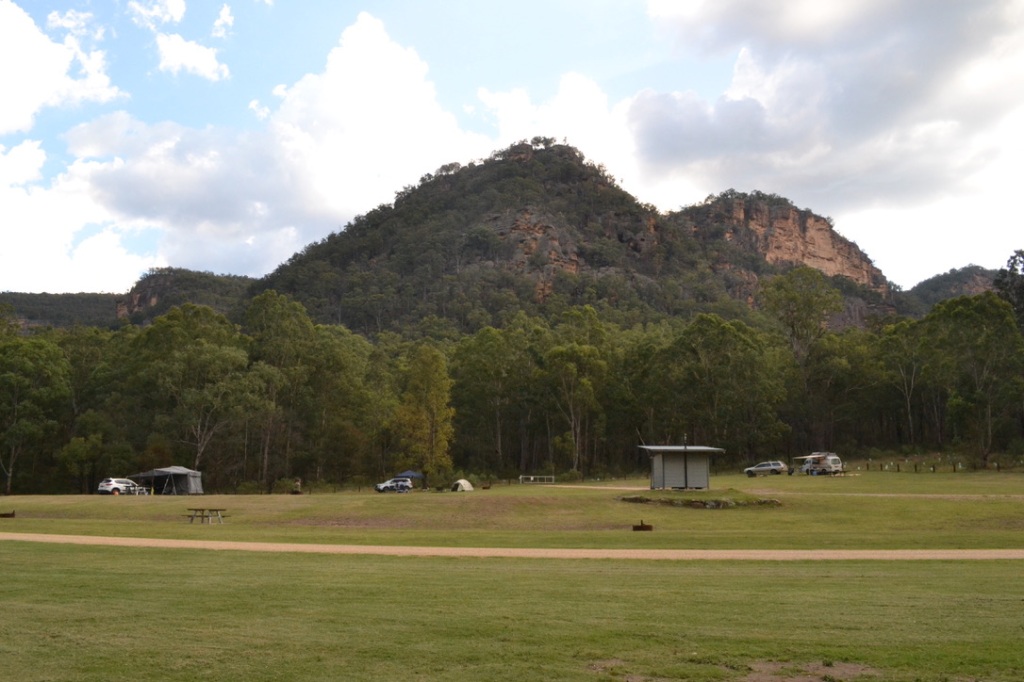
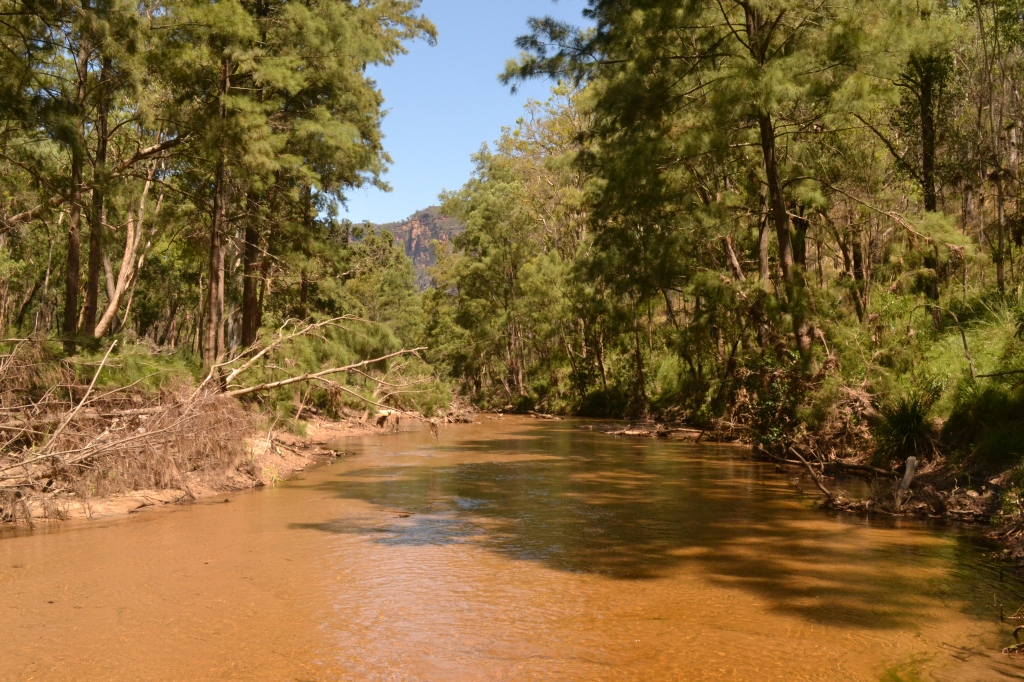
On reaching the Coorongooba camping grounds we were not disappointed. They were isolated, but well managed with toilets and fire pits available. The grounds were situated along a river not far from the ruins of an old shale mine where they produced oil and petroleum during and  after the war years.  When we arrived most of the spots along the rivers edge were taken but there were many other level sites with park benches and barbecue pits available. We chose a flat area near a table, looking straight toward the trees along the riverbank. Above the tree line the red and grey cliff face reached for the stars.  A very picturesque setting.  It took us about an hour to set up and after a wander through the campsite we settled down with a beer and wine. We were pleasantly greeted by the locals. A very domesticated family of kangaroos happily hopping throughout the grounds, stopping  to stare, taking their time to munch on some grass and then bounding off to entertain other campers.  Just after that little introduction we looked down to see quite a large goanna making his way up from the river. He casually made his way up the rise, crossed the dirt road, and continued up the hill checking out all the fire pits, we assume he was looking for leftovers. He then, went merrily on his way searching for insects around the perimeter of the grounds.  He seemed to have a set ritual, as we saw him repeat the process the next evening also. He appeared oblivious to us humans, but not completely unaware as we noticed, on a couple of occasions, they can move very quickly when necessary.  

Dinner was underway, a curried chicken casserole with rice and the aroma was very encouraging.  While we let the curry do its thing, we were able to sit and watch the setting of the sun continuously change the colours of the cliff face, from red, to orange to yellow with the green of the trees becoming more of a contrast. It would not be long before the night sky settled in with the sparkling of the multitude of stars occupying our thoughts.

Out came the binoculars to try to seek out the  ZWF (Green Comet) last seen 50 thousand years ago by the Neanderthals. Ken was able to find it quickly but my skill at operating the looking glasses was pathetic so unfortunately, I was devoid of such a luxury.

The camp site lights turned off and the area grew quiet. It was time for us humans to rest and allow the nocturnal creatures  to have their time.
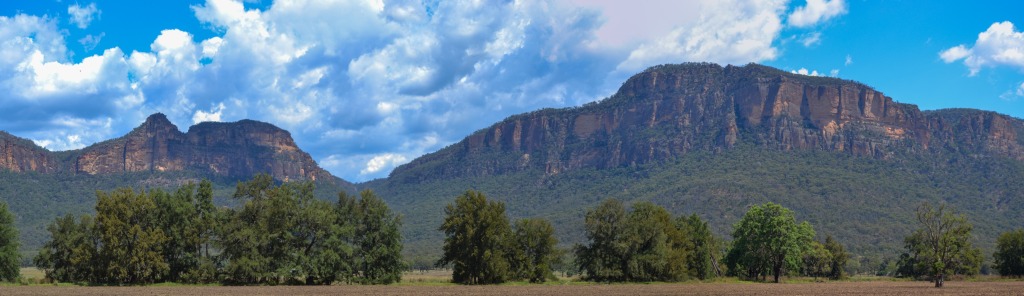
The next morning before the sun was allowed into the valley, the air was cool and crisp.  The Kookaburra’s were sounding off and quickly joined by numerous other birds stirring all around.  The water boiled and a hot cup of coffee was placed in my hands. The best start to a brand-new day of sunshine  and adventure. We started the day slowly taking the time to watch the sun fill the canyon and change the view substantially.

A short drive from camp led us to the old shale mining town of Glen Davis. Parking off the road we headed uphill along a dirt track. Small remnants of  previous buildings are evident along the way.

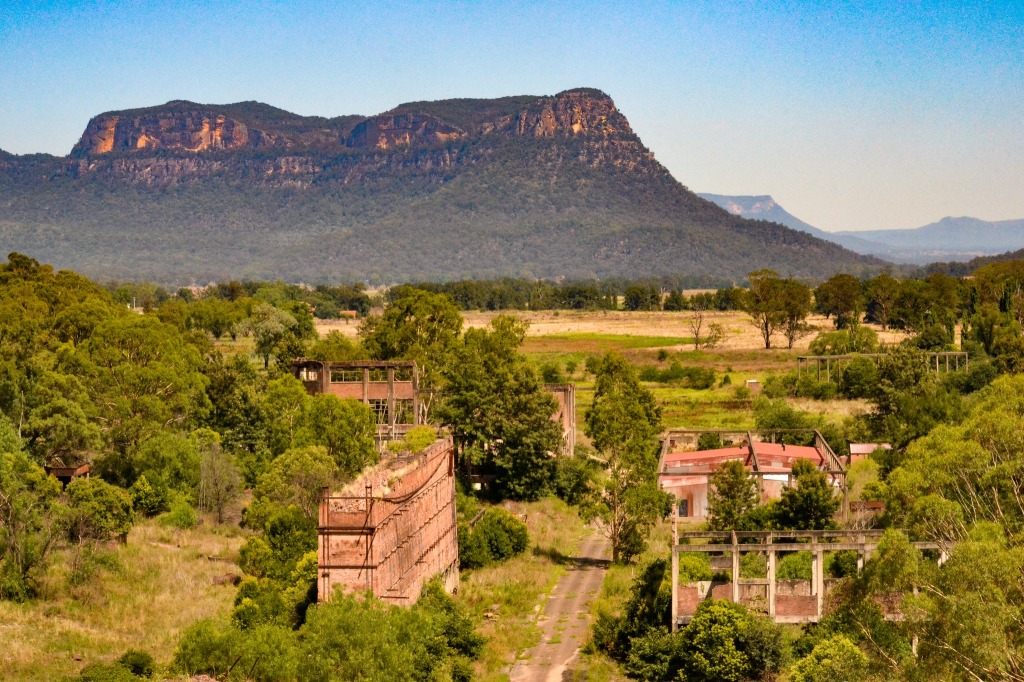
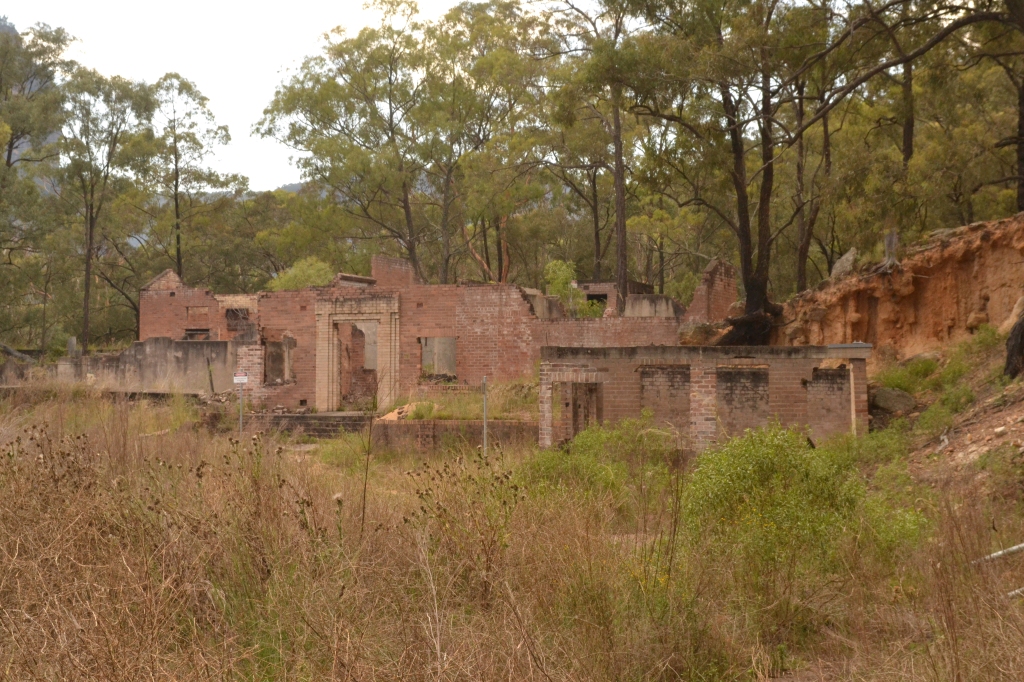
There is a great overview of the ruined shale works when you near the top.  Once a thriving community, the shale works was one of the largest employers in the area.

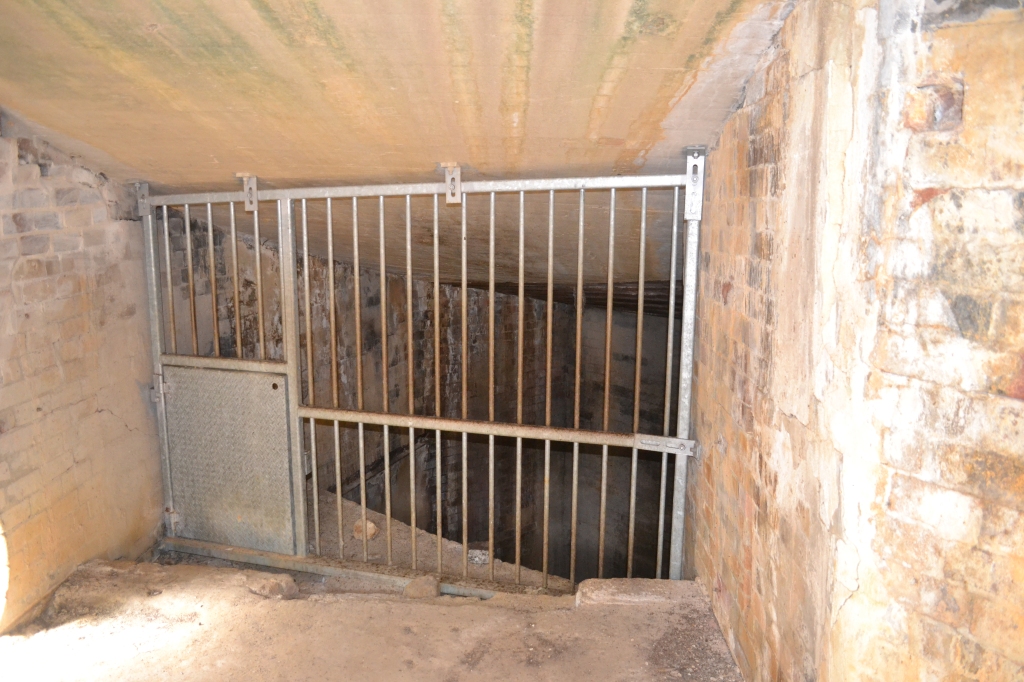
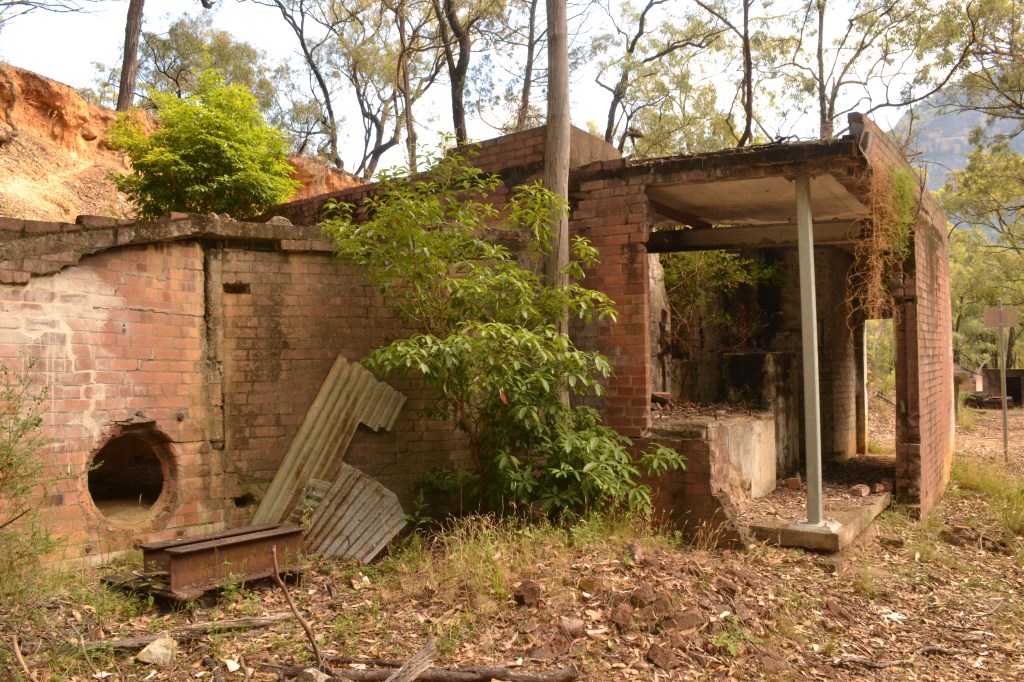
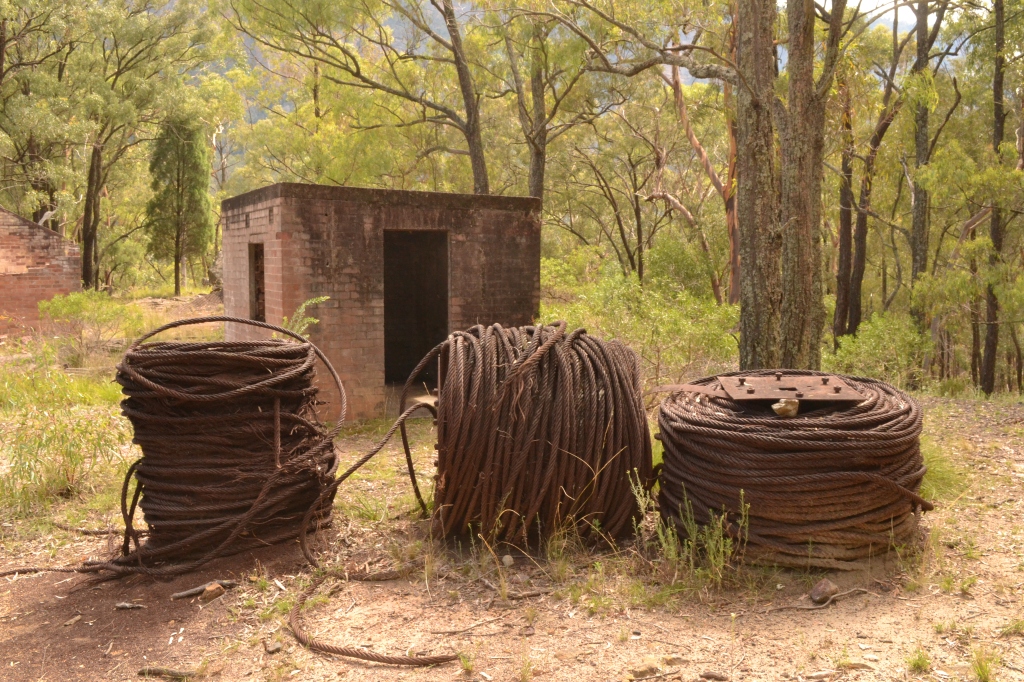
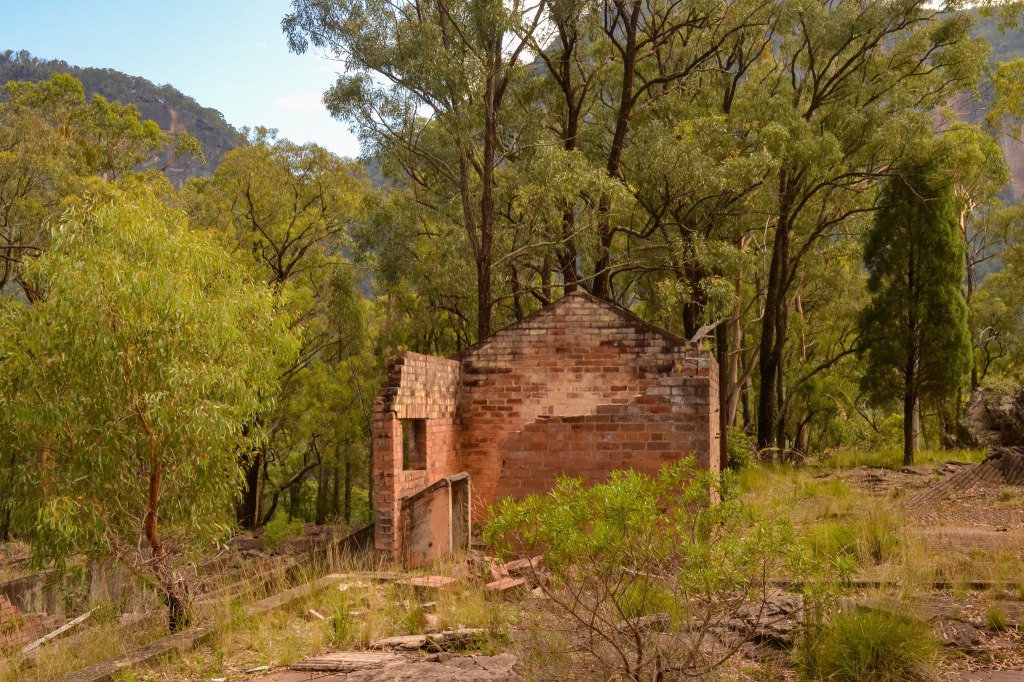
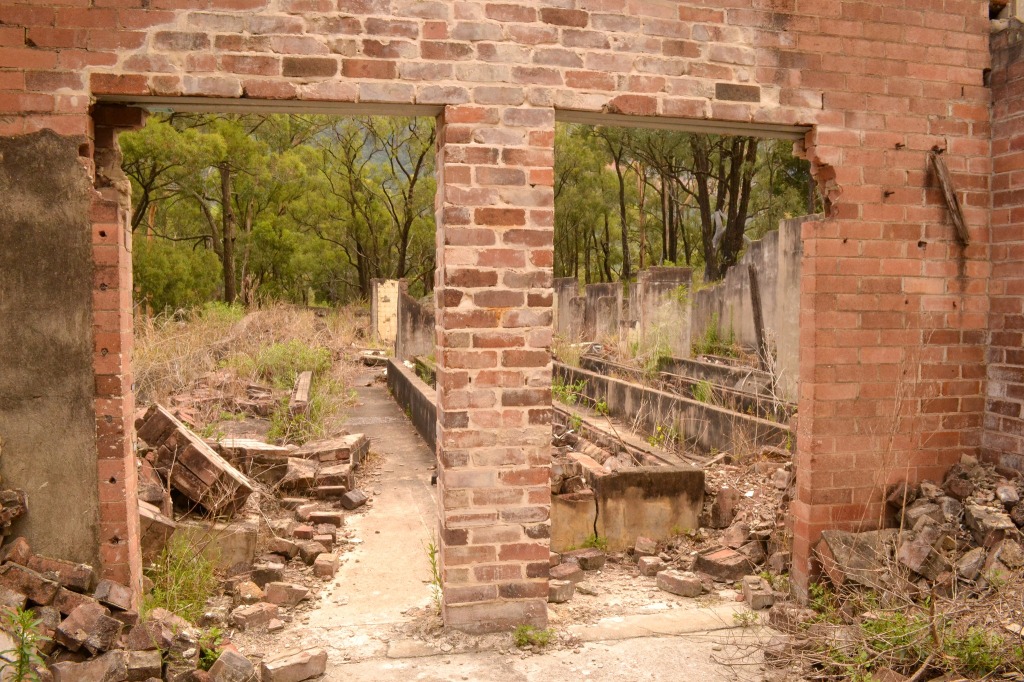
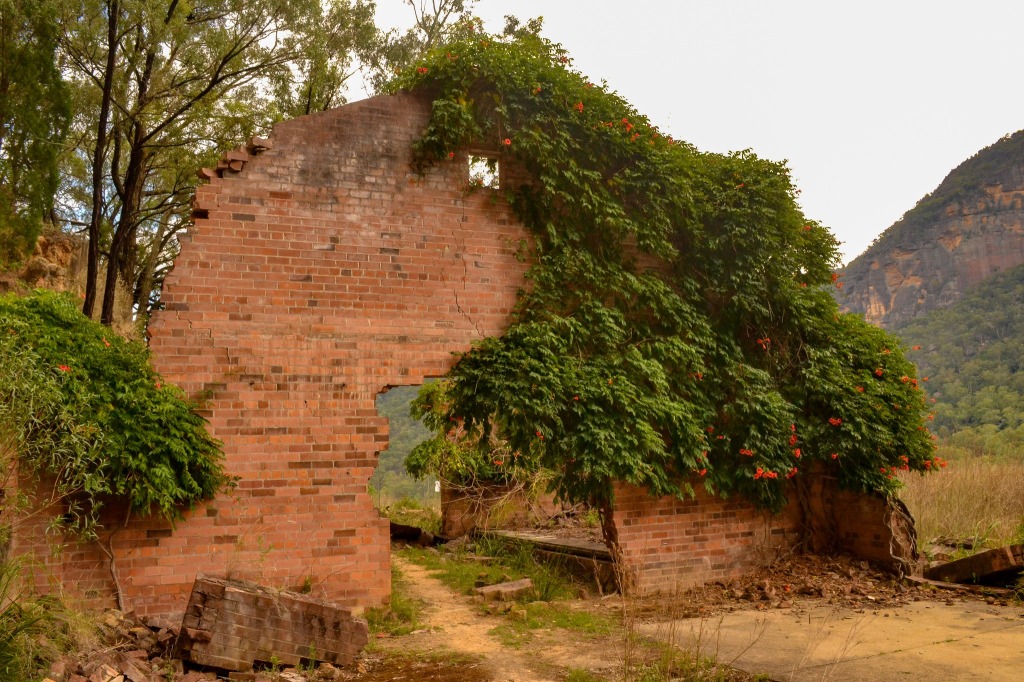
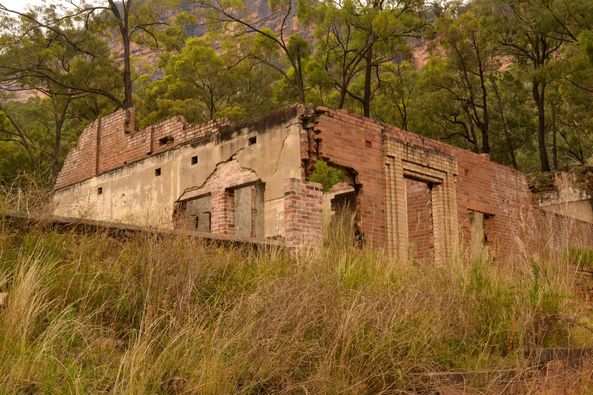
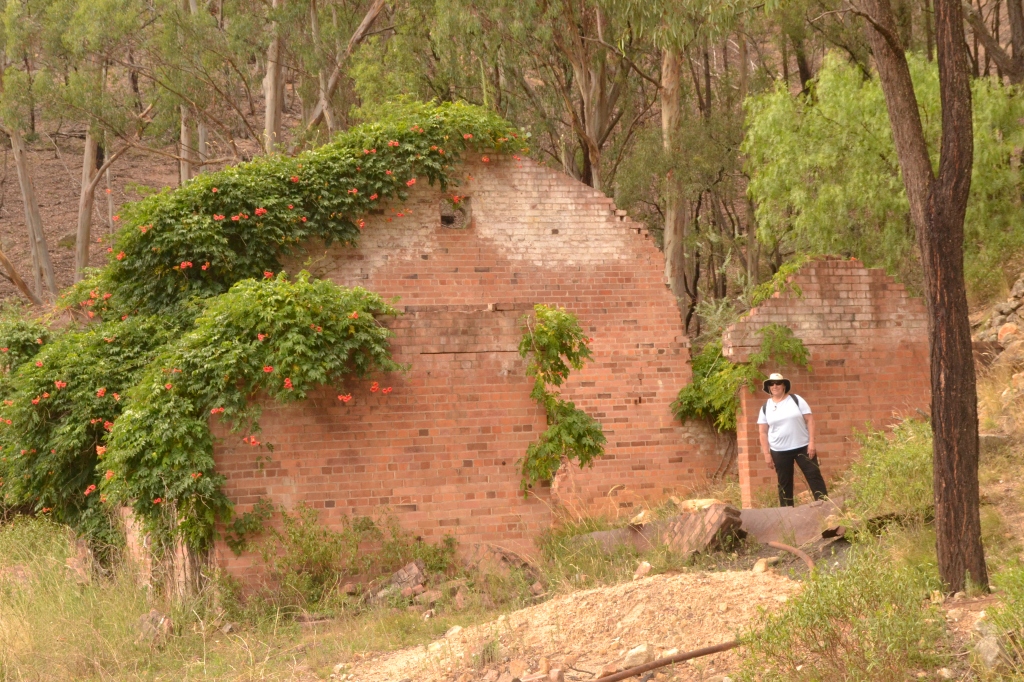
Further along quite a large structure remains. It is interesting wandering through the fallen archways navigating the levels and trying to figure out what its purpose was so many years before.  Walking beyond the first ruin, you will find more partly standing buildings, covered in flowers and greenery making them attractive to the eye.  Scattered with bits of dilapidated mining equipment, broken steps, crumbed walls your mind races once again with imaginary stories of the past.  A huge black snake slithered quickly away, thankfully in the opposite direction, as we interrupted his sunbaking.  Wandering further up the hill we found a closed off mining shaft. You could see down the shaft and marvel at the strength and conviction of those who had to delve into its depth, day after day. The weather was quite hot and the entry to the shaft  heavily occupied by flies, so we did not stay for too long.  Close by were a few very large rolls of cable, possibly used to lower the carts to the bottom of the shaft. Obviously too large to move when the mine was abandoned.  We returned to the first ruin, found a low wall to sit with a drink and snack before heading down the hill, where Ken put the drone up for an aerial view of the area.  There are tours which can be purchased, and we were told it was very interesting learning of the history of the area.

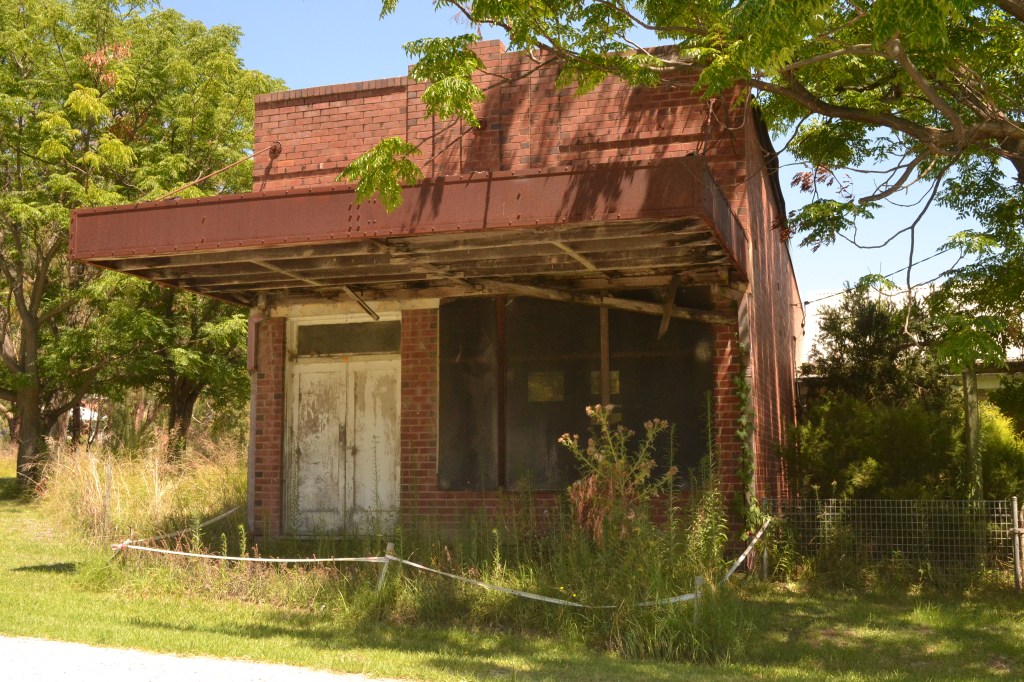
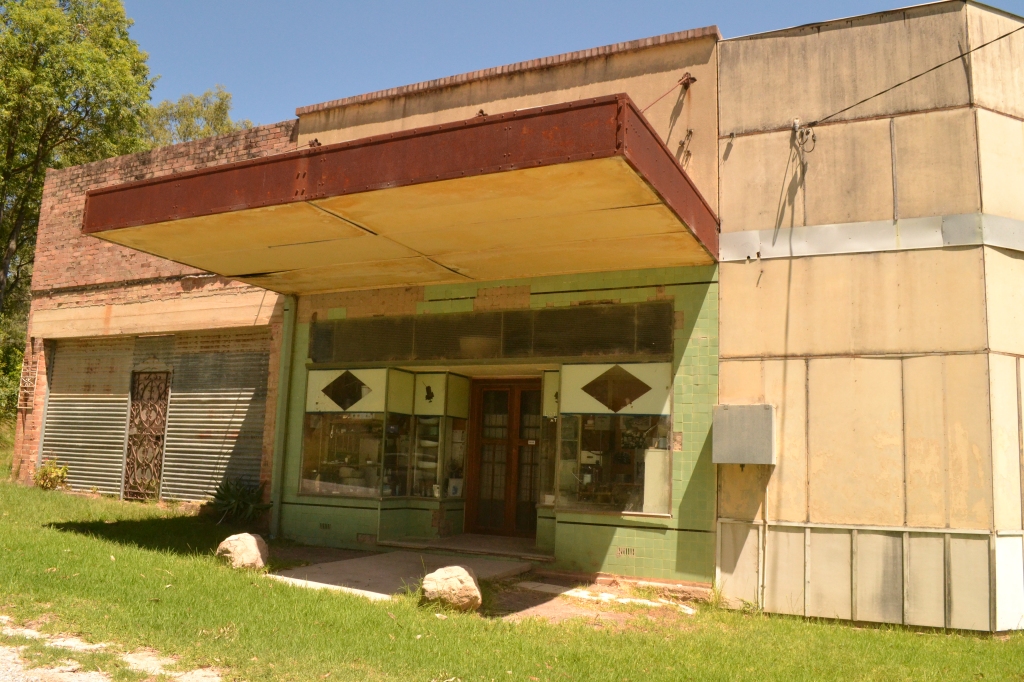
 Reaching the bottom of the hill we crossed the road to the weir to paddle our feet.  Today the water was shallow, but you could see the effects of previously high-water levels. It was refreshing on the toes but a bit of a scramble to get to the water’s edge. Moving on we drove to Glenn Davis, pretty much a ghost town now. There are residents still around but not many and no shops or industry to see.

A nice park and camp area with a community hall in the centre of town. Some information plaques which tell the story of the lifestyle of those who occupied the houses. It is a remote place and hard to believe there were once approximately 2500 people living and working in the area. We took off to find a café for lunch and found ourselves in Rylestone. Another country town with a huge history. A lovely park to wander through, a couple of pubs, cafes, and touristy shops.

Overall, it was an interesting day and we finished it with some wine and cheese, a chat with some regulars to the campsite, a great meal, and an early night.

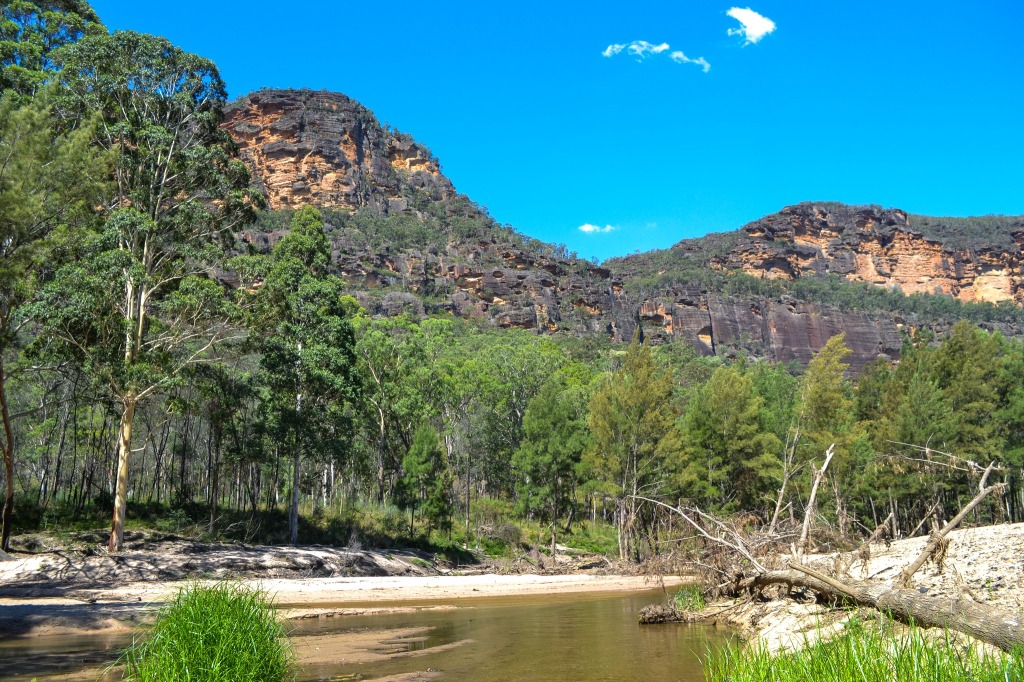
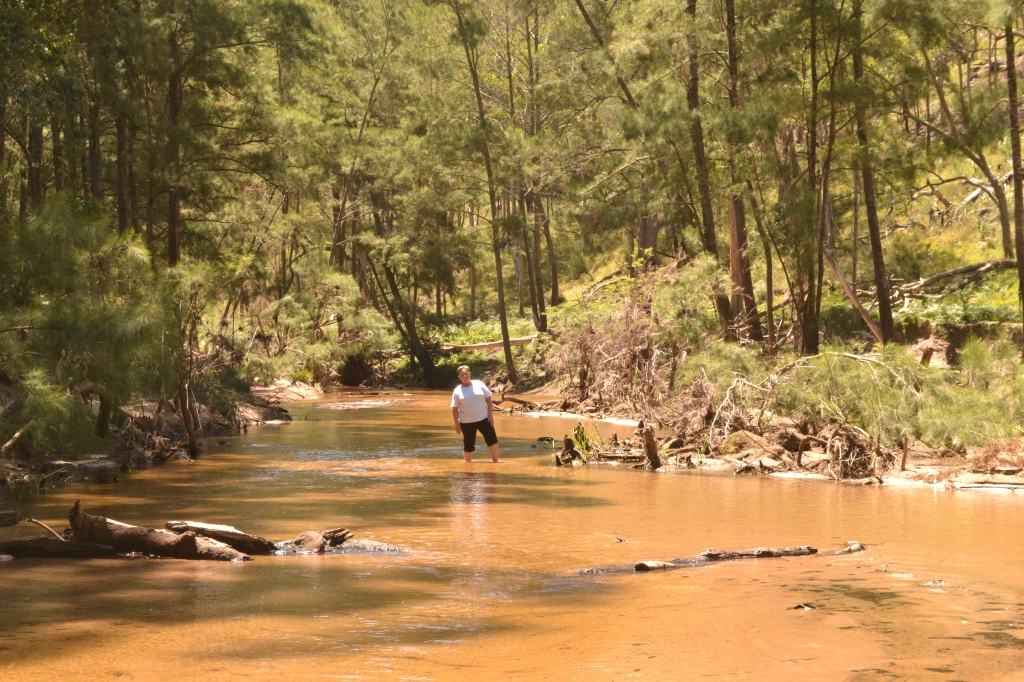
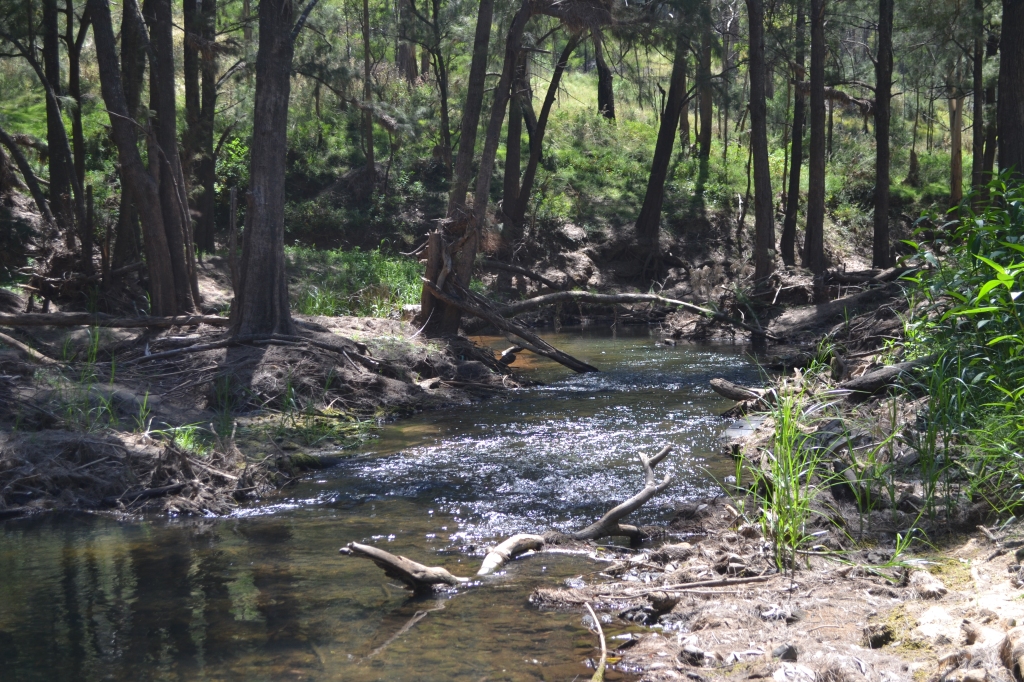
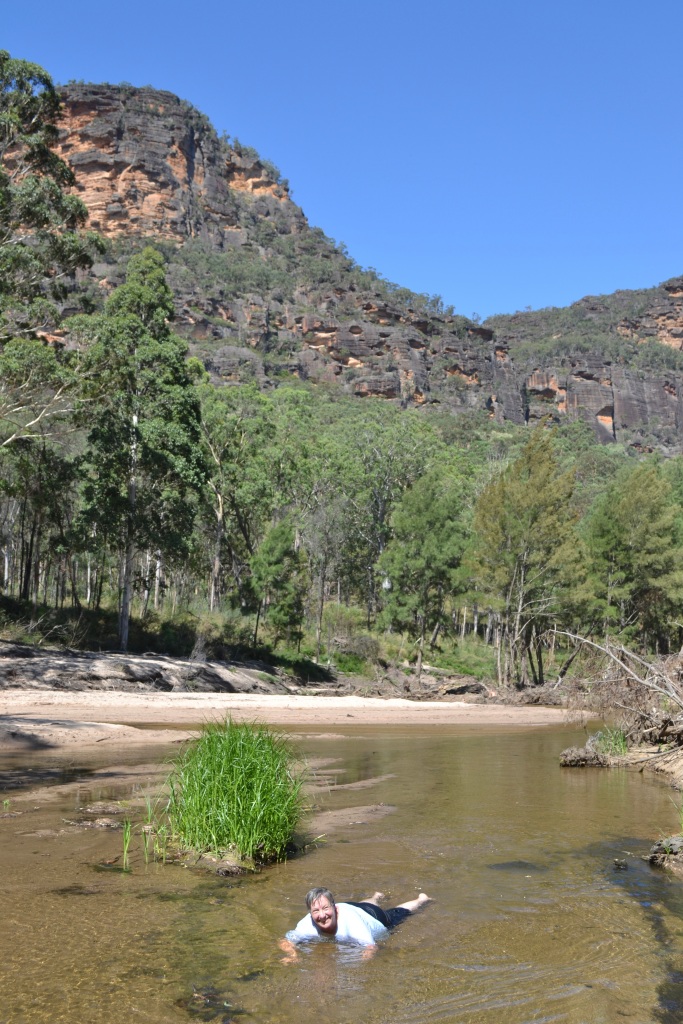
The next day we decided to spend some time down by the river. The water was warm, and the sun was shining.  We started walking up the river heading for the spot where two rivers met. It was a lot longer than we thought but was a beautiful walk. It was relatively shallow in most places.  We came across a family of kangaroo’s standing in the water watching us closely.  We slowly skirted around them so as not to disturb them from their routine. Neither of us had seen kangaroos standing in water previously, it was a bit of a surprise. We kept going and eventually after a bit of offshore walking we came to the join where the rivers met.  It was a little deeper here and we were certainly hot by then. I laid down in the water floating aimlessly soaking in the sun. It was very relaxing and soothing on my aching calves. Walking in water is not something my legs were familiar with.  We saw a few more kangaroos, and lots of birds throughout the journey. After some time, we trudged up the embankment, scrambling over some debris to find ourselves at the very end of the campsite. A slow walk back checking out the campers coming and going drained us completely, so we hovered near the campsite that afternoon. There were the usual goings on with the goannas and the resident kangaroos which kept us amused till dinner. I cannot remember what delicacy we had that night, but Ken is a whizz at camp cooking, so I am sure it was wonderful.
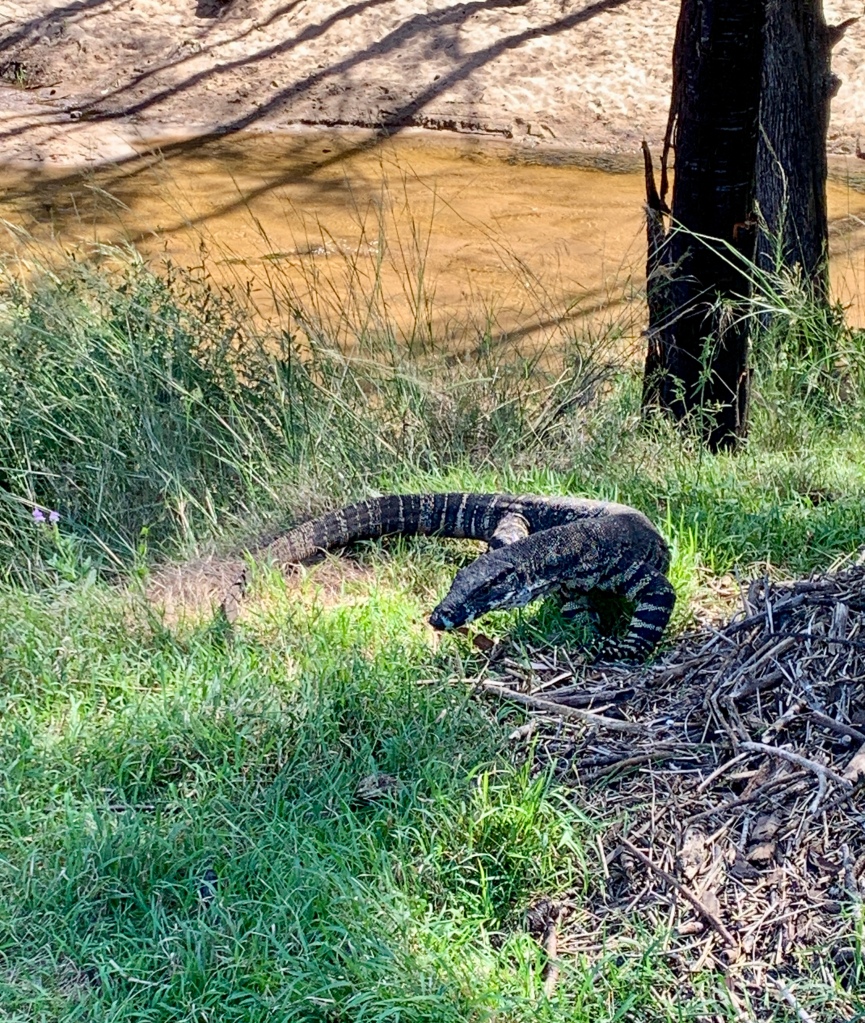
The next morning, again waking to a clear day, Ken decided to tackle a bush walk taking him uphill and down the other side to the creek. I chickened out and decided to read my book at camp side.  I wandered down to the lower end of the camp area and sat myself down at one of the low bench tables for a good read. It turned out there was much entertainment right at my foot with several goanna’s searching for food.

Meandering in and about the trees and bushes and the table legs. I followed 2 of them closely and then to my amazement saw at least another 3. With trusty mobile phone in hand, I watched them fluidly manoeuvring tree stumps, grassy patches, bushes, and table legs searching constantly for insects. They were all on a mission and nothing stood in their way except maybe each other when they got too close.  Ken arrived back a couple of hours later, tired but happy he had managed the climb. We chatted with some other campers, hearing about their interesting encounter with a snake and a possum the night before. After  finding out about some other good sites to camp, we said our goodbyes and headed over  to pack up our trailer.   It had been 3 lovely days and we highly recommend the site to others.  We suspect you would need to book well in advance if attending in holiday times though.  Outside of that you should have no trouble.
The little things …………………

Ablutions, toilet paper, people and  other things. Basing these comments on my recent travel across Australia.

Beside visiting  wonderous towns, seeing exceptional scenery, and noticing  quirky occurrences we have learned a lot about travelling in general and specifically in a camper trailer. The difference to being in a caravan with its own toilet and shower facility.

There needs to be more discussion about basic facilities offered across Australia, whether it  be on the side of the road, in a caravan park, in a public park, a tourist attraction or a shopping centre. Regardless  of where it is there is something to say about them all.

Starting with the positives, availability of toilets in the outback is quite good. Many of the free camps have drop toilets and there no shortage of  roadside  pull offs with drop or flushing toilets. The majority are clean, with toilet paper, sanitiser, and large spacious areas for wheelchair access. Most regional towns have public toilets which again we found to be clean and spacious. As for the national parks and tourist attractions, beaches, and lookouts, particularly in WA have sealed facilities, with toilet paper and sanitiser provided. Some of the more remote towns have isolated shower facilities and toilets available for a few dollars, most are clean and safe. We also noticed water is readily  accessible for a small fee. Rubbish bins are provided at most road pull offs and throughout all towns and attractions. We also noticed all the caravan parks have washing machines and dryers which work, and many have camp kitchens and barbecue area.

 Now for the frustrating negatives. Thoughtless humans being the first and most annoying of the problems. Not only across  the Nullarbor but in the outback one can easily drive stretches of 100-300 kms with no facilities which is totally understandable. Often there is no possible way to monitor or maintain proper care for facilities over these distances. Therefore, it is sensible to take that into account when travelling these routes.  My first thought was to not drink copious amounts of soft drink or water in between. Apparently not obvious to all. Along some of these massive drives the toilet paper on the side of the road is ridiculous. If collected there would be enough to build a bloody bonfire at the end of each stretch. Why is it so hard  for one to keep a plastic bag and a toilet roll in their vehicle. Take your rubbish with you or put it in the provided bin.  If you are free camping, take a little shovel with you. It is not rocket science. It is common decency which is obviously lacking in many human beings.
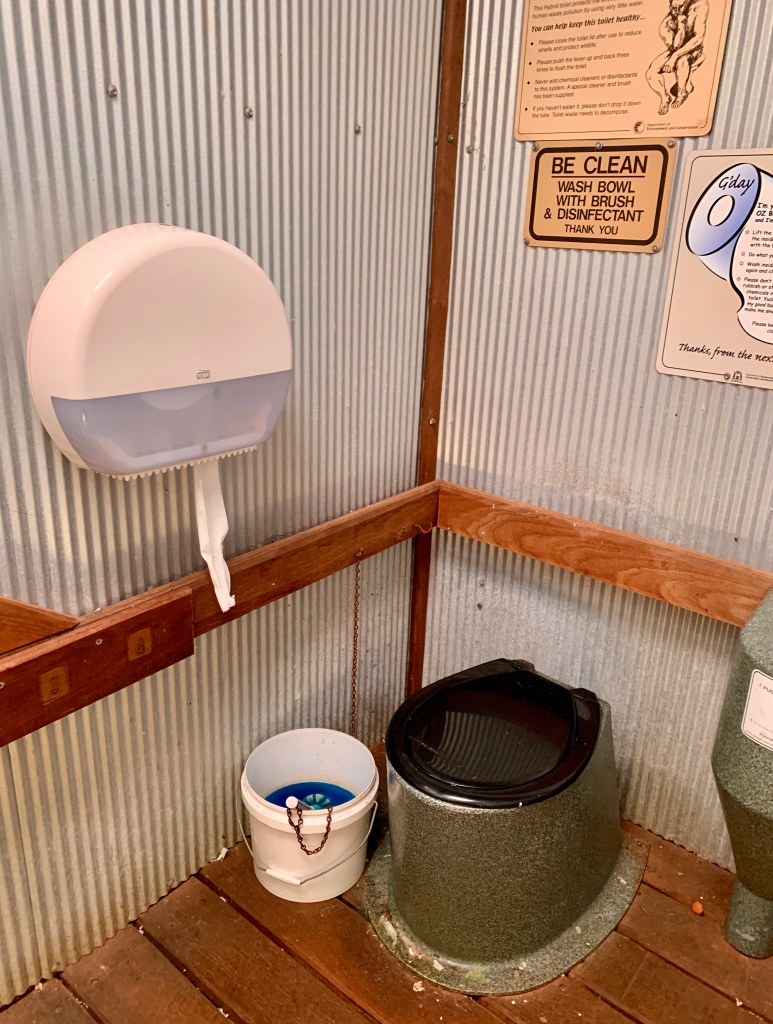
 My second gripe is toilet roll holders. Uniformity would be the key here. There are those with dowel sticks that hold several rolls. Just a note to those who put the rolls of paper on the stick, the roll must be able to turn. It won’t work if the toilet roll is too fat or too close to the next one or in once case the stick was a flat rectangular bar which did not turn. The tall drop boxes where the toilet rolls sit on top on one another. Bad design all over. Hard for the roll to turn when another roll sitting on top. Hard to remove the used roll and then the other refuses to drop down. Can you get the lid off to fix it, of course not as it is jammed tight or locked. Now let’s talk about the newer large receptables with the massive size toilet rolls in them. First thing is the toilet paper is not very wide and unacceptably thin. Because it is thin paper one needs copious amounts of toilet paper to avoid the obvious so not economical. Who thinks up where to put these  receptacles. Why are they in positions which make it impossible to gently pull on the paper. Either one must twist into a yoga pose to reach behind to tug on paper, alternatively you must reach down to your ankles to pull or push the paper out.  If the person before does not tear it off properly the paper roll just keeps turning without releasing the paper. On one occasion in a café the spare toilet roll was on the shelf above the toilet, way above the toilet, not exactly the right time to have to stand up and turn around to reach for the one item you need to be able to leave the receptacle gracefully. Someone did not think that one through. Still on the toilet paper issue and humans, having said it is difficult to get the paper out of these receptacles, it is not however difficult to pick up the bits that have fallen on the floor. You dropped it, not your fault but pick it up and place it in the toilet bowl before you flush. Why is this so hard. It is not used paper just discarded paper. If you leave it on the floor, it then becomes dirty and messy.

Now onto the size of toilet cubicles. In one toilet I had to open the door slide up to the side of the toilet to be able to close the door, another I was practically sitting on the sanitising bin at the same time I was sitting on the toilet seat. Low and small toilets are also very inconvenient for the older generation.  No handrails beside the toilets, again older people can have  difficulty rising from a toilet seat. Where does one put the handbag, on the wet or paper covered floor, on the sanitizer bin or should we just keep it on our lap.  Finally done we move to wash our hands, good luck with the soap dispenser, I am not bothering to elaborate on these poorly designed containers, give up and go straight to the tap. We are often confronted with a tiny weeny  sink which is hard to get one hand under the tap let alone both hands. Then there is that  tap which splutters and spurts at either minimum flow or with the force of a high-pressure hose. Let us not forget those unique water sinks with the taps which may or may not turn off themselves.  Is it going to stop or flood the entire area?  Do I turn it, wave over the fitting, or bang it with my fist?

Next to contend with is drying one’s hands. Firstly, never near the sink, so shake the hands and drip the water on the floor while looking for what’s available. Either paper or blow apparatus or occasionally these days you will still get those rolling hand towels. 

With luck you will remove a small slither of paper to use or said paper will be stuck in the receptacle or more likely it is completely empty.  Try the blower and get blown to the far wall or should I hug the air vents with my hands to find the miniscule airflow. Now  where did I put my handbag, is it on the wet counter, the miniscule shelf provided or on the wet floor between my feet. Check your hair and makeup without getting the comb or your lippy from your bag as it is too wet or awkward.  Sometime later you get to  emerge from the toilet block having endured an experience you had not wished for. 

Now we are onto showers or ablution blocks. Not a word I have heard used regularly but I have noticed this trip it is referred to often in camp site reviews. Appropriate I guess as the dictionary meaning is “an act of washing oneself”.   Cleanliness was very good in most of the parks we stayed. It is usually the humans using the facility that are messy. Most places provided mops and buckets  which allowed you to assist in keeping the block clean. Shower heads leave a lot to be desired, some work well, but many are very unpredictable depending on the amount of people using the facility at the time. Some are just pathetic. Water pressure is a big problem in a lot of them.  Water temperatures varied considerably and always an unknown. I wonder if they consider the amount of wasted water while we try to regulate the hot and cold-water taps.  Size of the cubicles always a discussion point. Tiny spaces with barely enough room to turn around, no shower curtain, and one towel hook. There is  often a little bench seat for your dry clothes  which usually end up wet from the shower spray.  Of course, the floor is wet all over, so shoes are also wet.  Realistically you need 2 towels, one to dry the cubicle so you can then dry yourself. There was one occasion I walked into the shower block to hear someone having a great party time with their music blaring out from the shower. Luckily it was music I did not mind. Another time in a small ablution block, two ladies in opposite rooms were having a most boisterous discussion in a foreign language through the wall of the cubicles. I may have been happy to join in had I understood the conversation. The laundry and clothesline, always a need for several trips back and forth. Walk to see if one is available. Walk to reception to get applicable coins because the last one took $1 coins, but these takes $2 coins. Walk back to machine and hope machine is still available. If you are in luck, make sure you read the sign, they all work differently. Figure it out and get it started. Blinking light says 30 minutes. Wait for another available machine for the second load. There are usually 2-3  washing machines in a caravan park of 50 or more vans. Cannot figure that one out.  First load finishes so you load the dryer, if available. Price varies of course but often no sign to say how long a cycle is. $2 could be 15mins or 30mins. You wait and see and hope you will not be there all day, because you know that first cycle is not going to be enough.  Sometimes the clothesline is a better choice however than we have those that leave their clothes on the line for 2 days. They went out, they forgot, or they are just inconsiderate. Once again you wait and hope. My advice regardless of the set up take a book, you will need it.

Leaving the amenities, we move on to other things.

Once again thoughtless human behaviour is everywhere, bear with me while I rant a little more.  I am amazed at the number of people who ignore instructions and warnings. I know it is only a few who spoil it for the majority however my frustration levels soar when I see it happen time and time again.  Don’t go near the edge, avoid area due to slippery rocks, keep your distance from the animals, don’t leave your rubbish, road subject to flooding, no parking, no camping, no fires, beware dangerous area.  Signs are plentiful and obvious and there is one person  in every crowd that simply has no common sense and does exactly the opposite to the instruction. I am not talking about children, it is always an adult and even worse, an adult with a child in tow. What sort of example are they setting? Do they have a death wish or are they just selfish?  I am dumbfounded and so angry every time I see it.

I will end this blog on a more positive note as I do not want to sound like a winging old lady (my apologies if I do, as I get older, my tolerance is diminishing.)

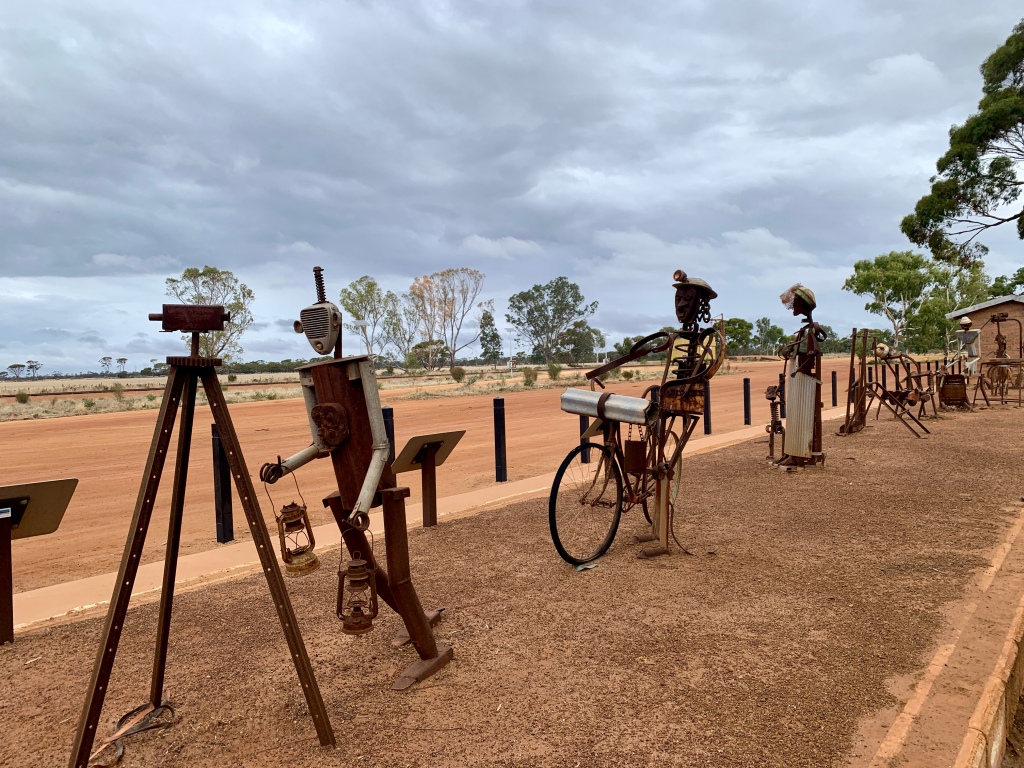
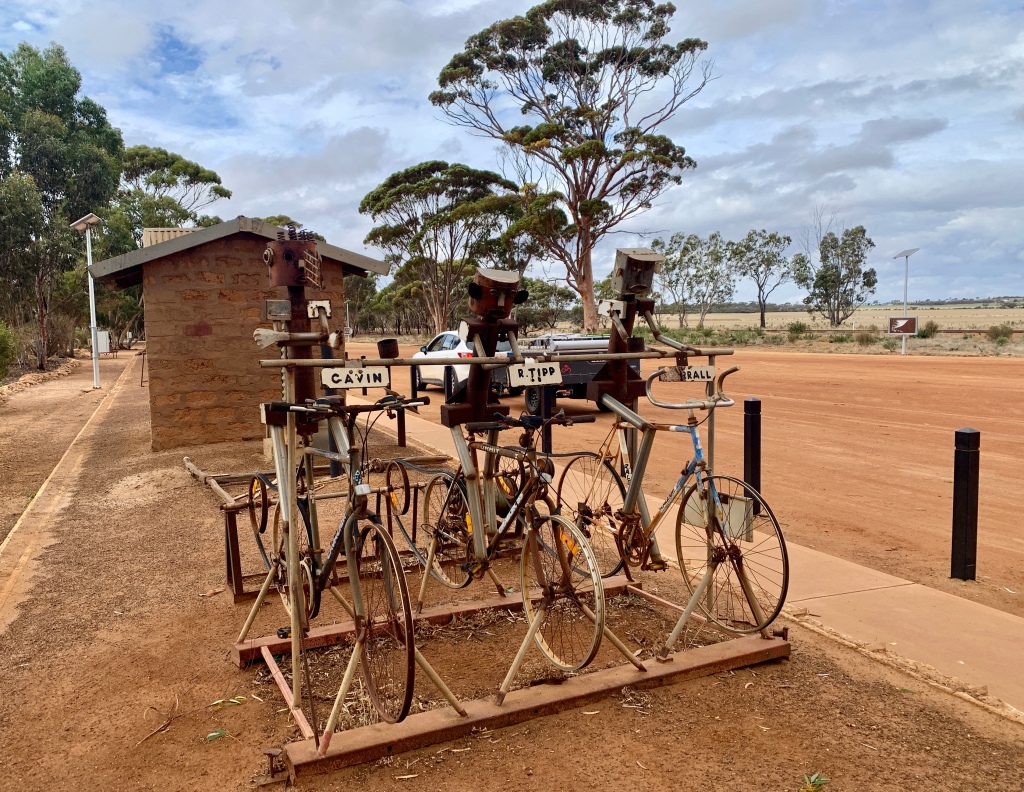
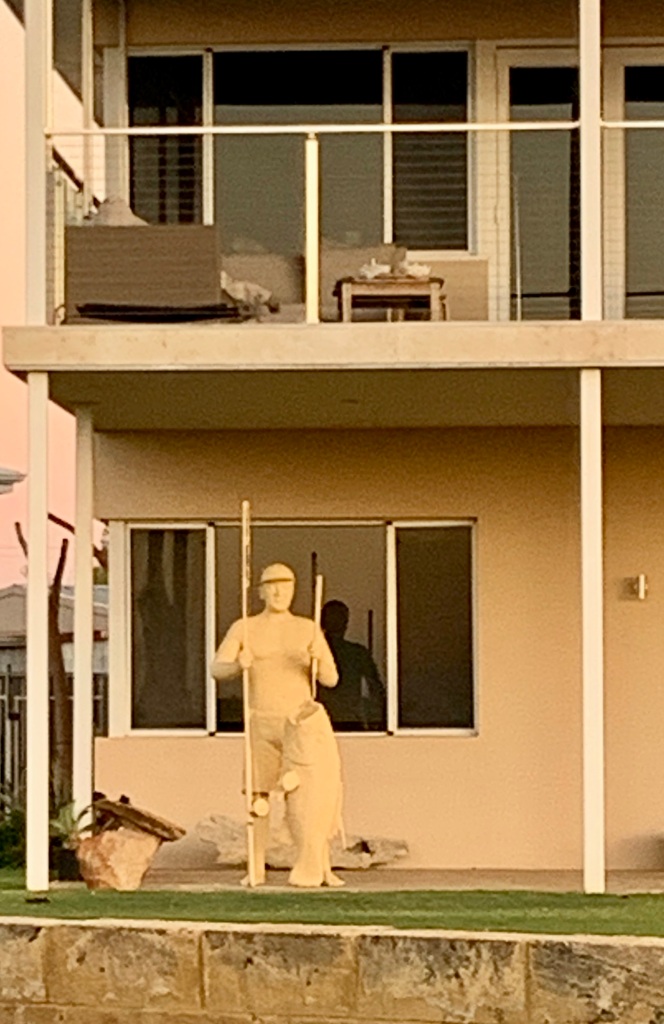
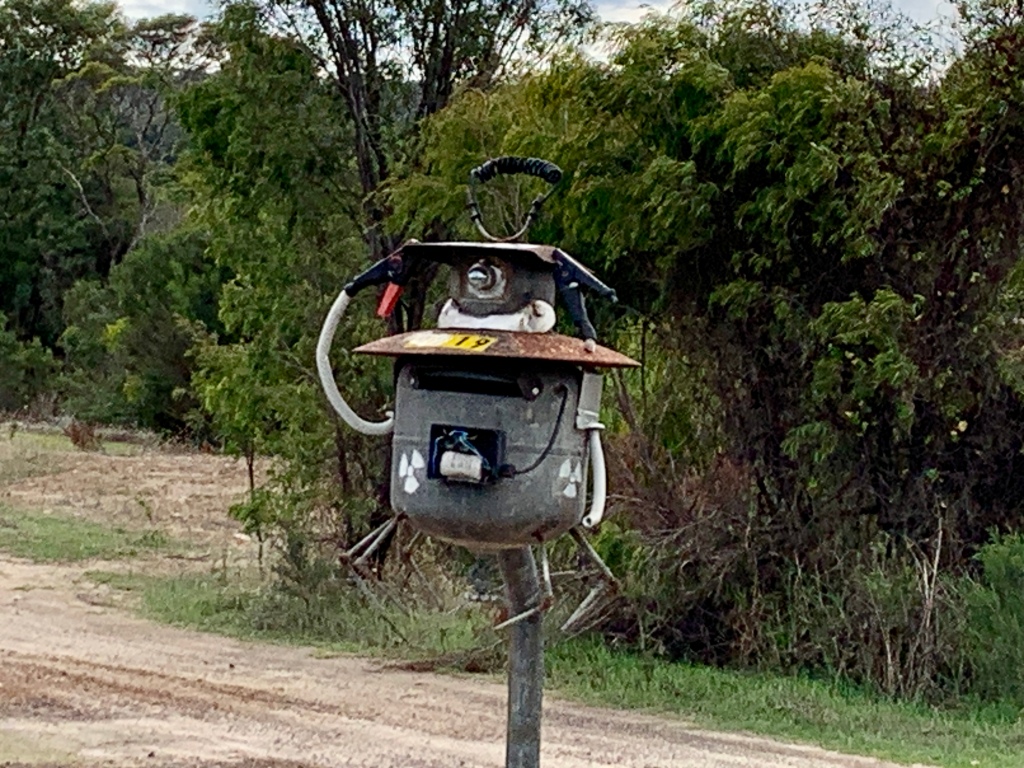
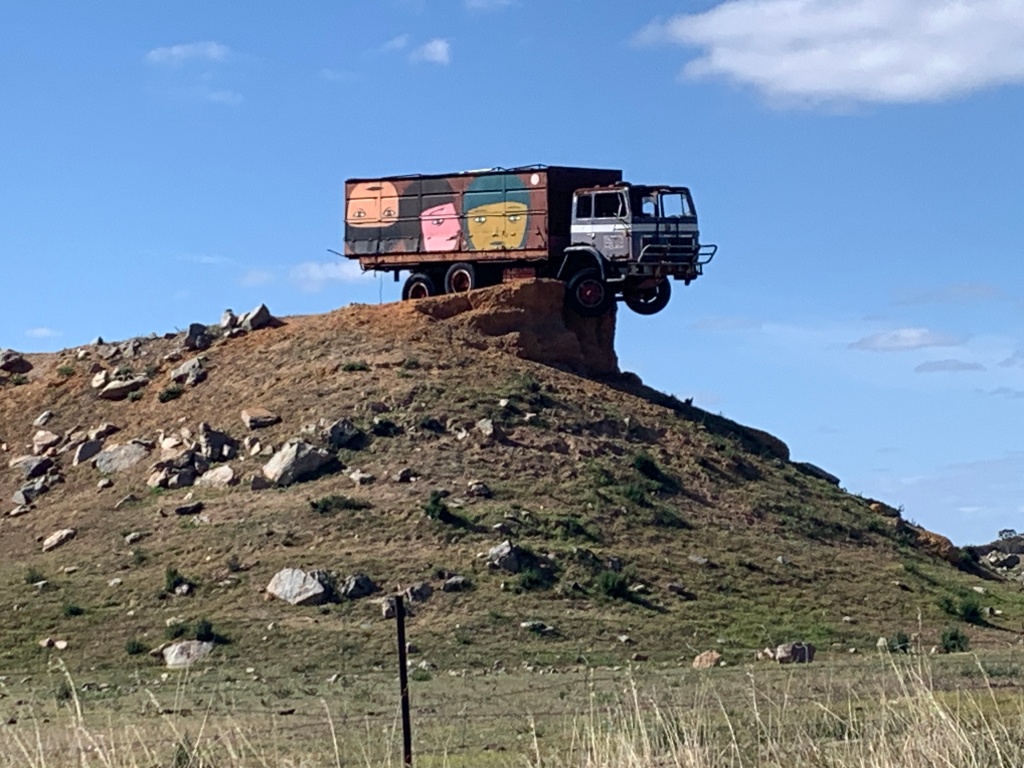
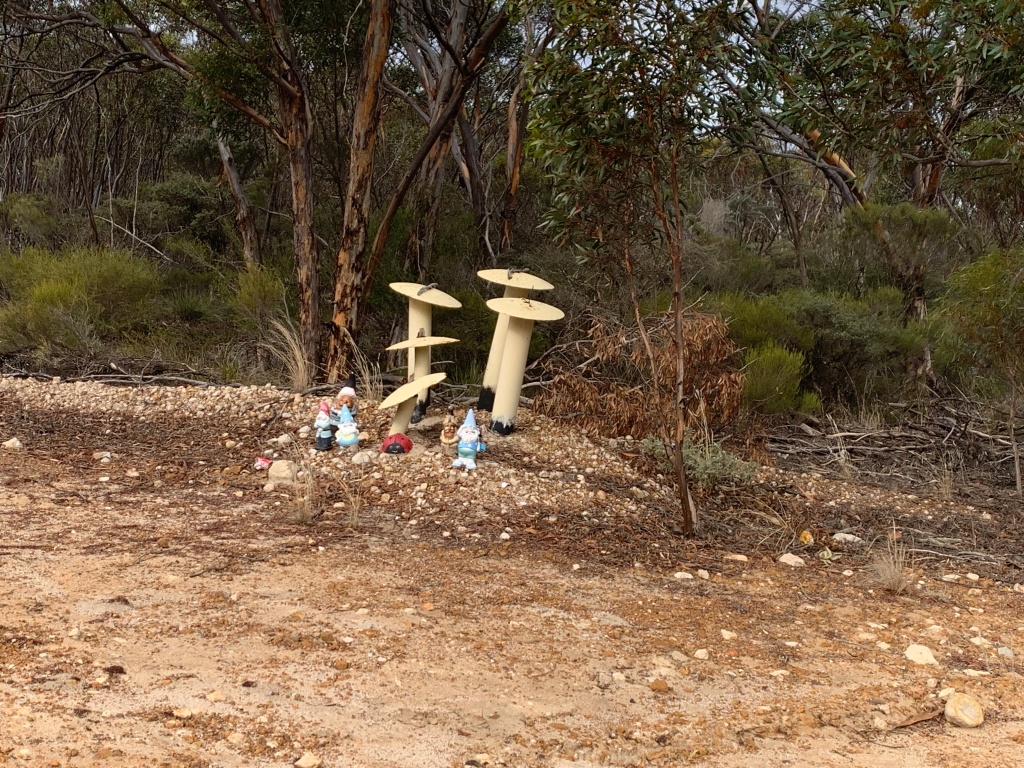
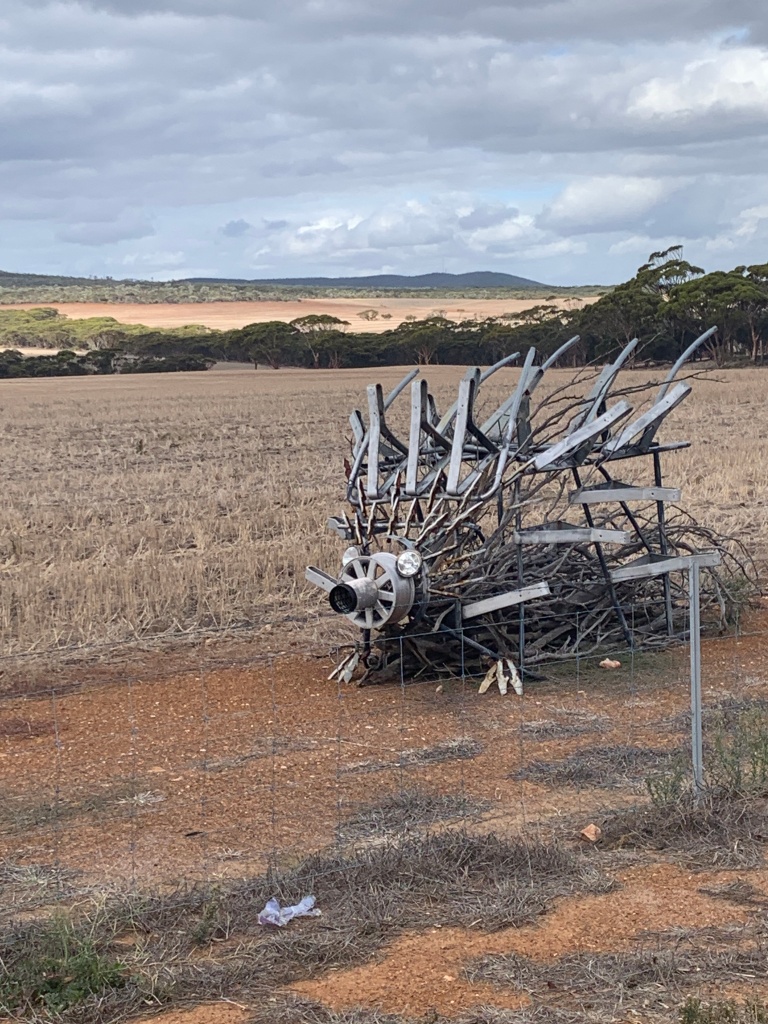
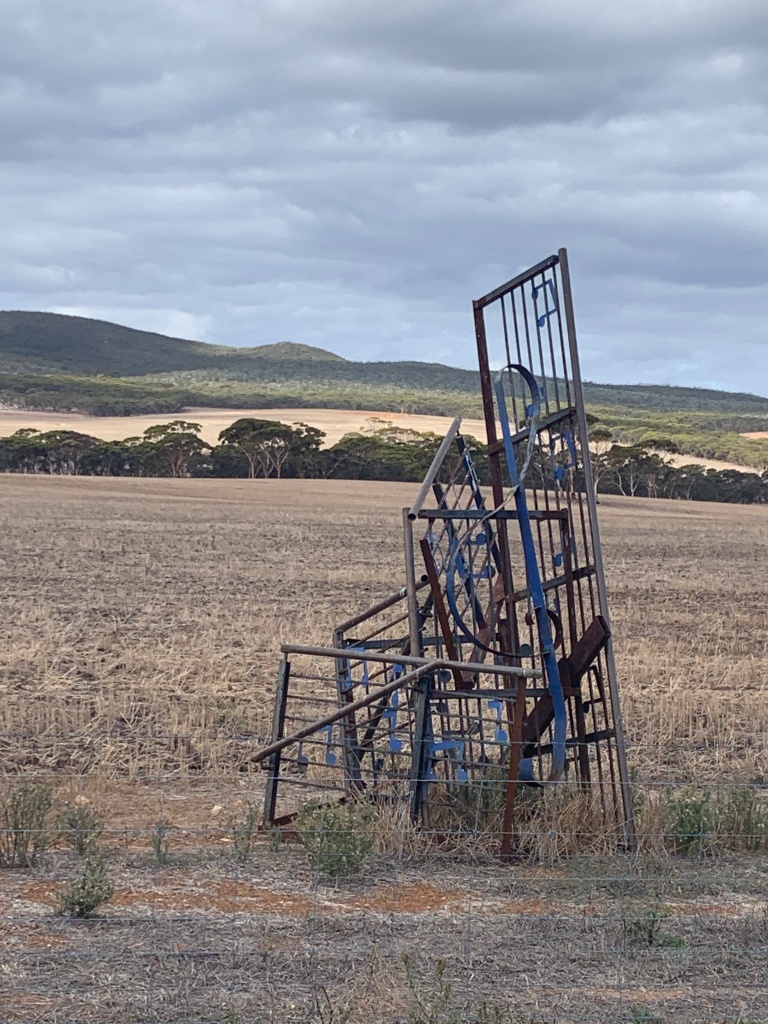
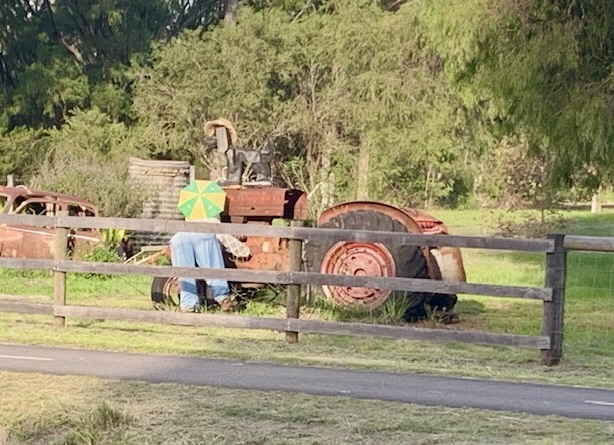
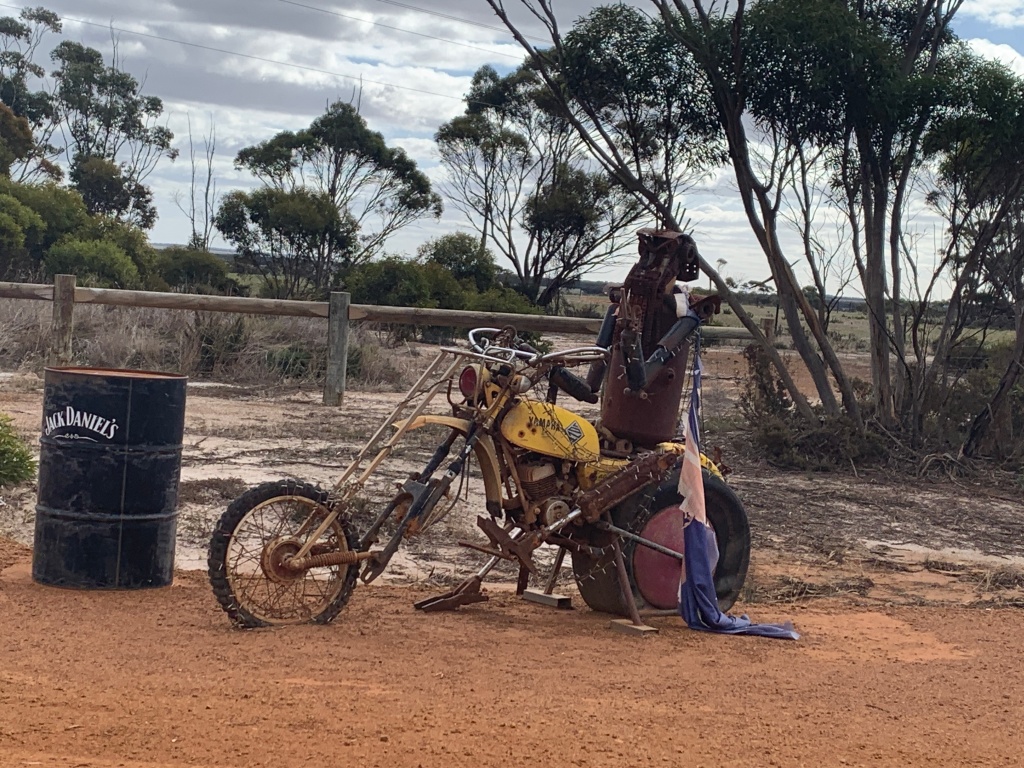
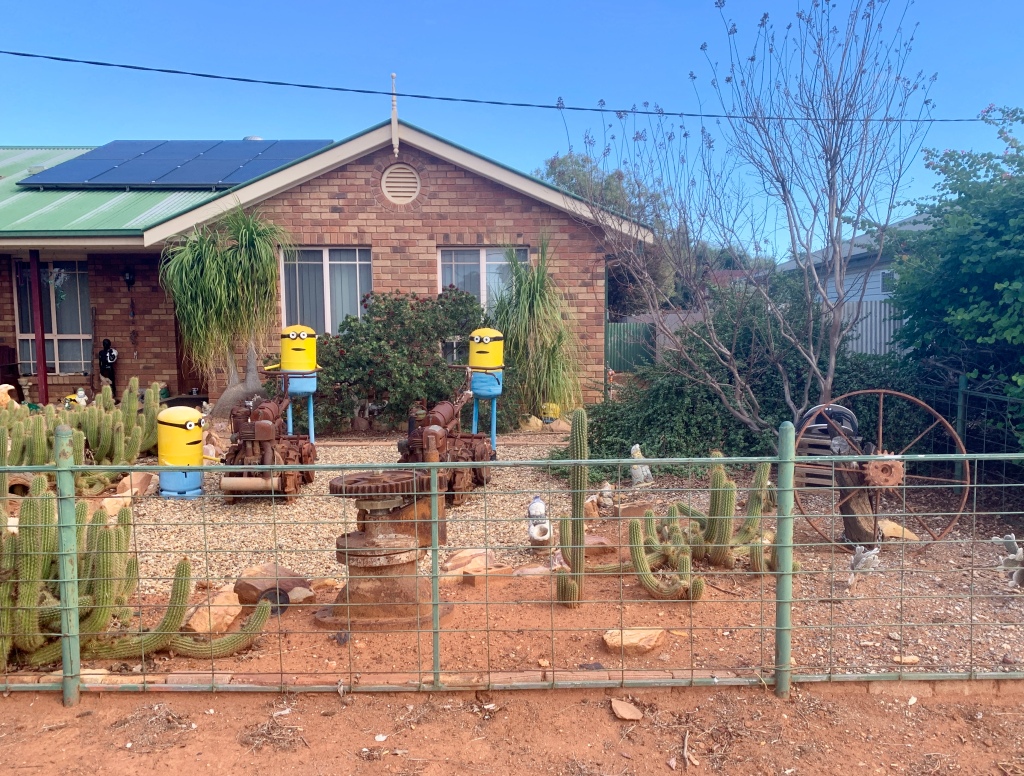
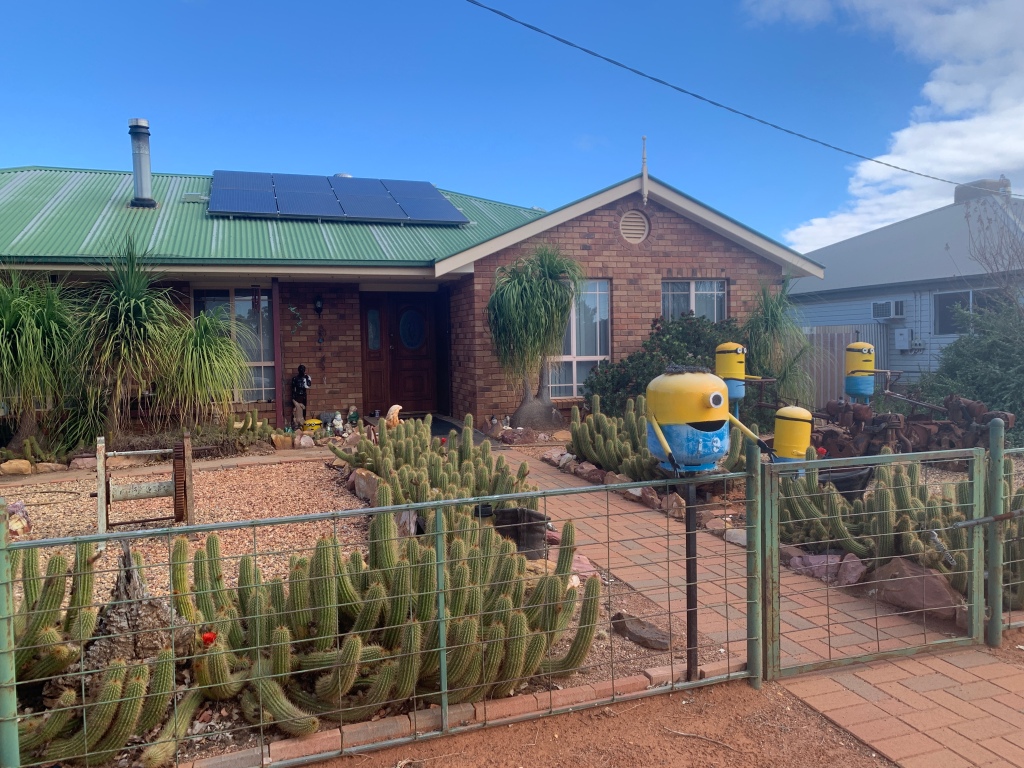
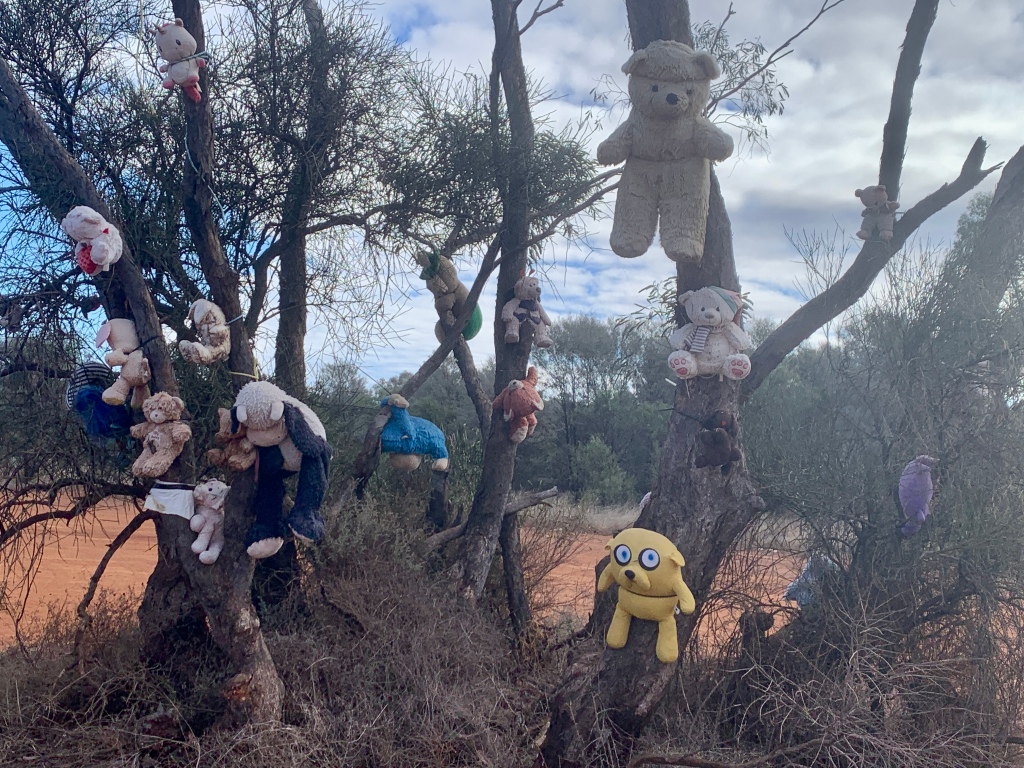
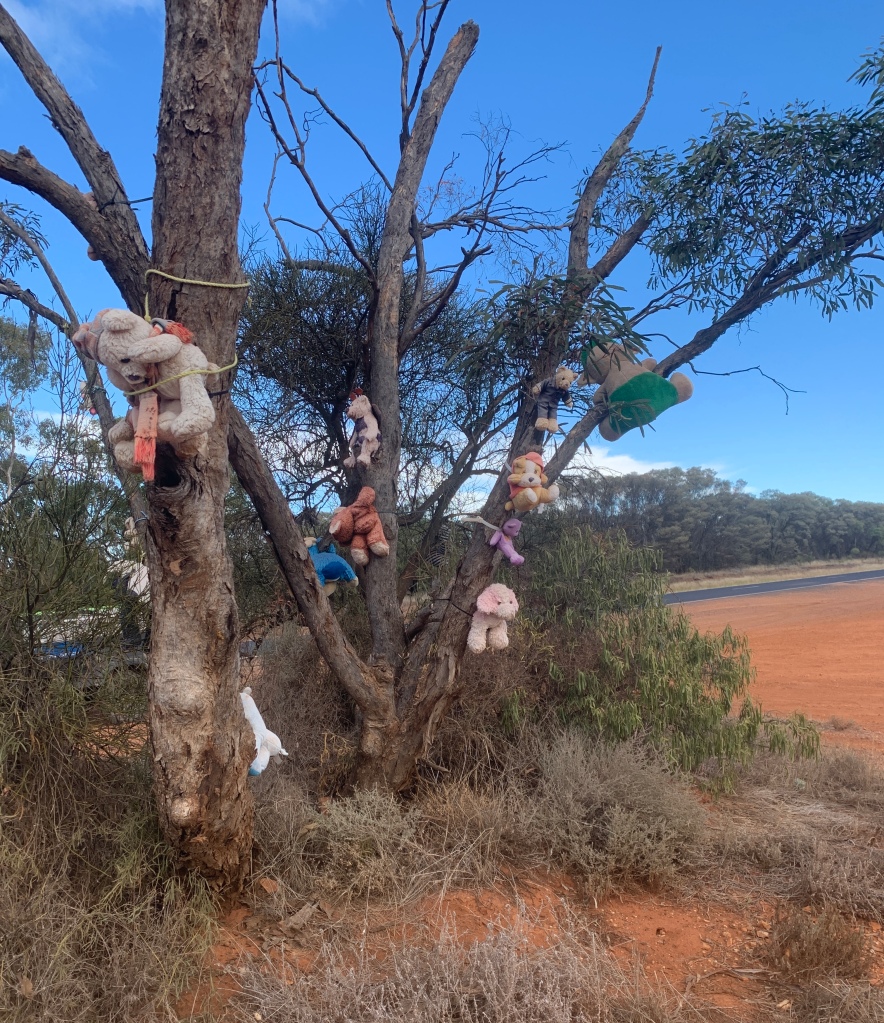
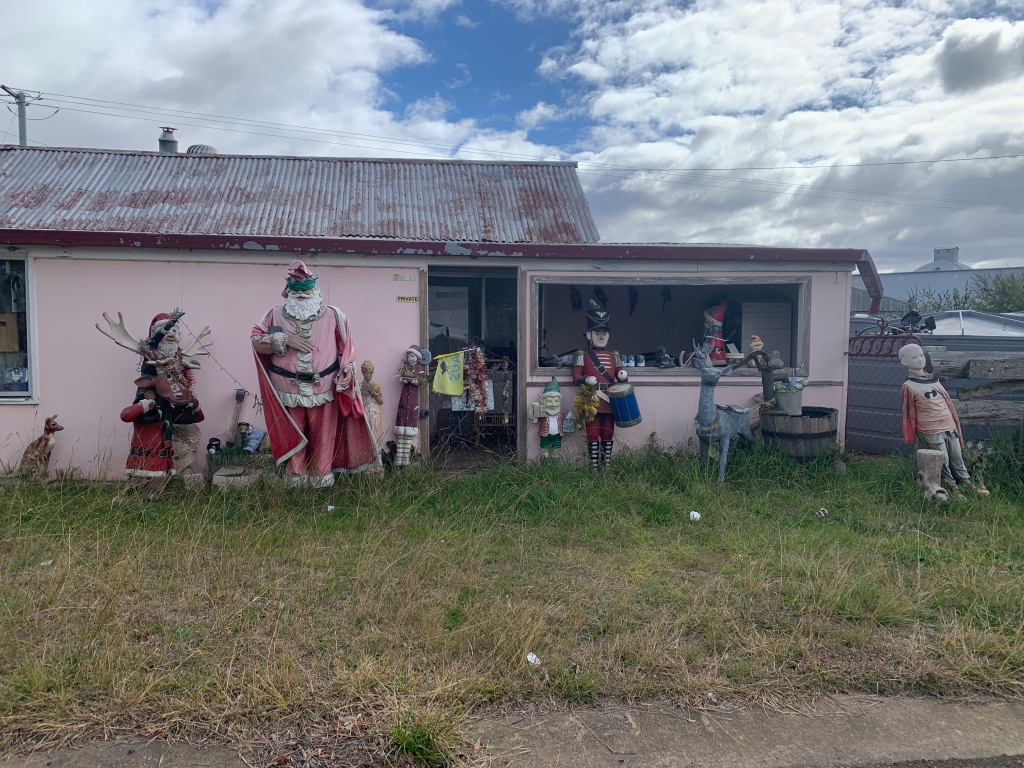
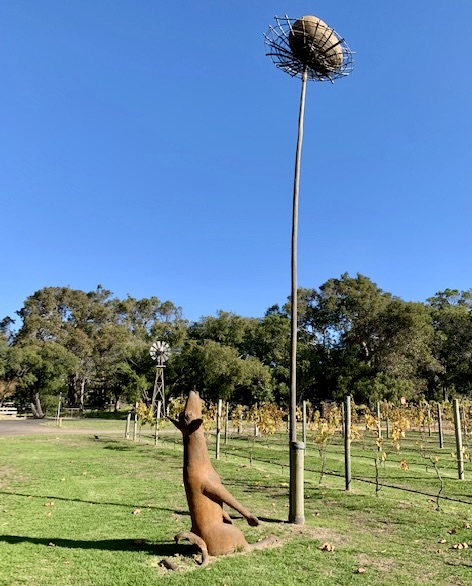
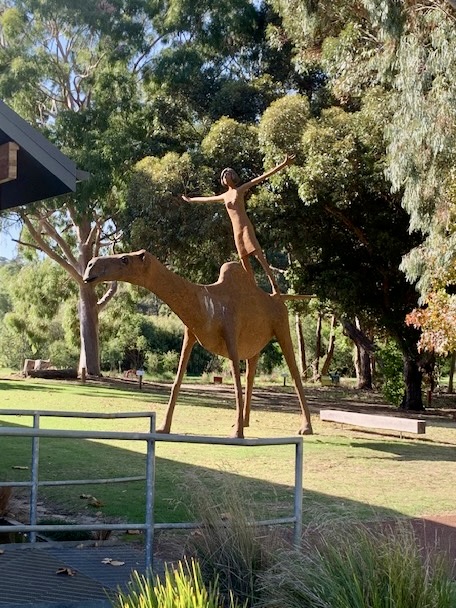
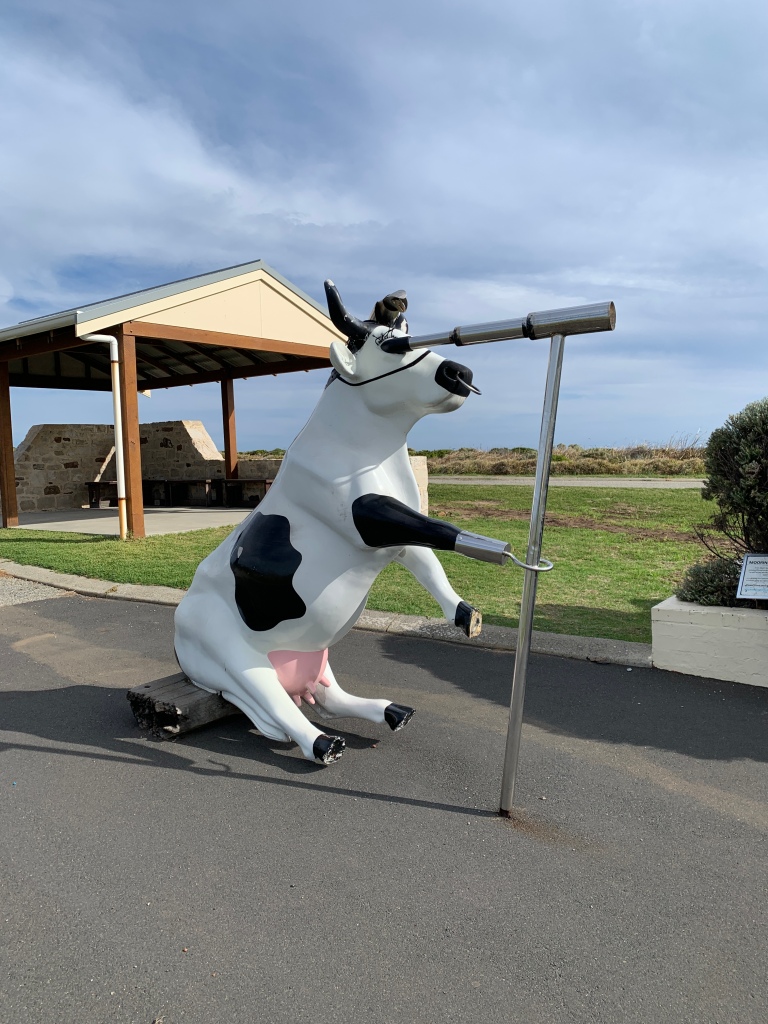
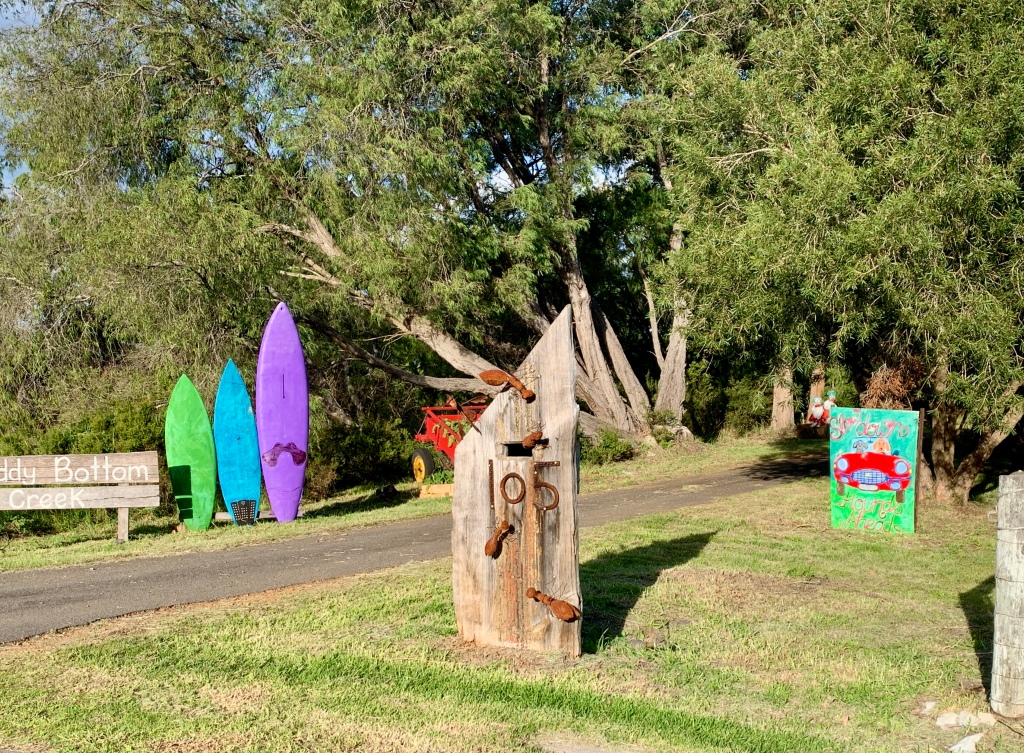
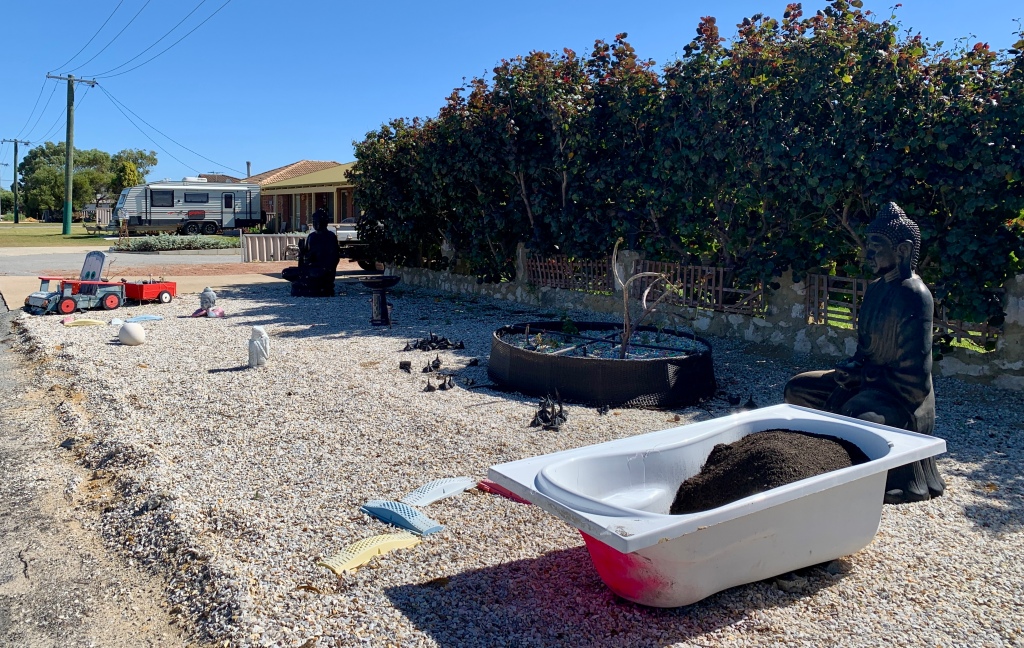
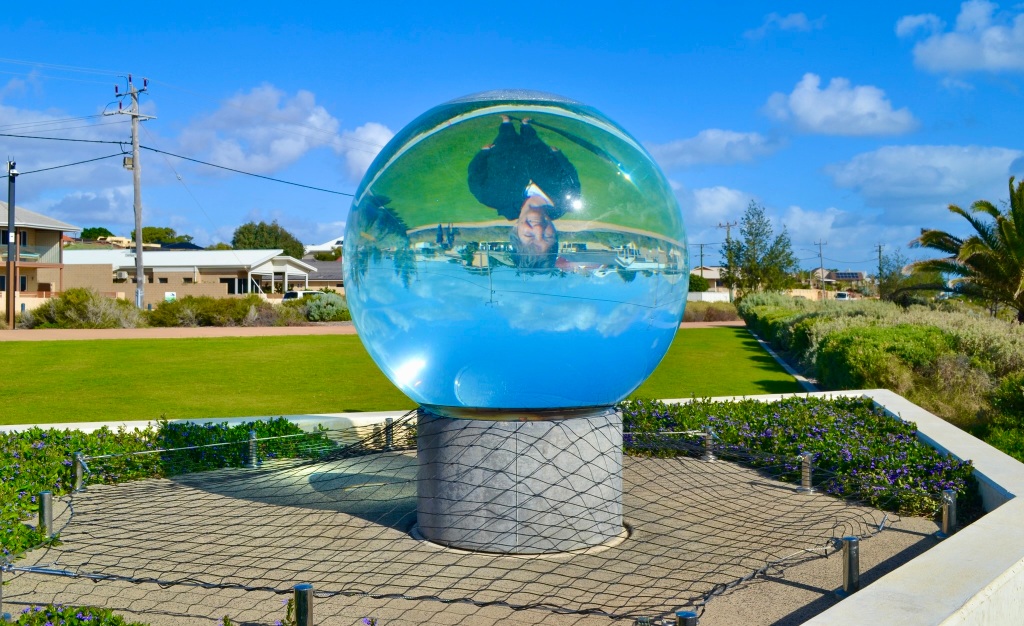
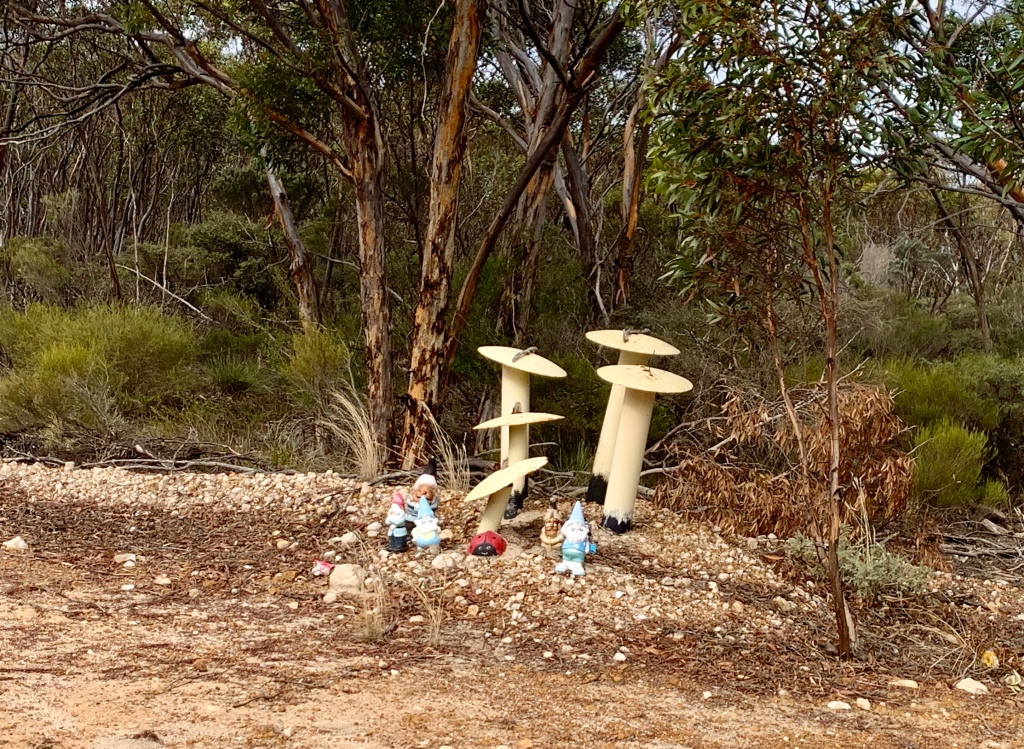
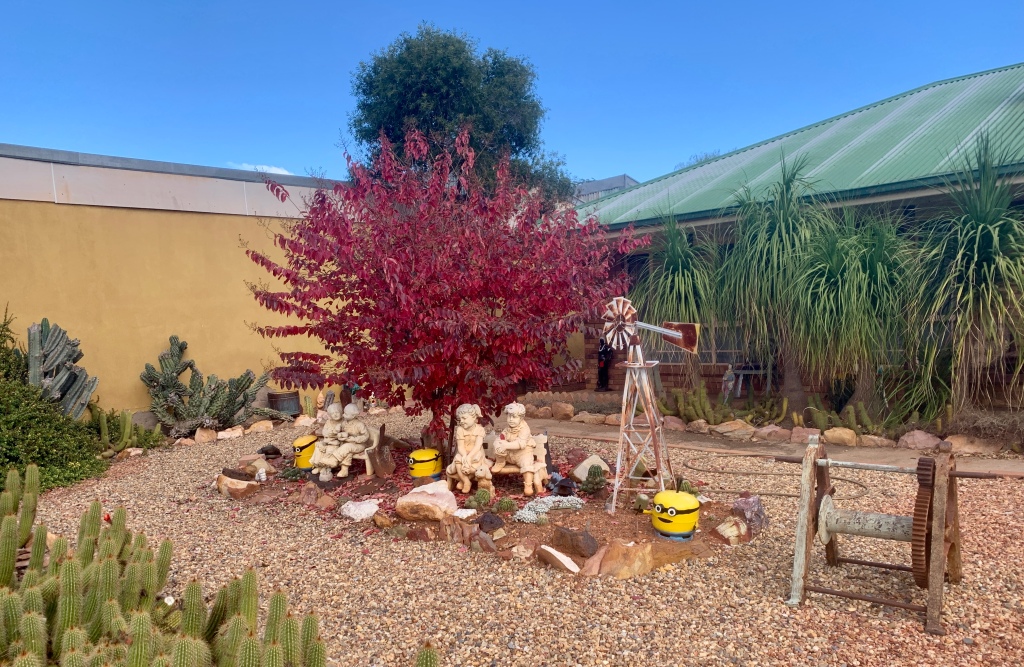
There were many times during our travels that we had to quickly pull over to take a photo when something unexpected caught our eye. Letterboxes, garden arrangements, some sculptures. I love how people are strong enough to put their passion and thoughts on display for everyone to see.  I love the artistic flare of others who put tireless hours into a creation in the middle of nowhere. I often wonder about the story behind the picture. We can tell stories and show photographs of all the highlights, the grand scenes, and the wow moments, many of which others have had the pleasure of seeing themselves,  but for me it is the quirky stuff that makes each trip unique and memorable.

Below are some of this trip’s quirky moments.

Hope you enjoyed my silliness. If so like and follow for more of my tales.